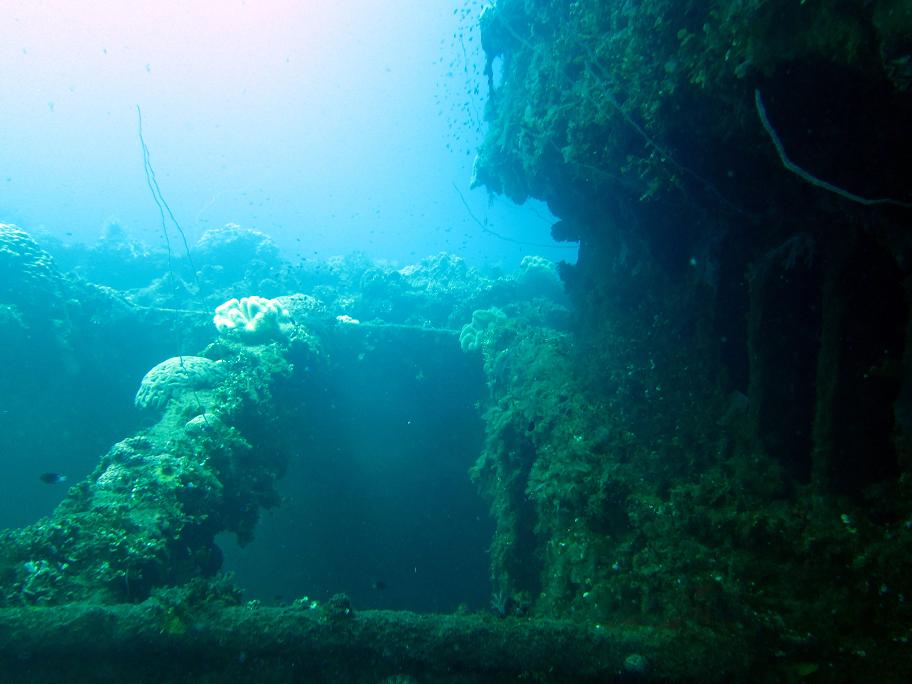
Fujikawa Maru was laid down at Mitsubishi in Nagasaki on 20 October 1937 as a passenger-cargo ship for Toyo Kaiun, launched on 15 April 1938, and completed on 1 July 1938. She worked the Japan to North America run and was then chartered to Mitsui Bussan for South America and India, carrying passengers and raw silk, cotton, jute, and flax. Some Japanese sources spell the name Fujigawa. Her sister Kinugawa Maru was lost at Guadalcanal on 14 November 1942 and is a different ship.
The Navy requisitioned her on 9 December 1940 and registered her at Yokosuka on 16 December. At Kawasaki in Kobe she was converted to an armed auxiliary aircraft transport, with Russo-Japanese War era British 5.9-inch guns at bow and stern. The conversion finished on 20 January 1941. Captain Tokutaka Ito, Etajima class 39, former commanding officer of Kamoi, had her then. On 25 June 1941 Captain Shunji Yamagata, class 45, former commanding officer of Notoro, relieved him. Fujikawa Maru's account says Ito was later posted as commanding officer of Shinkoku Maru. Shinkoku Maru's own account, dated 5 September 1941, appoints Ito supervisor and reserve officer Yukinoshin Nakajima commanding officer. On Shinkoku Maru he was the supervisor, and Nakajima was the commanding officer.
In July 1941 Captain Samata Inoue, class 40, was appointed. Through late 1941 and 1942, while Inoue was the named captain, she served the 22nd Naval Air Flotilla and the 11th Air Fleet: Saigon and Kota Bharu in the Malaya campaign, Kuching with men and construction material of the Genzan Air Group, Bangkok, Palau, Truk, and Rabaul, and a July 1942 call at the Yokkaichi refinery that is marked as a probable load of aviation gasoline. On 20 September 1942 recalled retired Captain Aritaka Aihara, class 38, former commanding officer of Kako, took her. He was later a rear admiral. On 26 December 1942 she reached Roi, probably with Mitsubishi A6M fighters for the 201st Naval Air Group. Captain Denjiro Goto, class 38, was appointed on 8 October 1943. On the morning of the loss she was Reserve Captain Chuyo Takayama's ship.
On 12 September 1943, in convoy 6113, USS Permit claimed a hit on her at 08-23 N, 165-12 E. That attack, too, was described as amidships. She reached Truk on 31 December under tow by Mikage Maru No. 18, probably for repair by Akashi. On 1 January 1944 she was rerated an auxiliary transport, attached to Maizuru, and stayed under repair. In February she put 30 B6N Jill bombers ashore on Eten airfield.
On 17 February an Avenger of Rear Admiral Frederick C. Sherman's Task Group 58.3, which included Bunker Hill and Monterey, torpedoed the anchored ship on the starboard side aft of the bridge. She filled, went down by the stern, and settled nearly upright in 138 feet, 42 meters. Nobody was killed, so Takayama is not described as killed. After the war the hulk, shallow enough for divers, became a favorite of the lagoon. Four A6M5 Zeke fuselage sections are visible in No. 2 hold. Other reports put the torpedo in No. 4 hold rather than amidships. Removal from the Navy register is dated only to 1944.
A note on sources. The career is the tabular record by Bob Hackett, Sander Kingsepp, and Peter Cundall. Takayama's appointment date is not in it, and neither is the day of Inoue's appointment or the date of Goto's relief. The author's note on that record is the source for the four Zeke sections, for the disagreement over which hold the torpedo hit, and for the description of the Permit hit as amidships. The Joint Army-Navy Assessment Committee calls her an aircraft ferry of 6,938 tons at 7-20 N, 151-53 E, carrier aircraft, 17 February. A 2011 underwater photograph released as CC0 names her, and it is used. The other wreck photographs on Commons are CC BY-SA.