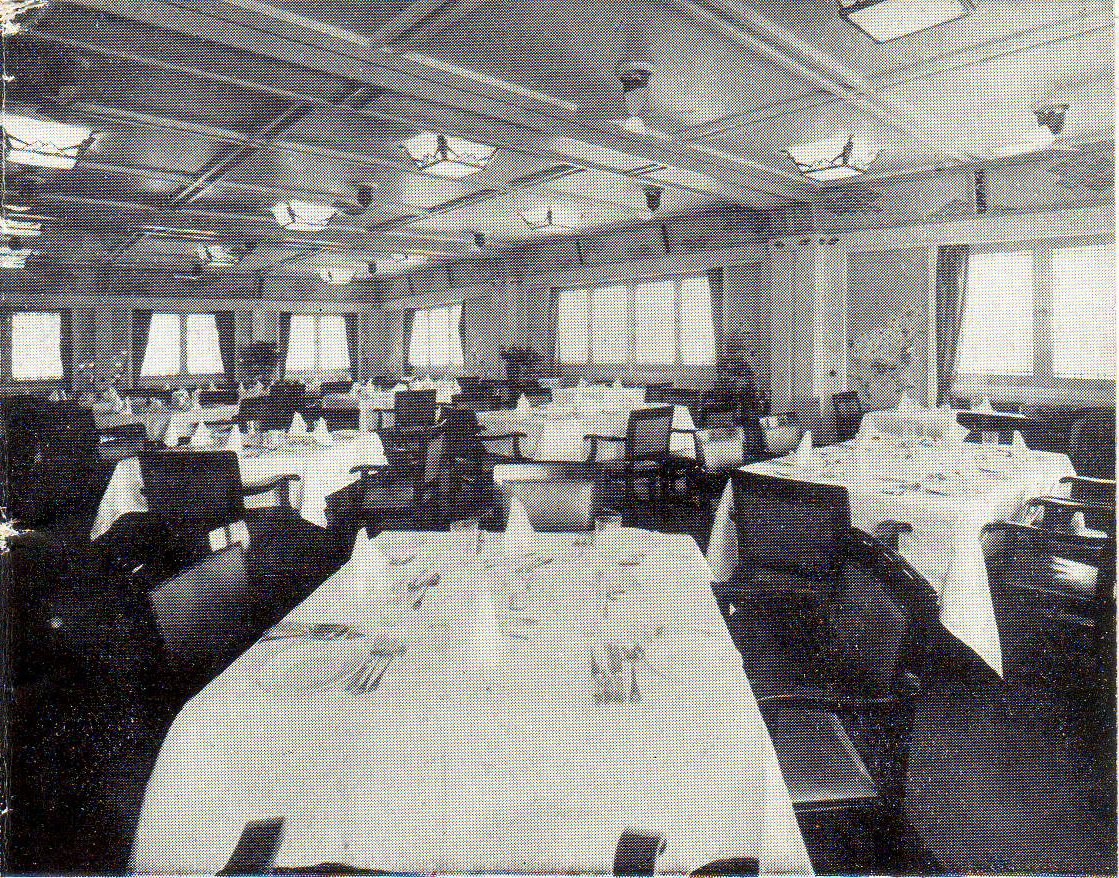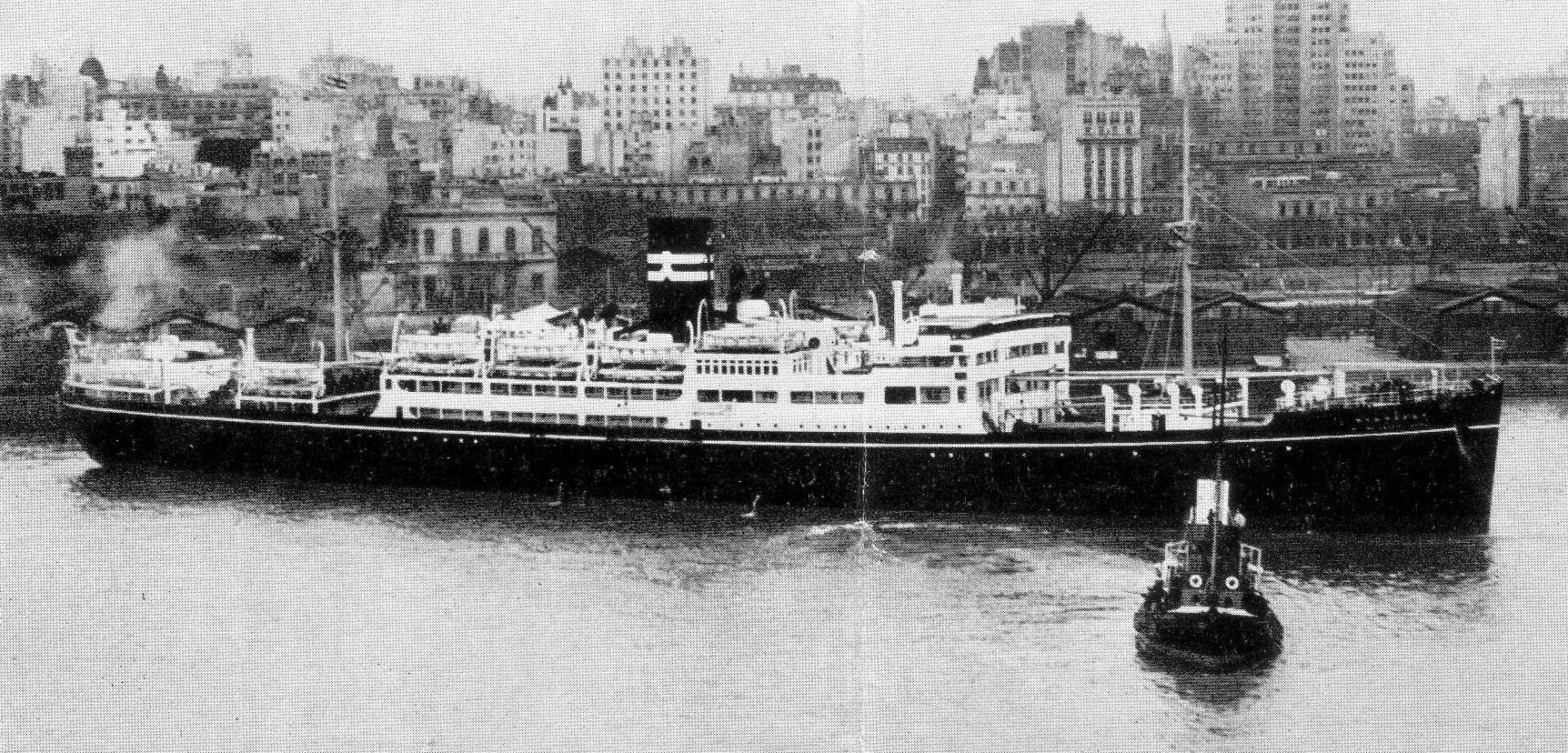
Rio de Janeiro Maru was an Osaka Shosen liner on the South America run, completed in 1930. On 25 March 1941 she was registered as a prospective submarine tender in the Sasebo Naval District. Captain Raiji Murase, class 38, former commanding officer of Matsukaze, was appointed. On 7 May 1942 Captain-retired Tatsuo Ohashi, class 40, former commanding officer of RO-68, relieved him. Ohashi is later styled a rear admiral. That promotion is not dated.
She served as a tender and a transport. On 5 December 1943 recalled Captain-retired Yoshio Kanemasu, class 40, former commanding officer of the light cruiser Oi, was posted as supervisor of a modification, and Ohashi went to the Kure Naval District. By 13 January 1944, when she left Aioi, Kanemasu was her commanding officer. She loaded ammunition at Kure for the damaged cruiser Agano, then went south.
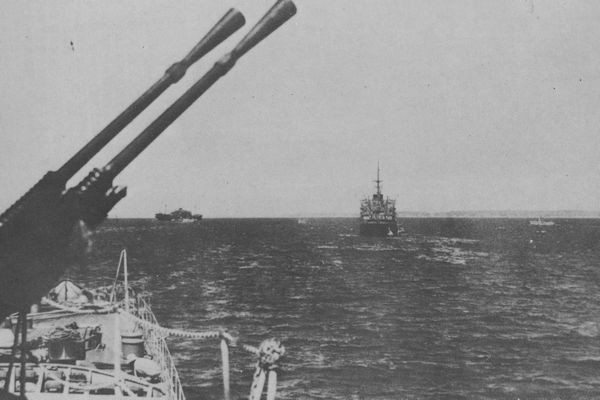
On 17 February she was anchored east of Uman. In the first attacks she was hit by 1,000-pound bombs, probably from Yorktown's dive bombers and Bunker Hill's Helldivers. Captain Kanemasu was killed and promoted rear admiral after his death. At 0030 on 18 February she sank. Two crewmen were lost. She lies on her starboard side in about 115 feet. She was removed from the Navy list on 31 March 1944.
A note on sources. The commanding officers and the split between the bombing on the 17th and the sinking at 0030 on the 18th are the tabular record by Hackett, Kingsepp, and Cundall. The prewar trade is the Osaka Shosen booklet North America via Panama, South America (1939), which is also the source of her photograph, and the Commons description of that file. The Joint Army-Navy Assessment Committee lists a converted submarine tender of 9,626 tons at 7-20 N, 151-53 E, carrier aircraft, dated 17 February. A prewar builder and launch date are not in the movement record used here, and they are not supplied from the photograph's category page.