Ships
- USS Heermann (DD-532) Captain, 1 May 1944 – 19 August 1945
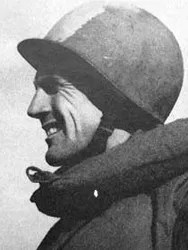
Amos Townsend Hathaway was born in Pueblo, Colorado, on 5 December 1913, the son of James A. and Nina North Hathaway. His hometown of record is Chevy Chase, Maryland. The family later lived in Bakersfield, California. He studied at Duke, then the Naval Academy, Class of 1935, and was commissioned ensign on 6 June 1935. He was promoted lieutenant (junior grade) on 6 June 1938, lieutenant on 1 January 1942, temporary lieutenant commander on 1 May 1943, and temporary commander on 1 March 1944. He retired a captain in 1965.
His first sea duty was the battleship Mississippi (BB-41). In the late 1930s he served on the destroyer Craven (DD-382) and the light cruiser Boise (CL-47). In the war he was navigator, then executive officer, of the high-speed minesweeper Zane (DMS-14). He was not her captain. He was then executive officer of the Fletcher-class destroyer Hoel (DD-533), the ship sunk beside Heermann off Samar. He was not Hoel's captain. In April 1944 he was given Heermann (DD-532). He relieved Dwight M. Agnew on 1 May 1944 and had her until 19 August 1945.
On 25 October 1944 he had Heermann in Taffy 3's screen when Kurita's force came out of the squall. Johnston had already turned in. Hathaway took Heermann in with Hoel and the escorts, closed to about 4,000 yards twice, and fired torpedoes under constant fire, then fought with 5-inch guns. A shell came into the pilothouse. The ship was flooded forward and down by the bow. She was the only one of Taffy 3's three destroyers to get out. Four of her crew were killed and seventeen wounded. He received the Navy Cross, Commander Seventh Fleet serial 0678 of 1 February 1945, and shared the Presidential Unit Citation given to the unit.
The citation says he scored one confirmed hit on a battleship and greatly assisted in putting two heavy cruisers out of action. That is the award language. It does not pin a sinking or a crippling to Heermann. The usual account is that her torpedo wakes forced Yamato to comb them and fall out of the formation for a time. The bow blown off Kumano is the usual account of Johnston, not of Hathaway.
After Samar he took the damaged ship to Kossol Roads, then Seeadler, then Mare Island, and brought her back out for Iwo Jima, the Okinawa raids, and the Third Fleet strikes on Japan. He left her on 19 August 1945, four days after the surrender.
In the Korean War he was executive officer of the heavy cruiser Saint Paul (CA-73) from November 1950 to July 1951. He was not her captain. After that he served on the staff at the Naval Academy and the Naval War College, commanded Destroyer Division 92, and was chief of staff of Carrier Division 16 in Valley Forge. He was not her captain. From 1959 to 1960 he commanded the heavy cruiser Rochester (CA-124). From June 1963 to June 1965 he was director of the Logistic Plans Division in the Office of the Chief of Naval Operations, work that also sat with the Joint Chiefs logistics plans, and for that he received a Gold Star in lieu of a second Legion of Merit. He retired in 1965 as a captain.
He then taught mathematics and computer science at The Citadel in Charleston, South Carolina, and retired from the faculty in 1979. He died in Charleston on 26 August 1996, at 82, and is buried at Arlington, Section 12, Site 8533-7.