Ships
- HMAS Napier (G97) Captain from 7 November 1942
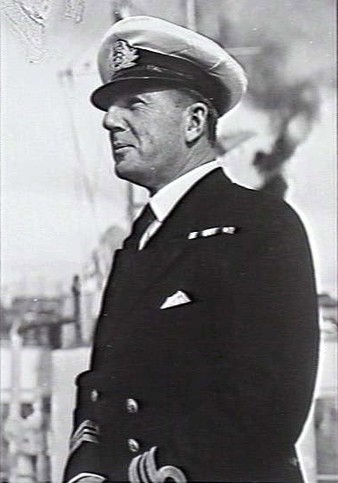
Arnold Holbrook Green was born at Hawthorn, Victoria, on 23 March 1906, and died at Hobart, Tasmania, on 3 April 1967. In the Royal Australian Navy he became a wartime commander whose officers remembered a hard, outspoken captain, impatient with delay, and also capable of kindness. A British admiral serving with Australian officers was said to have judged the RAN too small for his talents.
In September 1940, while serving in the flotilla leader Stuart under Captain H. M. L. Waller, he was lent to the depot ship Nile as liaison officer with the Western Desert Force. Inside besieged Tobruk he picked up the nickname Hydraulic Jack, for a gift at acquiring whatever the garrison was short of. He also went out on patrols beyond the perimeter. One of those forays brought prisoners back into the fortress, and the army officer who commanded the patrol received an immediate Military Cross. The army soon had Green back at sea.
He already held the Distinguished Service Cross when, as a lieutenant commander, he commanded the sloop HMAS Warrego from 27 May to 22 August 1942. On 7 November 1942 he relieved Stephen H. T. Arliss in command of the N-class destroyer HMAS Napier. The ship was then on escort and patrol work between the Eastern Fleet base at Kilindini and Durban. The new year found her at Durban, still running patrols and convoys in the eastern Indian Ocean and the Mozambique Channel. From late March 1943 she spent about two months with the South African anti-submarine forces on the South Atlantic Station, and she remained with the Eastern Fleet into the following year.
In July 1944 Napier gave up her duty as fleet destroyer leader at Colombo. A week later she left the Eastern Fleet off Trincomalee, and on 27 July she entered Fremantle. A long refit at Melbourne followed. On 14 September 1944, by then a commander and still her captain, Green presented a replica of the ship's badge to G. W. Taylor, editor of The Sun, in thanks for the newspaper's adoption of the ship. He left her in the middle of that refit. John Plunkett-Cole took her on, and in October 1944 she sailed again for Fremantle and then for Trincomalee to rejoin the Eastern Fleet.
Late in the war, as an acting commander, Green went back to liaison work ashore, this time in Borneo. On ten occasions he landed with the first wave of infantry, and the reports he brought off were used in planning later assaults. A bar to his Distinguished Service Cross marked that service. He then commanded the destroyer HMAS Norman from 3 September to 29 October 1945. Undocked on 9 September, she left Manus for Guam on the 11th and entered Tokyo Bay on the 16th. In October she returned to Australia and was handed back to the Royal Navy.
After the war Green was senior officer of ships in reserve at Brisbane, still quick to demand a straight answer and still held in affection by many who had served under him. He was appointed OBE. On 23 March 1951 he transferred to the Emergency List, closing a career that ran from the desert war and the Indian Ocean escorts to the surrender of Japan.