Ships
- USS Hugh W. Hadley (DD-774) Captain from 13 January 1945 · Relieved on 19 June 1945
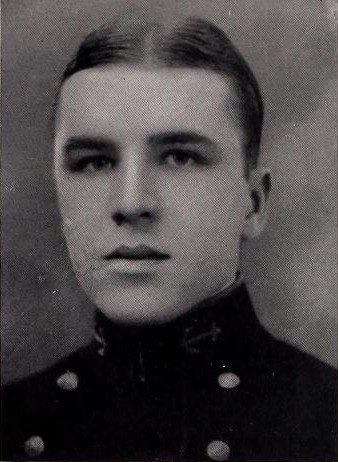
Baron Joseph Mullaney was born in Hackensack, New Jersey, on 13 August 1905. He graduated from the United States Naval Academy in 1928 and remained in the Navy until he retired as a rear admiral in August 1958.
His first wartime command was the new destroyer Mullany, which he commissioned at San Francisco on 23 April 1943 and commanded until 19 September 1944. She worked up off San Diego, escorted ships in the Aleutians, and in December 1943 joined the Seventh Fleet in the Southwest Pacific. At the beginning of March 1944, off the Admiralty Islands, Mullany covered minesweepers clearing the entrance to Seeadler Harbor before troops landed on Los Negros. Japanese shore guns fired on the sweepers. Mullany silenced them with her 5-inch battery and stayed two more days in support of the landing force. Through the rest of his time aboard she operated off British and Dutch New Guinea and in the Moluccas. The Legion of Merit recognized that command, running from the spring of 1944 into the early autumn.
On 13 January 1945, at San Diego, Commander Mullaney became commanding officer of the new Allen M. Sumner-class destroyer Hugh W. Hadley (DD-774). Speaking to the crew on the fantail, he told the enlisted men that he would have to learn how to get along with them, and he told the officers that they would have to learn how to get along with him. The ship was still finishing her training. On 21 February he took her out of San Diego for Pearl Harbor and arrived on 27 February. About a week later Hugh W. Hadley sailed for Ulithi and the Okinawa campaign. By early May she was on the radar picket line north of the island, serving as both picket and fighter-director ship.
On the morning of 11 May 1945 Hugh W. Hadley was on Radar Picket Station 15 with the destroyer Evans and four small support craft. More than a hundred Japanese aircraft attacked in successive waves. Evans was hit hard and left dead in the water. Hugh W. Hadley fought on, with planes pressing in from ahead and from astern. Under Mullaney’s direction the guns shot down nineteen aircraft. A bomb and three kamikaze planes then struck the ship. Fires spread, and three engineering spaces flooded. He ordered the colors hoisted on the signal halyards to join the battle ensign, and he passed the word that if the ship went down she would go with her flags flying. Wounded himself, he kept the crew at damage control until Hugh W. Hadley could be taken in tow.
The tow brought her in to Ie Shima. On 14 May she was moved on to Kerama Retto, where a repair ship began emergency work on the hull. Twenty-eight men had been killed and sixty-seven wounded. The Navy Cross cited Mullaney for fighting the ship through that morning and for holding her together until she reached port. Hugh W. Hadley later received the Presidential Unit Citation for the same action, and Mullaney received the Purple Heart for his wounds.
He was relieved as commanding officer on 19 June 1945 by Roy Arthur Newton. He left Okinawa without asking for a farewell muster of the crew. In a radio interview after the battle he said that destroyer men were good men, and that his were good destroyer men.
After the war he commanded the oiler Monongahela and the attack transport Thomas Jefferson, and he led Destroyer Division 112 and Destroyer Squadron 15. Shore duty included the Fleet Sonar Base at Key West, the staff of the Chief of Naval Operations, and the staff of the Joint Chiefs of Staff. He died in San Rafael, California, on 16 January 1959, at the age of fifty-three.