Ships
- USS Picking (DD-685) Captain from 12 August 1944
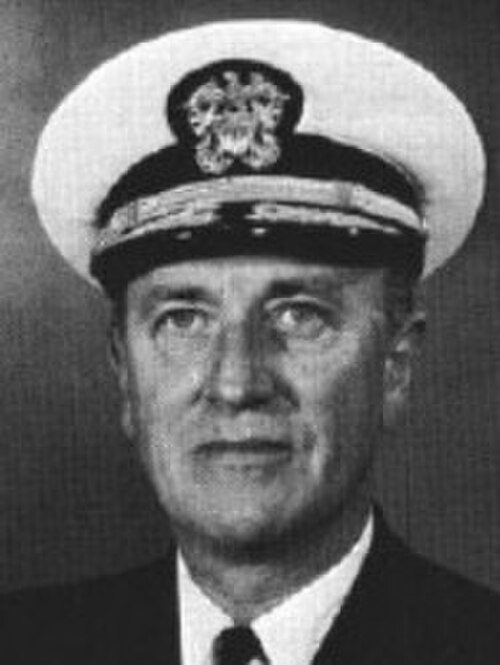
Benedict Joseph Semmes Jr. was born in Memphis, Tennessee, on 8 April 1913 and was educated in that city. Appointed to the United States Naval Academy from Tennessee, he entered in June 1930, graduated on 31 May 1934, and was commissioned an ensign the same day. His first sea duty was in the battleship Mississippi, where he served for about three years. He afterward served with the Battle Force and in the destroyers Claxton and Badger. He was promoted to lieutenant (junior grade) on 31 May 1937 and to lieutenant on 1 July 1941.
At the opening of the Second World War he was serving in the carrier Wasp, which operated in the Atlantic and then in the Pacific. On 15 September 1942, near the Solomon Islands, a Japanese submarine torpedoed Wasp and the carrier sank. Semmes was aboard and came through the loss. He was next assigned to the destroyer Sigsbee and, in her, took part in the assault on Tarawa in November 1943. He received a temporary promotion to lieutenant commander on 1 March 1943.
On 12 August 1944, during a short upkeep at San Francisco after USS Picking (DD-685) left the Aleutians, Semmes relieved Raymond Starr Lamb and became captain of the Fletcher-class destroyer. Lamb had commanded her since commissioning in September 1943. Semmes brought Picking to Pearl Harbor at the end of August and reported to the Third Fleet. In early October she escorted attack transports to Manus.
Assigned then to the Seventh Fleet, Picking screened the southern landings on Leyte on 20 October 1944. While escorting unloaded transports toward Hollandia she brought down a Japanese plane on 24 October. The next day, after word arrived of the action off Samar, she and the destroyer Hale made for the scene and together shot down another aircraft. When the Battle of Leyte Gulf was over, Picking escorted Mount Olympus and Auriga to Manus, returned to Leyte on 20 November, and guarded convoys carrying reinforcements.
She stayed with the Philippines campaign into 1945. Under Semmes she screened amphibious forces and fired in support of troops ashore for the Lingayen Gulf landings on Luzon in January, and she took part in the retaking of Corregidor in February. In the spring the destroyer moved to Okinawa for screening and shore bombardment during the assault on the island.
On 18 May 1945, off Okinawa, the destroyer Longshaw ran aground on a reef within about a mile of the enemy coast and came under Japanese artillery. Semmes took Picking in through obstructed water and tried to pull the stranded ship free. The tow could not be completed. Shore batteries then fired on both destroyers. He answered with Picking's guns, maneuvered to avoid the bursts, remained alongside Longshaw, and helped take her crew off. For his conduct that day as commanding officer he received the Navy Cross.
Semmes remained captain of Picking until 15 August 1945, when Charles Thomas Mauro Aug relieved him. He thought of himself as a destroyer sailor and kept to that line of work. He commanded a destroyer division during the Korean War, served as chief of staff to the commander of Atlantic Fleet destroyers, and commanded the destroyer tender Shenandoah during the Lebanon crisis of 1958. He was promoted to captain in 1953, finished the National War College in 1958, and became a rear admiral that July. From 1962 to 1963 he commanded the Middle East Force. In 1963 and 1964 he commanded the cruiser and destroyer force of the Atlantic Fleet, and he also commanded the Second Fleet and NATO's Atlantic Striking Fleet.
On 1 April 1964 he was promoted to vice admiral and became Chief of Naval Personnel and Deputy Chief of Naval Operations for manpower and the Naval Reserve, serving until March 1968. The Navy Distinguished Service Medal and the Legion of Merit marked that tour. His last active duty was as president of the Naval War College in 1971 and 1972. He retired in 1972. Semmes died in Virginia Beach, Virginia, on 4 June 1994, at the age of 81, of respiratory failure after surgery. He had come for the decommissioning of the destroyer Ainsworth, named for his father-in-law. His home was in Wonalancet, New Hampshire, and he had also lived in Washington for long periods after 1952.