Ships
- USS Louisville (CA-28) Captain from 4 October 1932 · Relieved on 9 April 1934
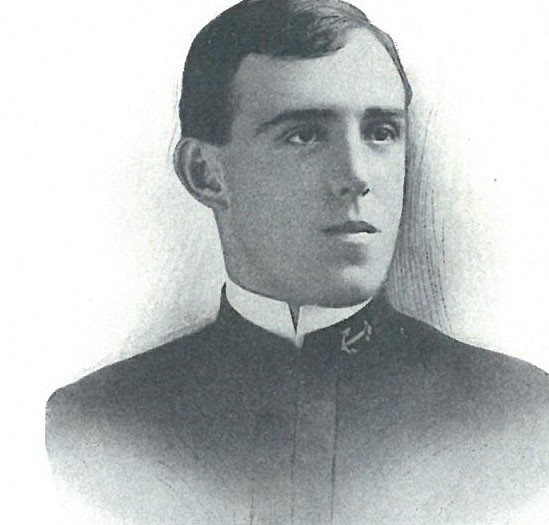
Bruce Livingston Canaga was born in Annapolis, Maryland, on 4 March 1882, the son of Commander Alfred B. Canaga of the United States Navy. He attended public schools in Leesville and Scio, Ohio, and later in Baltimore and Washington, D.C. In 1901 the Sixteenth District of Ohio appointed him to the Naval Academy. He graduated in January 1905 as a passed midshipman, completed the two years of sea duty then required before a commission, and became an ensign in January 1907. He rose to lieutenant (junior grade) and then to lieutenant, holding the latter rank on 31 January 1910. During the First World War he received temporary promotion to lieutenant commander and to commander. His permanent rank of commander dated from 3 June 1921, and he was promoted to captain on 2 September 1927.
After graduation he served in turn in the battleship Ohio, the cruiser Baltimore, and the battleship Vermont. In November 1908, while the battle fleet was on its cruise around the world, he left Vermont at Manila to become aide to Rear Admiral Potter, commander of the Fourth Division, with Wisconsin as flagship. Detached in September 1909, he served in Virginia on the staff of Rear Admiral S. P. Conly and then helped bring together the crew of the new battleship Michigan. He joined Michigan when she was commissioned on 4 January 1910 and left her in April 1911. For the next three years he was stationed at the Naval Proving Ground at Indian Head, Maryland. From February 1914 until June 1915 he commanded the gunboat Alert.
In the First World War the Secretary of the Navy awarded him a special letter of commendation, which entitled him to a Silver Star device on the ribbon of his Victory Medal. That medal also carried the mine clasp. He received the Army of Occupation of Germany Medal as well.
In November 1927 Canaga took command of the repair ship Medusa and remained in her until June 1929. That July he became professor of naval science and tactics at the University of California, Berkeley. On 4 October 1932 he assumed command of the heavy cruiser Louisville (CA-28). He was relieved on 9 April 1934.
In July 1934 he became director of the Central Division in the Office of the Chief of Naval Operations, serving until October 1936. In December 1936 he took command of Destroyer Squadron 4 of the Battle Force. After the squadron was renumbered Destroyer Squadron 12, he flew his flag in the destroyer Borie. He left that command in February 1938.
From 21 April 1938 until 31 January 1940 he was in Peru as advisory chief of staff to the Minister of Marine. For that service Peru awarded him the Order of the Sun in the grade of commander. Mexico awarded him the Order of Naval Merit. On 30 June 1940 he was placed on the retired list and remained on active duty.
From July 1940 until November 1942 he was district intelligence officer of the Eleventh Naval District at San Diego. By October 1943 he was director of the training division in the Bureau of Naval Personnel, and that month President Levering Tyson of Muhlenberg College in Allentown handed him a diploma at a Navy training gathering. In March 1944 he returned to California as commanding officer of the Navy V-12 units in the San Francisco Bay area and again as professor of naval science and tactics at Berkeley. He was relieved of that duty in June 1945 and released from all active duty in January 1946. His later decorations included the American Defense Service Medal with base clasp, the American Campaign Medal, and the World War II Victory Medal. He died on 22 February 1966.