Ships
- USS Neville (AP-16) In command, 7 August 1942
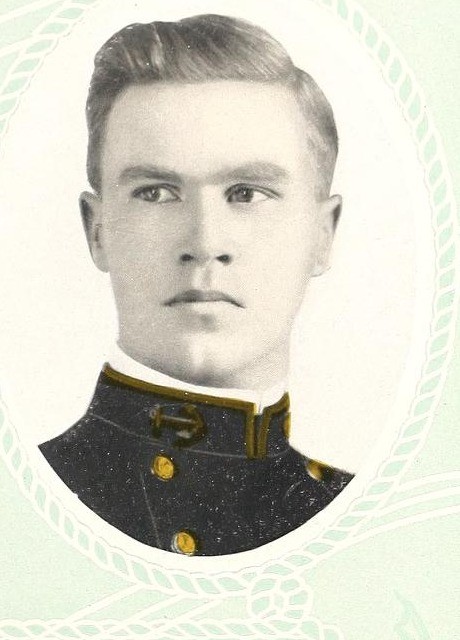
Carlos A. Bailey was born in Somerville, Massachusetts, on 3 May 1887. After a year at Tufts College in Medford he was appointed to the Naval Academy from Massachusetts in 1907 and graduated in June 1911. Sea duty followed, as the law then required, and he was commissioned an ensign on 7 March 1912. He rose to lieutenant (junior grade) in 1915 and to lieutenant in 1918, held a temporary appointment as lieutenant commander during the First World War, and was commissioned in that rank on 31 December 1921. He became a commander on 4 June 1931, a captain on 1 August 1939, and a commodore on 2 November 1945.
His first sea duty was in the battleship Nebraska, where he served until December 1914. That cruise later brought him the Mexican Service Medal. He moved to the cruiser Des Moines as a watch officer and then as engineer officer, and stayed until October 1918. In January 1919 he reported as first lieutenant of the battleship Utah. That September he went to the Naval Academy to teach marine engineering and naval construction.
From July 1921 until December 1923 he had successive command of the destroyers McKee, Hopkins, and Sturtevant. Three years in the Fleet Maintenance Division of the Bureau of Engineering came next. He returned to sea in January 1927 as first lieutenant, and later engineer officer, of the battleship Mississippi, leaving in September 1929 with two letters of commendation from the Secretary of the Navy for the engineering performance of the ship. Another stretch in the same bureau division followed. From January 1932 until June 1934 he was executive officer of the repair ship Medusa. He then sat on the Naval Examining Board in Washington for two years and, from June 1936 to May 1937, completed the senior course at the Naval War College in Newport.
In June 1937 Bailey became executive officer of the cruiser Houston and served in her until July 1939. During that tour the ship carried the President on several cruises, and Bailey received a letter of commendation from the President for the way she was run. He next sat on the Pacific Coast Section of the Board of Inspection and Survey at Long Beach until 19 December 1940. Before the month ended he was at the Willamette Iron and Steel Company in Portland, Oregon, for the conversion of the passenger ship City of Norfolk. He assumed command when she was commissioned as the transport Neville (AP-16) on 14 May 1941.
Neville reported to the Atlantic Fleet on 18 June 1941 and, through the last months before the United States entered the war, carried soldiers and sailors along the East Coast and in the Caribbean. On 7 December 1941 she was at San Juan, on the way from Trinidad to New York. Within the month she was rehearsing landings with Army troops off the Virginia coast. Released from that work in mid-February, she loaded Army and Navy passengers and equipment and sailed from the East Coast on 19 February 1942 for Belfast. She was back in New York on 25 March, landed Royal Air Force, Royal Canadian Air Force, and British merchant seamen, and continued to Norfolk for repairs. There she took on 20-millimeter guns and newer landing craft. She left Hampton Roads on 10 April with Task Force 38, passed through the Panama Canal on the 18th, and joined Transport Division 8 of Service Squadron 4. On 4 May she anchored in Fanui Bay at Bora Bora, put ashore Army troops and Seabees, and went on to Wellington, New Zealand, where she remained until 22 July.
With men of the 1st Marine Division embarked, Neville headed for the Fiji Islands to meet the other ships assigned to Operation Watchtower, the landings on Tulagi and Guadalcanal. Bailey was in command on 7 August 1942. At half past six that morning Neville reached her transport area off Beach Blue on Tulagi. Her boats went into the water almost at once with Marine Raiders, and Marine Combat Team 2 followed them toward the beach. She had her assigned waves ashore by a little after ten, while Japanese resistance on Tulagi, Gavutu, and Tanambogo hardened and bombers and fighters appeared overhead. She remained in the area through 9 August. From a distance her people saw the wreckage left by the night action off Savo Island. Bailey was detached from Neville later in August.
He reported as commander of Transport Division 14, with the transport Barnett as flagship, and over the next months directed task groups in the work of holding Guadalcanal. He took command of Barnett on 20 December 1942 and kept her until 12 March 1943. That March he became commanding officer of the Receiving Ship at San Francisco. On 14 June 1944 he reported as chief of staff and aide to the commandant of the Ninth Naval District at Great Lakes, Illinois. In November 1945, with the rank of commodore, he added the duties of deputy commandant of the district and deputy commander of the Midwest Naval Area. The Legion of Merit recognized that shore service, from June 1944 to October 1945, for the reorganization of a fast-growing district and for a plan that pushed authority down to the people who had to use it. He transferred to the retired list on 1 November 1946 in the rank of commodore. With the Legion of Merit he held the Mexican Service Medal, the World War I Victory Medal with escort clasp, the American Defense Service Medal with fleet clasp for his time in Neville, and the European-African-Middle Eastern, Asiatic-Pacific, and American campaign medals, together with the World War II Victory Medal.