Ships
- USS Aylwin (DD-355) Captain, 1 March 1935 – 28 June 1936
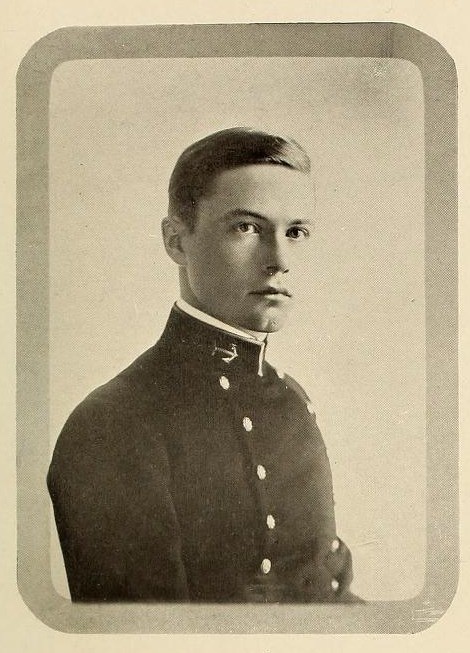
Clarence Gulbranson was born in Chicago on 28 June 1890. He entered the United States Naval Academy in 1908 and graduated with the Class of 1912. Destroyer duty filled much of his early service. In the early 1920s he commanded the flush-deck destroyer Toucey. His home in later years was Cleveland Heights, Ohio.
On 1 March 1935, then a commander, he placed Aylwin in commission at the Philadelphia Navy Yard and became her first commanding officer. Aylwin (DD-355) was a Farragut-class destroyer, the third Navy ship to carry the name of Lieutenant John Cushing Aylwin, who died aboard Constitution in 1813. The yard laid her keel on 23 September 1933 and launched her on 10 July 1934. Elizabeth M. Farley, the eleven-year-old daughter of Postmaster General James A. Farley, sponsored the launch. At the commissioning Gulbranson read the orders giving him the ship, with Captain George B. Landenberger, captain of the yard, beside him.
Fitting out continued after the ceremony. Late in March 1935 Aylwin ran builders' trials. She then shifted to the Naval Torpedo Station at Newport, Rhode Island, and took aboard eight torpedo warheads. Further trials followed, and she was back at Philadelphia on 8 May to prepare for shakedown. On 22 May she sailed for European waters. The cruise put her into Leixões, the port of Oporto, on 1 June, into Santander, Spain, on 5 June, and into Cherbourg, France, on 10 June. On 15 June Jesse I. Straus, the United States ambassador to France, came aboard and inspected the new destroyer.
Gulbranson remained in command through the ship's first year in service. On 28 June 1936 Dennis Leo Ryan relieved him. In those sixteen months Aylwin was a 1,375-ton ship, 341 feet long, designed for 37 knots, armed with five 5-inch guns and eight 21-inch torpedo tubes, and manned by a complement of 251. His tour was the work of a first captain: trials, a foreign cruise, and the training of a new crew.
After Aylwin he served for three years, beginning in 1937, at the Naval Ammunition Depot at Fort Mifflin, Philadelphia. He was promoted to captain on 29 December 1939. During the Second World War he took part in the North African landings. From January 1943 to January 1945 he commanded the Amphibious Training Base at Fort Pierce, Florida, where naval landing forces trained for assault operations. The Navy awarded him the Legion of Merit for that command. He retired as a captain and died in Washington on 1 November 1947.