Ships
- USS Astoria (CA-34) Captain from 28 April 1934
Edmund Spence Root was born in Delaware, Ohio, on 27 December 1881. He graduated from the United States Naval Academy in 1905 and went to sea as a junior officer. Destroyer command came early. On 30 December 1909 he took charge of Barry, and on 4 April 1910 he moved to Bainbridge, which he commanded until 23 December 1911. Through 1910 and 1911 he also led the First Division of the Asiatic Torpedo Fleet, the small striking force the Navy kept on the China and Philippine station.
In the First World War he served in the Bureau of Navigation and then with the American destroyers based at Queenstown, Ireland, where the force patrolled for German submarines off the British Isles. On 3 July 1918 he became commanding officer of Rowan. The Navy marked his conduct of that anti-submarine work with a letter of commendation. After the armistice he was chosen to place a new ship in service. On 28 May 1919 he took Rizal to sea as her first commanding officer. By the start of 1922 he was commanding officer of Panther.
Shore duty of a different kind followed in the western Pacific. Root was naval governor of Guam from 15 May 1931 until 21 June 1933, the thirty-fourth officer to hold the post, and he was commandant of the naval station. He succeeded Willis W. Bradley, and George A. Alexander succeeded him. The Guam Museum opened while he was in office. He also ordered 112 Japanese laborers to leave the island, an expulsion that drew sharp public criticism and became the disputed act of his governorship.
His best-known sea command came the following spring. The heavy cruiser Astoria (CA-34), a ship of the New Orleans class, had been laid down at the Puget Sound Navy Yard in Bremerton, Washington, on 1 September 1930. While she was still under construction the Navy reclassified her from a light cruiser to a heavy cruiser, on 1 July 1931, because she carried eight-inch guns. She was launched on 16 December 1933. Miss Leila C. McKay, a descendant of a partner in the Astor expedition that founded the Oregon port, sponsored her.
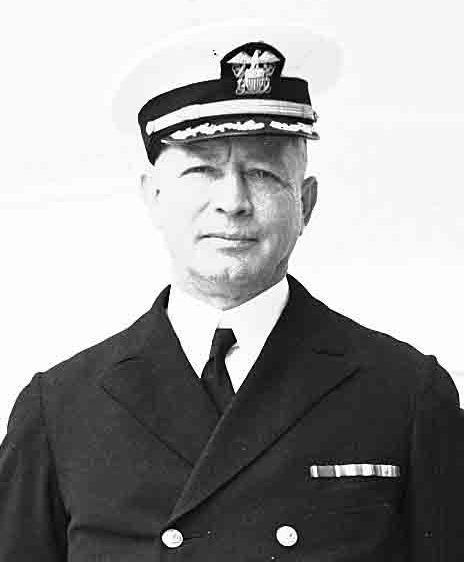
Root commissioned Astoria on 28 April 1934 and was her first captain. Through the summer he took her on a long shakedown across the Pacific, with calls in the Hawaiian Islands, Samoa, Fiji, Sydney, and Nouméa in New Caledonia. A photograph made in August shows him on her deck during that voyage. The cruiser returned to San Francisco on 25 September 1934. For the rest of 1934 and into 1935 she worked with Cruiser Division 7 of the Scouting Force, based at San Pedro, California, and Root remained in command through that opening stretch of her peacetime service. He left the ship in 1935.
The cruiser he had placed in commission went on to a short and hard war. Astoria fought in the Battle of the Coral Sea and at Midway, and she was lost in the early hours of 9 August 1942 after the night action off Savo Island. Root was long off her bridge by then. His own later service was on shore. In the 1940s he directed naval officer procurement in Chicago, and from that office he oversaw the first local enrollment of WAVES, the women who entered the Naval Reserve after Congress created the program in July 1942.
Root’s career had run from Asiatic destroyers and a submarine hunt in the Atlantic, through the governorship of Guam, to the commissioning of a treaty cruiser on the eve of the Pacific war. He died in San Diego County, California, on 27 February 1961, at the age of seventy-nine. His wife was La Mira N. Root.