Ships
- USS Long Island (CVE-1) Captain from 18 July 1944 · Relieved on 5 December 1944
- USS Nehenta Bay (CVE-74) Captain from 27 December 1944 · Relieved on 25 September 1945
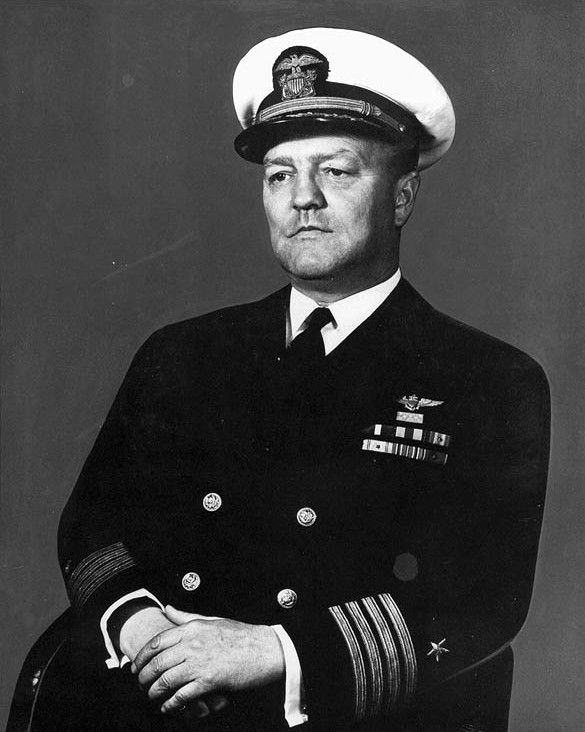
Edward Orrick McDonnell was born on 13 November 1891 in Baltimore, Maryland, and graduated from the Naval Academy in 1912. Two years later, as an ensign at Veracruz on 21–22 April 1914, he set up a signal station on the roof of the Terminal Hotel and kept it working day and night under continuous fire, with one man killed and three wounded beside him. He received the Medal of Honor.
He trained with the Wright Company in Dayton and at Pensacola and became a naval aviator in March 1915. In 1917 he test-launched an aerial torpedo that bounced and nearly struck his own seaplane. He flew in France and Italy in World War I, winning the Navy Cross for hazardous flights over the Alps in structurally imperfect aircraft. On 10 March 1919 he flew a Sopwith Camel off a gun turret of the battleship Texas, the first man to fly an airplane off a battleship.
In 1920 he went into the reserve and onto Wall Street, eventually becoming a partner at Hornblower & Weeks. In 1940 he flew as a naval observer on Pan American's first flight to the southwest Pacific. Recalled in October 1940, he served as air attaché in London and at Peiping, then commanded NAS New York. During the war he commanded the escort carriers Long Island and Nehenta Bay.
After the war he returned to business as a director of Pan Am and Hertz, living at Mill Neck, Long Island, with a vacation home at Hobe Sound, Florida. On 6 January 1960 he was killed in the bombing of National Airlines Flight 2511 over Bolivia, North Carolina, while flying from New York to Miami. He is buried at Arlington, and the frigate USS Edward McDonnell was named for him.