Ships
- USS Randolph (CV-15) Captain from 9 October 1944 · Relieved on 26 July 1945
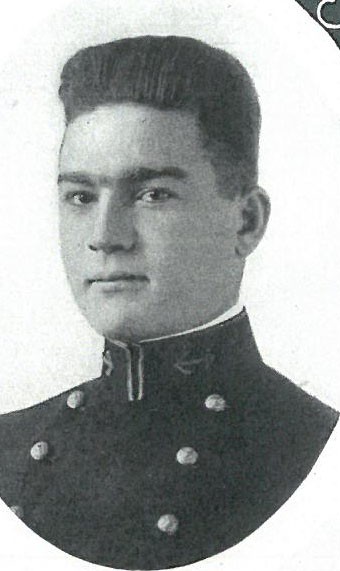
Felix Locke Baker was born in Homestead, Oklahoma, on 7 January 1898, the son of Ed Baker and Lula Belle Locke Baker. He attended school in Watonga and, in 1916, entered the United States Naval Academy from Oklahoma's Sixth District. During the First World War he served as a midshipman in Utah, Rhode Island, and New Hampshire. The Academy shortened its course for the war, and he graduated and was commissioned ensign on 6 June 1919 with the Class of 1920.
He advanced through the grades between the wars and became a commander in July 1939. On 3 July 1941 he took command of the seaplane tender Barnegat (AVP-10), and he left her on 5 July 1942, soon after his promotion to captain on 18 June 1942. In June 1944 he was ordered to the Newport News Shipbuilding and Dry Dock Company in Virginia to fit out a new fleet carrier.
Baker took command of Randolph (CV-15) at her commissioning on 9 October 1944. The long-hull Essex-class ship had been laid down at Newport News on 10 May 1943 and launched on 28 June 1944, with Rose Gillette, wife of Senator Guy M. Gillette of Iowa, as sponsor. After a shakedown off Trinidad, Randolph passed through the Panama Canal and reached San Francisco on 31 December 1944. Air Group 87 left the ship there, Carrier Air Group 12 came aboard, and on 20 January 1945 she sailed for Ulithi. On 10 February she sortied with Task Force 58.
In mid-February her aircraft struck airfields and factories in the Tokyo area, then attacked Chichi Jima and Haha Jima in the Bonins and flew close support for the Marines on Iwo Jima. A little more than four months after commissioning, the new carrier was already in combat.
On the evening of 11 March 1945, while Randolph rode at anchor in Ulithi lagoon, a Japanese twin-engine bomber hit her starboard side aft, just below the flight deck. Twenty-five men were killed and 106 wounded. The ship was repaired in the anchorage and went back to sea. On 7 April she joined the force off Okinawa. From 15 May until 29 May she flew the flag of Task Force 58, then retired by way of Guam toward the Philippines. For his command from 17 April to 28 May 1945, Baker received the Bronze Star, awarded for welding the carrier and her air group into an effective team during the Okinawa fighting.
In June 1945, at Guam, he was the first to try Operation Pinwheel. Aircraft were lashed down on the flight deck and their engines were run up so the propeller wash could pivot the carrier in the harbor. He kept command through the early summer. On 26 July 1945, Jackson Rogers Tate relieved him.
Baker next served in Washington as chief of the flight section in the Office of the Deputy Chief of Naval Operations (Air). In June 1948 he became the Bureau of Aeronautics representative at the McDonnell Aircraft Corporation in St. Louis, and he was in that post when he retired on 30 June 1949 as a rear admiral. His decorations included the Bronze Star, campaign medals from both world wars, and the Philippine Liberation Ribbon. Felix Locke Baker died on 4 June 1986.