Ships
- USS Breton (CVE-23) Captain from 2 December 1943 · Relieved on 7 October 1944
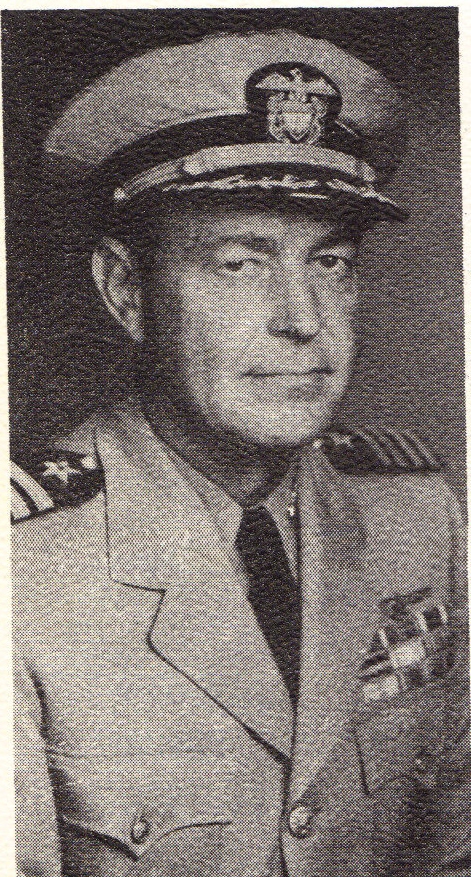
Frederick Mackay Trapnell was born on 9 July 1902 in Elizabeth, New Jersey, to Benjamin Trapnell of Charles Town, West Virginia, and Ada Probasco of Ohio. He came from a family with a long military tradition. His father had attended the Naval Academy, though a notorious hazing incident cut his career short. Trapnell followed him there and was commissioned in 1923. After sea duty in California and Marblehead he reported to Pensacola in 1926 for flight training.
He had what colleagues called "a natural flying ability" and "a firm grasp of aerodynamics." In 1930 he flew with the Three Flying Fish, the Navy's first official aerial demonstration team. From 1932 to 1934 he flew the hook-on fighters of the airships Akron and Macon and re-engineered their in-flight hookup gear. In 1938 he flew in the 18-bomber mass flight from San Diego to Honolulu.
As chief of the Test Flight Section at Anacostia from 1942 he became the Navy's foremost test pilot. Roy Grumman rushed the F6F Hellcat into production on Trapnell's opinion after a test flight of less than three hours. His recommendations shaped the redesign of the F4U Corsair. On 21 April 1943, at Muroc, he became the first naval aviator to fly a jet, the Bell XP-59A. He then went to sea, commanding two squadrons and the escort carrier Breton, and in October 1944 became chief of staff to Rear Admiral Arthur Radford in Carrier Division Six.
After the war he co-founded the Navy's first formal Test Pilot School at Patuxent River, approved in January 1948. His personal collection of 550 technical books became its first library. He commanded the Naval Air Test Center from 1949, won the Octave Chanute Award, and in October 1949 testified for naval aviation in the "Revolt of the Admirals." Time observed that he had "probably flown more types of planes than any other U.S. pilot." From April 1950 he commanded the carrier Coral Sea. He retired a vice admiral and died in San Diego on 30 January 1975. In 2015 he was inducted into the International Air & Space Hall of Fame.