Ships
- USS Cowpens (CVL-25) Captain from 24 November 1944 · Relieved on 10 September 1945
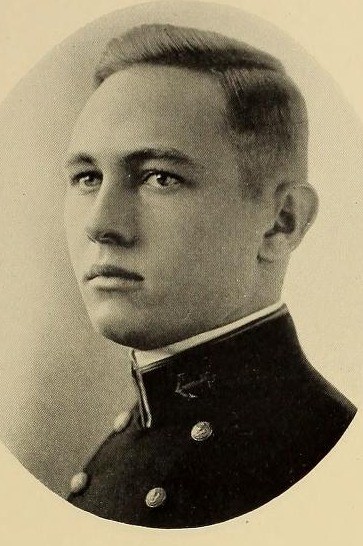
George Harbord DeBaun was born on 10 May 1897 and was a member of the United States Naval Academy class of 1921A. Manhattan, Kansas, was his home of record. He advanced through the Navy's sea ranks on a steady wartime timetable: lieutenant commander on 30 June 1936, commander on 1 October 1940, and temporary captain on 20 June 1942.
His seagoing command in the first year of the Pacific war was the seaplane tender USS Tangier. He took her on 25 April 1942 and left her on 1 September 1942. A tender of that kind kept patrol aircraft operating far from fixed bases, and the four months gave him a ship's deck of his own before the carrier appointment that defined the rest of his war.
On 24 November 1944 he became captain of the light aircraft carrier Cowpens (CVL-25). The change of command was held beside the island. Captain Herbert W. Taylor turned the ship over to him, with Commander Hugh R. Nieman present. Cowpens was an Independence-class carrier, called the Mighty Moo by her crew, and she already carried a long record of fast-carrier raids. DeBaun had her for the closing campaign against Japan.
He stayed in command through 10 September 1945. In that time Cowpens worked with the fast carrier task groups through the Luzon and South China Sea strikes, the landings on Iwo Jima and Okinawa, and the summer raids on the Japanese home islands. In mid-December 1944 she was among the ships caught in the typhoon that struck Admiral William F. Halsey's Third Fleet, and aircraft were lost and damaged in the storm. For his service as commanding officer of a warship in a carrier task group in the Western Pacific from 1 July 1945 to 15 August 1945, the weeks of the last strikes and the end of hostilities, he received the Legion of Merit.
Cowpens entered Japanese waters after the surrender was announced and was in Tokyo Bay on 2 September 1945, when the instrument of surrender was signed aboard the battleship Missouri. Men of the carrier watched the ceremony from their own ship. DeBaun was relieved on 10 September 1945, eight days after the signing, closing a command that had run from the western Pacific fighting of late 1944 to the first days of the occupation.