Ships
- USS Allen (DD-66) Captain from 15 October 1917 · Relieved on 19 April 1918
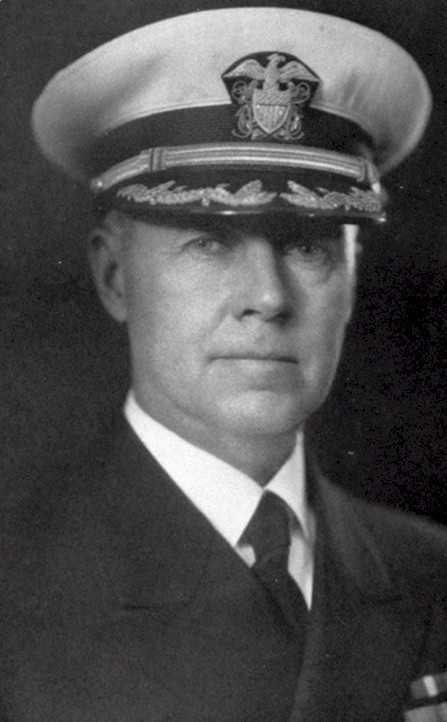
Henry David Cooke, Jr., was born in Washington, D.C., on 21 September 1879. His grandfather, Henry D. Cooke, had been a banker and the first governor of the District of Columbia. Cooke attended public schools in Washington and in New York, entered the United States Naval Academy from New York in 1899, and graduated in 1903.
His first sea service took him to the Asiatic Station, in the battleship Wisconsin and the gunboat Pampanga. During the Philippine-American War he went ashore with Army troops against Moro fighters at Jolo and was wounded there. He later sailed with the United States Fleet on its cruise around the world.
In the First World War he commanded the armed yacht Kanawha, working from Brest, and afterward the destroyer Jenkins. In October 1917 the Navy advanced him to the temporary rank of commander and sent him to the destroyers based at Queenstown, Ireland.
He became captain of Allen (DD-66) on 15 October 1917, relieving Samuel Woods Bryant. Allen was a Sampson-class destroyer, commissioned earlier that year, and already employed on the patrols and escorts that covered the last stretch of the Atlantic route. Cooke’s duty was to bring troopships and cargo ships through the submarine zone into British and French ports.
The Navy Cross awarded for that command rests on two days in March 1918. On 11 March, and again on 16 March, Allen and a convoy of Allied transports came into contact with German submarines. Cooke kept the escort in hand and saw the ships through to safety. The citation honored his conduct as commanding officer in the war zone and his care of the convoys in his charge. Later comparison with German records left the submarine contacts reported by the Queenstown destroyers unconfirmed.
He was still in Allen the following month. On 8 April 1918 he reported to Vice Admiral William S. Sims on an escort that had left Liverpool with the liners Teutonic and Adriatic and the transport St. Paul. Allen was senior ship of a screen that also included Paulding, Beale, and McCall. During the night St. Paul drew ahead of the formation and carried one destroyer with her, and Cooke wrote that the split had left the convoy more open to attack. Louis Calott Farley relieved him on 19 April 1918. Cooke then served as acting commander of Naval Air Station Lough Foyle and was back in the United States late in 1918.
Peacetime duty moved him between the fleet and the shore establishment. He was executive officer of the battleship Wyoming and commanding officer of the oiler Brazos, and he later commanded the destroyer tender Melville and the destroyer Billingsley. At the Naval Academy he was director of athletics and, in 1931 and 1932, commandant of midshipmen. He commanded the battleship Oklahoma from 1932 to 1934, served as chief of staff at the Naval War College, and was captain of the Boston Navy Yard. In 1939 he retired as a rear admiral.
The Navy recalled him in 1941. He served first as cable censor in New York and then, from 1942 to 1945, as commodore of Atlantic convoys, the same escort work he had practiced in Allen, now on a much larger scale. He received the Bronze Star for that service and left active duty in November 1945, after a career that had begun in 1903. Cooke died on 7 July 1958 at East Hills, New York.