Ships
- USS Crescent City (AP-40) In command, 7 August 1942
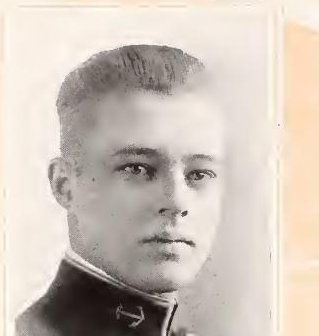
Ingolf Norman Kiland was born in Sioux Falls, South Dakota, on 26 March 1895, the son of Norwegian immigrants, and grew up in Manitowoc, Wisconsin, on the shore of Lake Michigan. A boyhood meeting with Theodore Roosevelt at a campaign stop in the Corn Palace stayed with him, and in later years he liked to offer the hand that had shaken Roosevelt's. After a year at the University of Wisconsin he entered the Naval Academy and graduated in March 1917, as the United States moved toward war.
His first duty at sea was as navigator of Sterett, an early oil-burning destroyer. In 1920 he took the destroyer Elliot up the Yangtze. From 19 November 1921 to 27 February 1922 he commanded the destroyer Young. Between the wars he studied ordnance engineering at the Naval Postgraduate School in Annapolis and earned a master's degree at Columbia University. He became a commander on 3 June 1937, and for a few weeks in July and August 1940 he commanded the light cruiser Savannah.
Captain Kiland took command of the transport Crescent City on 13 December 1941, when she was still designated AP-40. He carried her from Norfolk with troops and equipment, through the Panama Canal into the Pacific, and on to Pearl Harbor with Navy and Marine passengers. The ship also brought civilian evacuees back to San Diego, returned with workers and material for the repair of the damaged base, and helped set up an advanced base at Efate in the New Hebrides.
On 7 August 1942 he was in command of Crescent City for the first landings on Guadalcanal. Troops went ashore while Japanese aircraft struck the transport area. The ship stayed on through the following days to land the supplies the beach required, then moved cargo on to Espiritu Santo to feed a new forward base. For the rest of his tour she ran among Brisbane, Wellington, Nouméa, Espiritu Santo, and Guadalcanal with men and equipment for the campaign. He gave up command of the ship on 3 November 1942.
On 17 February 1943, still a captain, he commanded Task Unit 2.7.2 in the Solomon Islands when Japanese torpedo planes attacked. He worked the formation through the attack without damage to the ships, and the raid was beaten off. He received the Navy Cross for that day.
As a rear admiral he commanded an amphibious task group of the Seventh Fleet from 24 November 1944 to 17 January 1945, the span of the Lingayen Gulf landings on Luzon, and received the Legion of Merit. From 15 February to 22 May 1945 he commanded Amphibious Group Seven for the assault and capture of Kerama Retto, taken to support the larger fight for Okinawa. He directed the landings across those islands, laid out the fleet anchorage, and put in a logistics and repair base, a seaplane base, and stations for treating and evacuating the wounded. Ships refueled and rearmed there, and damaged ships were repaired and sent back out, while enemy aircraft kept up their attacks. The Navy Distinguished Service Medal followed. From September to November 1945, still at the head of Amphibious Group Seven and of a task group of the Seventh Amphibious Force off Korea, he received a second Legion of Merit.
Late in January 1951 he returned to the western Pacific in command of Amphibious Group One and Task Force 90. He was promoted to vice admiral on 12 February 1951. His last tour was as commandant of the Fifth Naval District at Norfolk, and he retired in 1957. He and his wife Isabel settled in Coronado, California. Their son followed him into the Navy and retired as a captain. Kiland died on 10 March 1992 and was buried at Arlington National Cemetery.