Ships
- IJN Haguro Captain from 20 October 1942
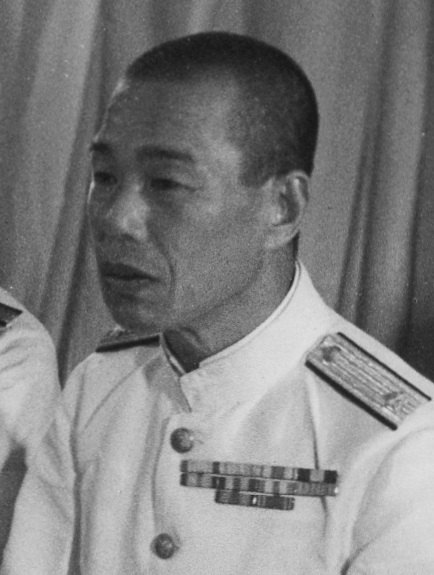
Jisaku Uozumi was a captain in the Imperial Japanese Navy. On 20 October 1942 he took command of the heavy cruiser Haguro, a Myōkō-class ship armed with ten 20-centimeter guns in five twin turrets and a large battery of oxygen-driven torpedoes. She had been built to fight in the main fleet, at long range, beside the other heavy cruisers.
Haguro had already been through the first year of the Pacific War when he came aboard. In February 1942 she had fought in the Java Sea during the campaign for the Netherlands East Indies, and in June she had gone to sea with the force assigned to the Midway operation. Tomokazu Mori and Kaju Sugiura served in her in that earlier period. Uozumi's command opened as the Navy turned its effort toward the Solomon Islands.
Through late 1942 and 1943, Haguro operated from Truk and later from Rabaul, the harbors that supported the Japanese hold on the central and northern Solomons. Under Uozumi she stayed with the heavy cruisers kept forward for a night action against the next Allied landing. Daylight movement grew more dangerous as American aircraft reached those anchorages, and a cruiser's useful work narrowed to short sorties after dark.
The sharpest test of that duty came on the night of 1–2 November 1943, off Bougainville. American troops had landed at Empress Augusta Bay, and Haguro left Rabaul with the heavy cruiser Myōkō, the light cruiser Sendai, and destroyers to attack the transports. In the dark the force met an American cruiser and destroyer group under Rear Admiral Merrill, whose guns were controlled by radar. The Japanese formation was broken up. Sendai was sunk, the destroyer Hatsukaze was lost after a collision in the melee, and Haguro was hit by shellfire. The transports were not reached, and the ships turned back for Rabaul.
Within days, carrier planes struck Rabaul, and Japan pulled its heavy cruisers out of that harbor toward Truk and home waters for repair. Uozumi had commanded Haguro from 20 October 1942 through the year in which she went from a fleet cruiser staged in the central Pacific to a ship sent in at night against a landing force that could fight in the dark and control the air by day. His responsibility was a cruiser of more than ten thousand tons and a crew of several hundred, employed at the edge of an advance the surface fleet could no longer turn back.