Ships
- USS Dashiell (DD-659) Captain, 20 March 1943 – 9 January 1944
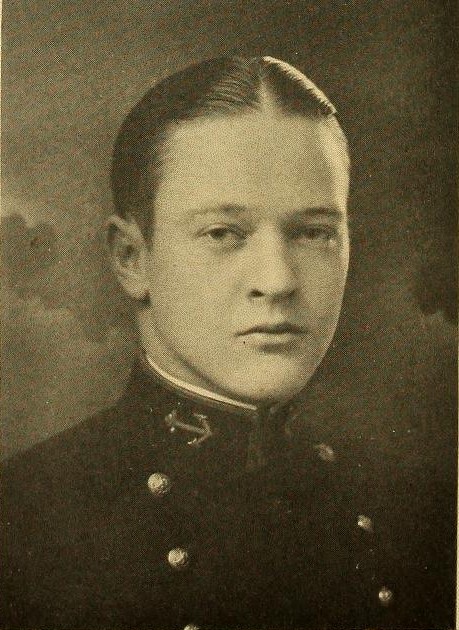
John Boyd McLean was born in California on 4 May 1902 and graduated from the United States Naval Academy in 1926. He was a lieutenant commander by 1 July 1940. On 15 August 1942 he was given the temporary rank of commander. He died on 29 August 1977, at the age of seventy-five.
His first wartime command was the destroyer Wilkes (DD-441). He took her as a lieutenant commander on 28 February 1942 and left her in January 1943. In that year Wilkes served in the Atlantic, on convoy duty and in the North African landings of November 1942.
On 20 March 1943 he became captain of Dashiell (DD-659), a new Fletcher-class destroyer, on the day she was commissioned at the Federal Shipbuilding and Dry Dock Company in Kearny, New Jersey. The hull had gone into the water on 6 February 1943. She carried the name of Robert Brooke Dashiell, a naval constructor who had worked on ordnance mechanisms and docks and who had died in 1899; his widow sponsored the ship. McLean spent the spring working the crew through fitting out and shakedown, and in April Dashiell was at the Brooklyn Navy Yard for alterations after those trials.
He brought her to the Pacific that summer. On 20 July 1943 she lay alongside the carrier Yorktown on the passage from Balboa toward Hawaii, and she entered Pearl Harbor on 24 July. From there she sailed with the fast carrier forces. The strikes covered Marcus Island from 31 August to 1 September, Tarawa from 18 to 20 September, and Wake Island on 5 and 6 October. On 1 August 1943, while he still had Dashiell, the Navy advanced him to the temporary rank of captain.
The Gilberts landing was the sharpest fight of his time in the ship. Dashiell reached Efate, in the New Hebrides, on 5 November 1943 and prepared for the assault. On 20 November she was among the first ships into the lagoon at Tarawa. Enemy shore batteries fired on her as she entered. For three days she fired back at those batteries, at strongpoints, and at an ammunition dump, in support of the troops ashore. She then left for an overhaul on the west coast. On 9 January 1944 McLean was relieved by Eugene Alexander Barham. Later in the war the same destroyer was commanded by Douglas Lee Lipscomb Cordiner and by John Edward Wicks.