Ships
- USS Massachusetts (BB-59) Captain from 2 May 1945 · Relieved on 22 January 1946
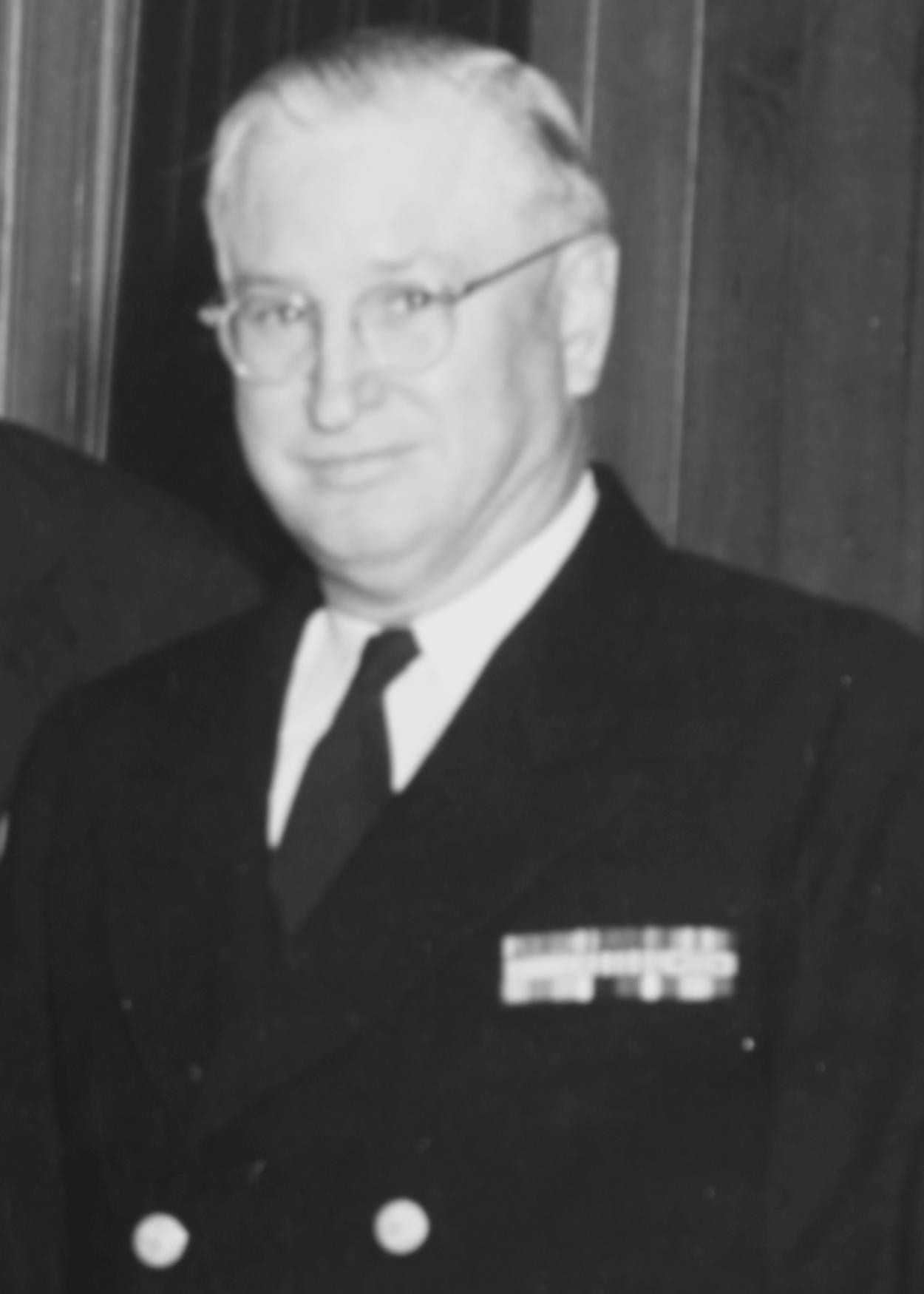
John Roland Redman was born in Reno, Nevada, on 31 January 1898. He graduated from the United States Naval Academy in June 1918 with the class of 1919, sent to sea early because of the First World War. Known as Jack, he wrestled for the United States at the 1920 Antwerp Olympics in the freestyle light-heavyweight class and finished fourth. His brother Joseph also made a career in the Navy and, like Jack, specialized in communications.
Redman stayed in the service through the years between the wars and became a commander on 1 July 1939. Once the United States entered the Second World War, his work shifted into signals intelligence. In February 1942, as the Navy concentrated that effort in Washington, he was put in charge of OP-20-G, the communications section responsible for cryptanalysis. He was advanced to temporary captain on 17 June 1942. A Legion of Merit later recognized his duty with the Communications Division under the Chief of Naval Operations from 12 February to 30 October 1942.
In October 1942 he joined the Pearl Harbor staff of Admiral Chester W. Nimitz as communications officer for the Pacific Fleet, and he remained there until March 1945. Those years have drawn hard criticism. Redman rejected Captain Joseph Rochefort's reading of Japanese naval messages, a reading that proved accurate and helped the fleet win at Midway, and he had a part in Rochefort's removal from the Hawaii codebreaking center afterward. His organization also withheld intercepts from the U.S. Army and from British, Indian, and New Zealand teams who were attacking other Japanese systems. Broader sharing of that material followed in September 1943, after his brother, Rear Admiral Joseph Redman, intervened. A second Legion of Merit covered Redman's Pacific Fleet staff service from 31 October 1943 to 25 January 1945.
On 2 May 1945 Captain Redman left the staff and took command of the battleship Massachusetts. The South Dakota-class ship, nicknamed Big Mamie, had been in commission since 1942. She had already fought off North Africa and through the Central Pacific campaign as far as Okinawa. He took over a veteran ship for the last months of the war.
Through June 1945 Massachusetts was still operating around Okinawa. On 5 June she passed through a typhoon with winds judged near one hundred knots, and on 10 June she bombarded Minami Daito Jima in the Ryukyus. On 1 July she sailed from Leyte Gulf with the Third Fleet for the final offensive against Japan. Screening carriers that struck the Tokyo area, she turned her 16-inch guns on the coast: the iron and steel works at Kamaishi on 14 July, the industrial plant at Hamamatsu afterward, and Kamaishi again on 9 August. That August shoot is counted as the last 16-inch bombardment by an American battleship in the war. A Legion of Merit recognized his command of Massachusetts from 2 May to 31 August 1945. With an earlier Navy Commendation Medal, three awards of the Legion of Merit marked his wartime service.
Japan surrendered while the ship was still under his command. Massachusetts sailed for Puget Sound on 1 September 1945 and began an overhaul. Redman was relieved on 22 January 1946, shortly before the battleship left the yard for duty off the California coast.
He returned to communications at the Navy's senior level. From August 1949 to September 1951 he was Director of Naval Communications in the Office of the Chief of Naval Operations, and he next served as Director of Communications-Electronics for the Joint Chiefs of Staff. His last tour was Commandant of the Twelfth Naval District, from 1954 to 1957. He retired on 1 October 1957 as a vice admiral. Redman died in San Francisco on 29 May 1970, at the age of seventy-two, and was buried at Arlington National Cemetery.