Ships
- USS Wisconsin (BB-64) Captain from 6 March 1945 · Relieved on 12 August 1945
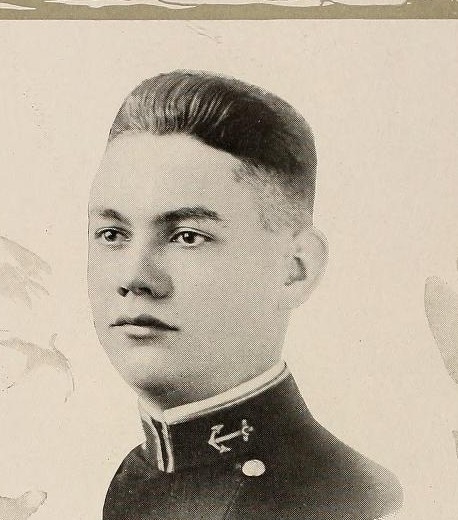
John Wesley Roper was born in North Carolina on 31 May 1898. His father was Daniel C. Roper, Secretary of Commerce in the administration of Franklin D. Roosevelt, and his brother Harry M. Roper later became a major general. Roper entered the United States Naval Academy and went to sea in the First World War aboard the destroyer Roe. On the North Atlantic, Roe ran coastal patrols, escorted shipping, and searched for submarines. That small-ship duty was his introduction to wartime service at sea.
Before he commanded a battleship, Roper was operations officer on the staff of the South Pacific Area. The staff had to match ships, aircraft, and troops to a campaign spread across many islands. The operations included the landings on Guadalcanal, the first large American ground offensive in the Pacific, and the fight that followed through the Solomon Islands. His part of the work was the planning that put those forces into action. A letter of commendation recognized his service in the South Pacific.
Roper became captain of Wisconsin on 6 March 1945, following Earl E. Stone. Wisconsin (BB-64) was an Iowa-class battleship, commissioned in April 1944 at the Philadelphia Navy Yard. She was built to stay with the aircraft carriers: nine 16-inch guns, a heavy antiaircraft battery, and a speed of more than thirty knots. By the time he took command she was already in the western Pacific with the fast carrier force, and the invasion of Okinawa was only weeks away.
Through the spring of 1945, Wisconsin worked off Okinawa with the fast carriers, much of that time in Admiral Raymond A. Spruance’s Fifth Fleet. Her main battery fired on Japanese positions ashore while American troops fought for the island. When Japanese aircraft, including kamikazes, attacked the ships offshore, her antiaircraft guns joined the defense of the formation. The battleship remained at sea for long periods. Men who served in her remembered a stretch of sixty-eight days in which Roper stayed in the control tower. Early in June she passed through a typhoon, came through without damage, and remained with the force.
In July the fleet turned north against Japan, and Wisconsin went with Admiral William F. Halsey’s Third Fleet. She screened the carriers on their strikes and used her heavy guns on coastal industry. On 15 July she bombarded the iron and steel works at Muroran, on Hokkaido. She afterward fired on industrial targets near Hitachi, on Honshu, and in early August she took part in the bombardment of the Hachinohe area. Roper was relieved on 12 August 1945, three days before Japan accepted the Allied surrender terms. The Legion of Merit recognized his command of Wisconsin in combat from 6 March to 11 August 1945.
He remained in the Navy after the war. He commanded cruisers and served as Deputy Chief of Naval Operations for Personnel, responsible for the assignment of sailors and for personnel policy as the service came down from its wartime strength. He attained the rank of vice admiral. In September 1963, at the age of sixty-five, he died of a heart attack at the Naval Hospital in San Diego.