Ships
- USS Strong (DD-467) Captain from 7 August 1942
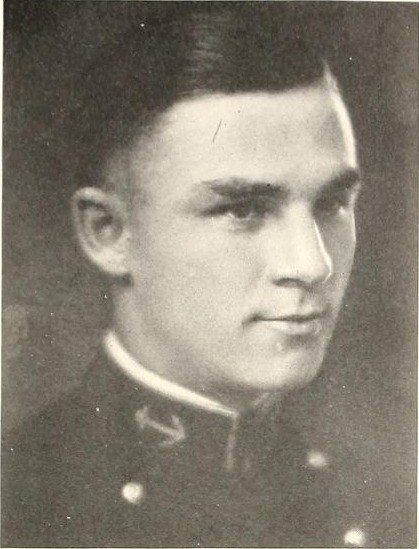
Joseph Harold Wellings was born in Boston, Massachusetts, on 23 April 1903, the son of John A. Wellings and Bridget G. Wellings. He graduated from the United States Naval Academy in the class of 1925. His early sea duty was in battleships and then in destroyers. He later served on the Naval Reserve Officers Training Corps staff at Harvard, on the staff of the Battle Force in the Pacific, and in the Office of the Chief of Naval Operations.
In 1940 he went to London as an assistant naval attaché. During the Royal Navy’s hunt for the German battleship Bismarck in May 1941, he served as operations officer in the battleship Rodney and was aboard her when she joined the action that destroyed the German ship. He came back to duty in Washington afterward.
In June 1942 Wellings reported to the Bath Iron Works at Bath, Maine, to fit out a new Fletcher-class destroyer. He took command of Strong at her commissioning on 7 August 1942, with the rank of commander. After shakedown, the ship worked in convoy service through the Caribbean, the eastern Atlantic, and the waters off North Africa. She reached Noumea on 30 January 1943 and began operations against Japanese forces.
In the Solomons he used Strong for escort, minelaying, and night bombardment. On the night of 7 April 1943, near San Cristobal, the ship found a large Japanese submarine on the surface in the dark, closed to within a thousand yards, and sank it with gunfire and depth charges. Wellings received the Navy Cross for that attack. In May he took Strong through badly charted water on minelaying and bombardment missions against positions on Kolombangara and New Georgia, service later recognized with the Bronze Star. On escort duty under air attack, the ship’s guns brought down four Japanese aircraft.
On the night of 4–5 July 1943 Strong was in Kula Gulf with a cruiser and destroyer force covering the landing at Rice Anchorage on New Georgia. Wellings handled the ship in narrow waters, screened the cruisers, and bombarded shore batteries on Kolombangara and New Georgia until a torpedo struck her. He directed the abandonment and remained aboard as she went down. Her depth charges exploded as the hull sank and the blast threw him, badly injured, into the sea. He was picked up several hours later. Forty-six of his men were lost. He received the Silver Star for his conduct that night and was promoted to captain on 20 July 1943 while recovering, first at a mobile hospital in Noumea and then at naval hospitals in Bethesda and Chelsea.
He returned to the Pacific in 1944. In March he took command of Destroyer Division 120, and from November 1944 until March 1945 he commanded Destroyer Squadron 2. At Lingayen Gulf, from 9 to 16 January 1945, he commanded the screen of the attack group off Blue Beach during the landings on Luzon and received a Gold Star in lieu of a second Bronze Star. A further Bronze Star covered his Pacific service in Strong, in the division, and in the squadron.
After the war Wellings was a student and then a staff member at the Naval War College. He later commanded the naval base at Newport and twice held command of the First Naval District, in the mid-1950s and again in 1962 and 1963. Made a rear admiral in 1953, he retired on 1 August 1963, settled in Newport, and died on 28 March 1988.