Ships
- IJN Hosho Captain from 15 November 1939 · Relieved on 20 August 1940
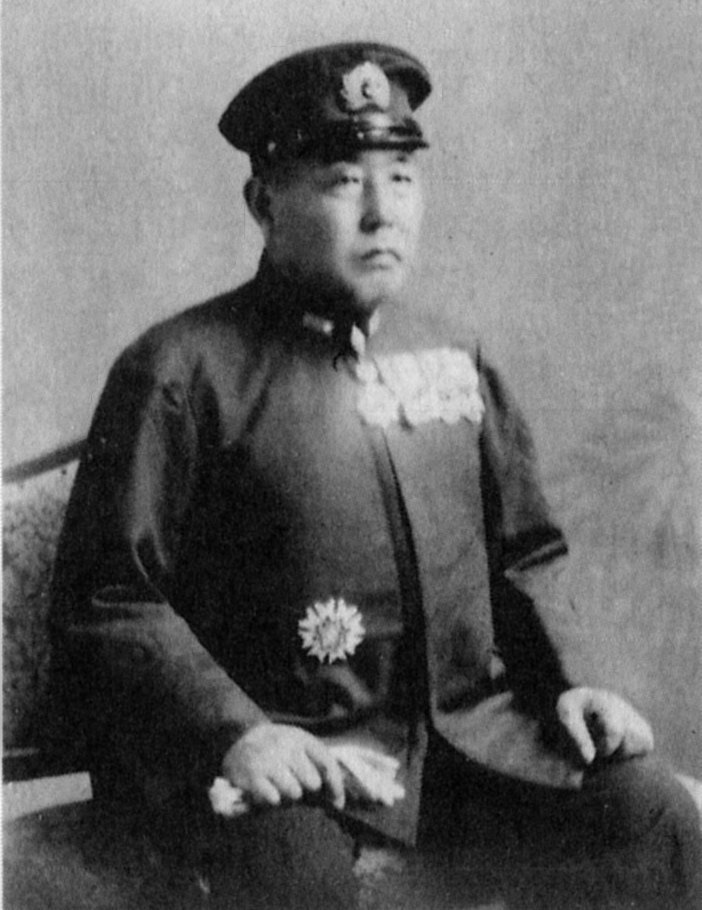
Kaku Harada was born on 12 October 1890 and graduated from the Naval Academy on 19 December 1913, forty-seventh in a class of 118. He made his name in submarines, reached captain in 1937, and finished the war as a flag officer in the Philippines. Disease contracted at the front killed him on 25 September 1945, the day he was promoted to vice admiral.
As a midshipman he went first to the cruiser Asama. In August 1914 he transferred to the battlecruiser Hiei, and on 1 December 1914 he was commissioned an ensign. He joined the cruiser Chikuma in October 1915. Promoted lieutenant junior grade on 1 December 1916, he completed the basic courses at the torpedo school and the gunnery school, then in December 1917 joined Submarine Division 2. A year later he moved to Submarine Division 1, served briefly in the repair ship Kanto, and in the summer of 1919 joined the Yokosuka Defense Unit.
Promotion to lieutenant on 1 December 1919 sent him to the advanced torpedo course. He then served in Submarine No. 23 and Submarine No. 41, and on 1 December 1922 received his first command, Submarine No. 16. After a tour with the Kure Defense Unit he commanded Submarine No. 19, Ro-11, and Ro-26. On 1 December 1926 he became a lieutenant commander and took Ro-18, later commanding the submarines then designated I-24 and I-3. Promoted commander on 1 December 1932, he led Submarine Division 6, then Submarine Division 9 from October 1934 and Submarine Division 29 from November 1935.
He was promoted captain on 1 December 1937 and given Submarine Division 8. On 15 December 1938 he became captain of the submarine tender Taigei. On 15 November 1939 he took command of the carrier Hosho, together with the target ship Settsu. Hosho was the navy’s first carrier laid down as such, brought into service in 1922 by Jiro Toshima, and by Harada’s time she was a small training carrier working in home waters with older aircraft. He remained her captain until he was relieved on 20 August 1940.
That same day he became captain of the seaplane carrier Chiyoda. The ship was fitted to carry the navy’s Type A midget submarines, and Harada became closely identified with building that arm. He was still a captain at the head of the midget-submarine force when the Pacific War began. In June 1942 he commanded the seaplane-carrier force at the Battle of Midway.
Promotion to rear admiral followed on 1 November 1942. On 12 January 1943 he took command of Submarine Squadron 7 and employed it in the Solomon Islands, where the squadron’s operations produced meager results. On 27 December 1943 he moved to the Yokosuka Local Defense Squadron. From 5 August 1944 he commanded the 33rd Special Base Force in the central Philippines. Preparation of the defense of Cebu stood in his name, while the army officer commanding the garrison directed the work on the ground. He died of disease on 25 September 1945.