Ships
- USS Hale (DD-642) Captain from 15 June 1943
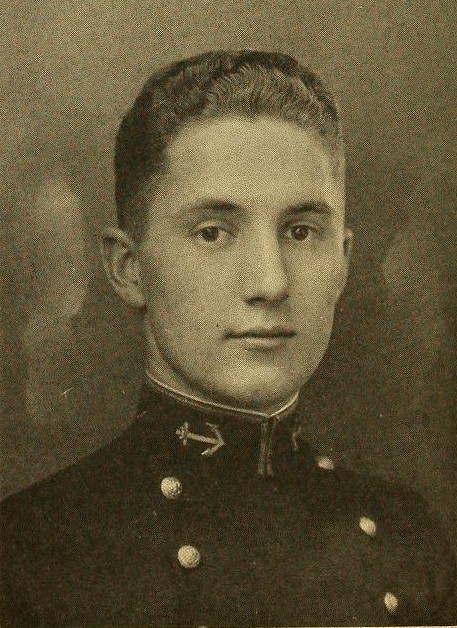
Karl F. Poehlmann was born in Erie, Pennsylvania, on 5 December 1904. He graduated from the United States Naval Academy with the class of 1926 and followed the usual path of a line officer through the interwar fleet. In the early 1930s, while still a lieutenant (junior grade) and still identified with Erie, he was ordered to a general line course with other young officers sent ashore for further professional training. He was promoted to lieutenant commander on 1 July 1940.
He commanded the destroyer USS Broome (DD-210) from 9 December 1941 to 23 May 1942, so the first months of the Atlantic war fell to him on an older flush-deck ship. On 19 April 1942 Broome picked up 27 survivors of the American freighter Alcoa Guide. A German submarine, U-123, had torpedoed the merchantman two days earlier about 300 miles east of Cape Hatteras, and the men were still awaiting rescue when the destroyer reached the scene.
His next ship was USS Eberle (DD-430), which he commanded from 30 May 1942 until 31 March 1943. On 15 August 1942, during that tour, he was advanced to the temporary rank of commander. Those two Atlantic commands were the immediate preparation for a new destroyer then building in Maine.
Bath Iron Works launched USS Hale (DD-642) on 4 April 1943. Mrs. G. H. Chase, a granddaughter of Eugene Hale, the Maine senator for whom the ship was named, sponsored the hull. Commander Poehlmann became her captain when she was commissioned at Boston on 15 June 1943. Hale shook down in the Caribbean, trained along the East Coast, and sailed from Halifax on 21 September. She passed the Panama Canal and reached Pearl Harbor on 9 October 1943. On 1 August, while the ship was still working up under his command, he received the temporary rank of captain.
Hale left Pearl Harbor on 8 November 1943 for the invasion of the Gilbert Islands, the first amphibious step across Micronesia. She screened carriers in the strikes on Tarawa from 18 to 20 November, took part in the bombardment of Betio on 19 November, and covered the Marine landings the next day. The Gilberts operation continued through 26 November. On 4 December the fast carriers struck the Marshall Islands, and Hale was back at Pearl Harbor on 8 December. For his conduct in command through the Gilberts landings and that Marshalls strike, he was awarded the Silver Star.
The pause at Pearl Harbor was given over to training for the next assault. Hale sailed on 21 December for the Ellice Islands, then got underway on 21 January 1944 for the invasion of the Marshalls. From 29 January to 22 February she shelled Maloelap and Wotje, firing before the landings and keeping up the bombardment after the troops were ashore. Poehlmann left Hale on 2 March 1944. From the Boston commissioning in June 1943 to that relief, he had taken a new destroyer from the builder’s trials into two of the early Central Pacific campaigns.
He next commanded Destroyer Division 12. In the First Battle of the Philippine Sea, on 19 and 20 June 1944, the division screened a task group of fast battleships inside Task Force 58. Japanese torpedo planes came in against the formation in strength. Captain Poehlmann shifted his destroyers to meet the attack, and the screen broke the raid up before the planes could reach the heavy ships. He received a Gold Star in lieu of a second Silver Star for that action.
After the war he commanded the Bremerton Group of the Pacific Reserve Fleet, the command responsible for ships laid up in Puget Sound. He retired from the Navy as a rear admiral. Karl F. Poehlmann died on 31 December 1985.