Ships
- USS Waller (DD-466) Captain from 1 October 1942
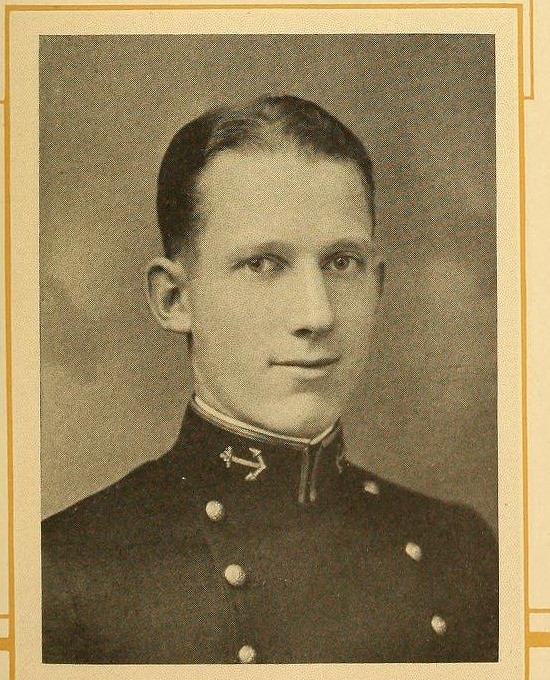
Lawrence H. Frost was born in Fayetteville, Arkansas, on 22 July 1902. He attended the University of Arkansas before entering the United States Naval Academy and graduated in 1926. His early sea duty as a line officer included the battleship Mississippi and the destroyer Elliot.
In 1933 he turned toward communications, the specialty that ran through the rest of his career, and began postgraduate study at Annapolis. He was radio officer on the staff of Destroyer Squadron One and then communications officer in Dallas. In 1936 he was serving in the cruiser Indianapolis when President Franklin D. Roosevelt traveled in her on a goodwill cruise to South America. He later served as aide to the commander of Cruiser Division Four and in the Communications Division under the Chief of Naval Operations.
In August 1941, with the United States still neutral, he took command of the destroyer Greer. On 4 September 1941 a German submarine attacked Greer in the North Atlantic, the first attack on an American warship in that war. Frost stayed in Greer into June 1942. During that Atlantic tour the destroyer picked up survivors of the merchant ships Equipoise and Robin Hood after German submarines had sunk them.
On 1 October 1942, as a lieutenant commander, Frost commissioned the new Fletcher-class destroyer Waller (DD-466) at Kearny, New Jersey, and became her first commanding officer. Late in the year Waller left the East Coast, crossed through the Panama Canal, and steamed on to Pearl Harbor for the Pacific war.
In the Solomons he took Waller into a night bombardment of Japanese airfields and shore installations in the Vila-Stanhope area of Kolombangara on 5 March 1943. From 15 to 18 August 1943 he commanded her for the first occupation of Vella Lavella and for the reinforcement convoys that followed. Japanese dive bombers and torpedo planes struck those convoys again and again. Frost held the escort together, and the ships carrying troops, supplies, and equipment reached the garrison without damage. He received the Silver Star for the Kolombangara bombardment and the Silver Star again for the Vella Lavella operation. He left Waller late in September 1943.
In October 1943 he went back to communications as an officer on the staff of the Central Pacific Force. Through 26 February 1945 he served the air commander of that force and the forward-area command, with duties that followed the fighting through the Ellice, Gilbert, Marshall, Mariana, and western Caroline Islands. That staff work brought him the Legion of Merit. His decorations also included a second Legion of Merit and the Navy Distinguished Service Medal.
He returned to sea in 1951 in command of the light cruiser Manchester during the Korean War and led a task element in several operations off Korea. In 1952 he was chief of staff to the commander of the First Fleet. From 1953 to 1955 he was chief of staff at the National Security Agency. He commanded Destroyer Flotilla Four in the Atlantic Fleet in 1955 and 1956, then served as Director of Naval Intelligence from June 1956 until September 1960. On 24 November 1960 he became Director of the National Security Agency and remained in that post until 30 June 1962. His last duty was with the Potomac River Naval Command. A vice admiral, he retired in 1964. He died in Portsmouth, Virginia, on 23 May 1977.