Ships
- USS Stephen Potter (DD-538) Captain, 21 May 1944 – 28 December 1944
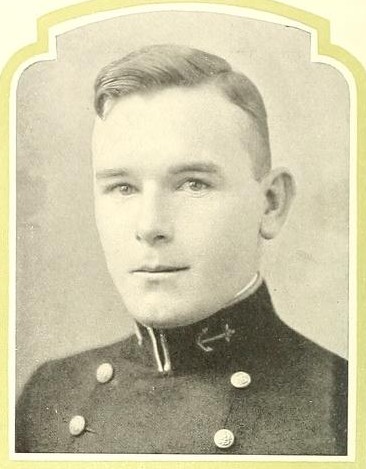
Commander Leonidas Walthall Pancoast was born in Texas on 22 May 1904, with San Antonio as his home. He graduated from the United States Naval Academy in 1927 and followed the ordinary path of a line officer through the peacetime fleet. On 30 June 1936 he was promoted to lieutenant. In the last summer before the United States entered the war he had a brief command at sea, taking the destroyer Jarvis from 15 June to 15 July 1941. On 1 January 1942 he was promoted to lieutenant commander, as the Navy filled out its wartime lists.
On 21 May 1944 he became commanding officer of Stephen Potter (DD-538). The Fletcher-class destroyer had been laid down at Bethlehem Steel in San Francisco in October 1942 and commissioned on 21 October 1943, with Charles Helmick Crichton as her first commanding officer. By the spring of 1944 she was already working with the fast carrier task force in the Central Pacific. She was a ship of about 2,050 tons, fast enough to keep station on the carriers, armed with five 5-inch guns, a thick battery of 40-millimeter and 20-millimeter antiaircraft guns, depth charges, and ten torpedo tubes. Under Pancoast her duty remained the close screen: guarding the flattops, picking up fliers, and fighting off aircraft.
That summer Stephen Potter stayed with the carriers through the Marianas campaign. The force covered the landings on Saipan and the fighting on the islands nearby. On 19 and 20 June 1944, in the Battle of the Philippine Sea, Japanese carrier planes came out against the American fleet. Fighter patrols met most of them, and the destroyers of the screen added their antiaircraft fire as the raids closed the formation. Pancoast kept his ship in that ring around the carriers. When the Marianas operation eased, the same task groups turned west and carried the offensive toward the Philippines.
In October the carriers struck Formosa, and Japanese aircraft hit back hard at the ships offshore. The heavy cruiser Canberra was torpedoed on 13 October, and the light cruiser Houston was torpedoed the next day. Both had to be taken in tow. From 13 to 17 October Stephen Potter screened the group that covered their withdrawal from waters still in reach of Japanese airfields. The sea was rough, the formation was slow, and the air attacks continued. Houston was torpedoed a second time while still under tow. Pancoast's destroyer rescued men and shifted others from ship to ship in that weather, and she held her station while the salvage moved east. The two cruisers got clear. For his conduct in those days he received the Silver Star as a commander, under an order of the Third Fleet dated 26 November 1944.
He was still in command when the fleet turned to Leyte. In the last week of October 1944 Stephen Potter screened fast carriers through the air strikes and the scattered fleet actions of the Battle of Leyte Gulf. In December she sortied again as those carriers covered the landings on Mindoro. The Philippine campaign was only beginning when his tour ended. On 28 December 1944 he gave up command of Stephen Potter, a little more than seven months after he had taken her.
On 20 March 1945 he was appointed a temporary captain. He stayed in the Navy after the war and retired as a rear admiral. Pancoast died on 10 August 1986, at the age of eighty-two. The service that defines his wartime record is those months on Stephen Potter, from the Marianas to Mindoro, and above all the mid-October withdrawal off Formosa, when the destroyer helped bring two crippled cruisers out under air attack.