Ships
- USS Helena (CL-50) Captain, 18 September 1939 – 14 July 1941
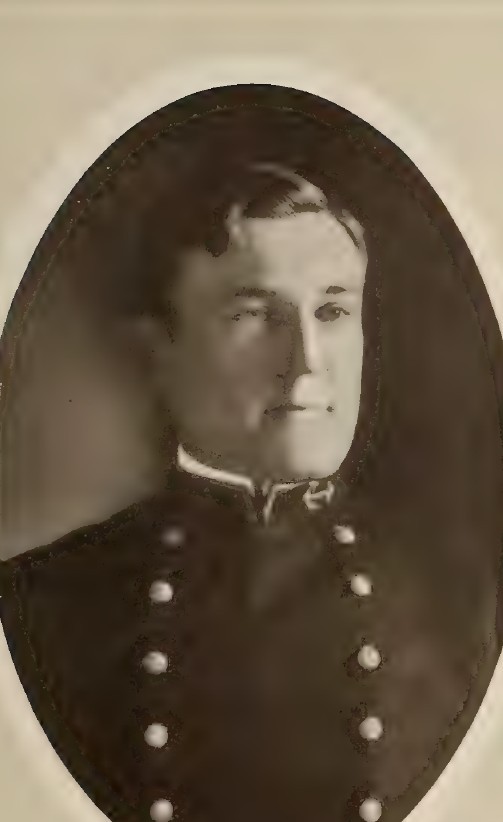
Max Burke DeMott (7 January 1886 – 30 January 1963), whose surname was printed both as DeMott and as De Mott, was a regular officer of the United States Navy from Niles, Michigan. He graduated from the Naval Academy with the class of 1909, after a midshipman career marked by a hazing scandal in which he was the victim, by football and by the Academy's heavyweight boxing championship. He spent the First World War on shore duty at Annapolis and in France, commanded a series of destroyers in the years after it, and was the first commanding officer of the light cruiser USS Helena, which he put into commission at the New York Navy Yard in September 1939 and took on her shakedown cruise to South America and then to the Pacific Fleet at Pearl Harbor. He left her in July 1941, five months before she was torpedoed in the Japanese attack. He was placed on the retired list as a captain on 1 May 1943 and kept on active duty, but what he did during the war after he left Helena has not been found. He died in San Diego at the age of seventy-seven. He is not the Lieutenant Richard Warren DeMott of the Naval Reserve who received the Navy Cross in 1945, and he is not the Army officer J. B. De Mott who appears in the casualty and order lists of 1918.
The Navy registers give DeMott's date of birth as 7 January 1886. A memorial sketch kept by the Helena veterans' association names Niles, Michigan, as his birthplace. That has not been checked against a birth record, but every contemporary source agrees that Niles was his home. Newspapers of 1906 called him a Niles boy, the Lucky Bag of 1909 lists his home as Niles, and the Army and Navy Journal still wrote in 1908 of his "home at Niles, Mich." He was appointed to the Naval Academy from Michigan and entered on 5 July 1905, when he was nineteen.
Almost nothing has been found about the family he came from: not his parents' names, not what his father did for a living, not whether he had brothers or sisters, and not where the middle name Burke came from. The young man first appears in the record at Annapolis, already a big, strong midshipman whom his classmates liked.
DeMott's first year at the Academy put his name in the national papers for reasons that had nothing to do with him. In the winter of 1905–06 the Navy, under pressure from Congress and the press, court-martialed a group of upperclassmen for hazing. DeMott, a fourth-classman or plebe, was one of the plebes called as prosecution witnesses. In January 1906, at the trial of Midshipman John P. Miller, he described being made to take part in a game with three other plebes, Canine, Cooper and Donelson, in which they imitated an automobile. DeMott was "the exhaust." He described being made to do "the sixteenth," an exercise of repeated deep knee bends. At the trial of another upperclassman, Desaussure, he testified that he had been made to stand on his head. He said he had taken it as a joke but thought it would have gone badly for him if he had refused. That plain answer, which neither exaggerated what had been done to him nor pretended he had been free to say no, was as good a description of plebe life as the court was likely to get. The Army and Navy Journal reported that the court complimented him on "the manly and straightforward manner" of his testimony. A plebe who testified against upperclassmen still had to live among them for three more years. Nothing in the record suggests that it hurt his standing with his class, and the class sketch written about him three years later is one of warm regard.
He made his name at the Academy as an athlete. He played end on the football team, and he was one of the players who received gold cuff buttons for the team that beat Army in 1906. The Lucky Bag called him "the star end of 1907." He won the Academy's heavyweight boxing championship. His classmates gave him the nickname "Swott" and as his motto the biblical line "And he smote them hip and thigh." He was made a petty officer of the battalion, a "buzzard" in midshipman slang, and he earned his football letter. His class sketch, written with the usual mix of teasing and affection, said he had a "big, manly face that everyone likes." It also called him a "jolly good fellow in any company, and that without sacrificing his principles." The writer added that he had "showed his grit."
It was grit that the next two years tested. In the summer of 1908 he caught typhoid fever and was treated in the naval hospital at Newport, Rhode Island. He missed the whole 1908 football season, his last, and was on sick leave for the first two months of his first-class year. He graduated in June 1909, forty-sixth in his class, which included Harold Train, Alan Kirk and Zachary Lansdowne. His health was not yet settled even then. In December 1909 the Army and Navy Journal reported that he had been "physically disqualified in the final examinations" and had been on extended sick leave since. He returned to Annapolis that month to go before a medical board before receiving his diploma. The board evidently passed him. By the spring of 1910 he was serving as a midshipman in the battleship South Carolina, part of the two years at sea then required of graduates before they could be commissioned, and in 1911 he was commissioned an ensign.
In November 1911, while serving in the armored cruiser North Carolina, he became engaged to Marguerite Knox, daughter of Colonel Thomas T. Knox, a retired Army officer who was then governor of the National Soldiers' Home in Virginia, near Hampton. They were married in the governor's mansion there in December 1911. Colonel Knox was also the father of Dudley W. Knox, the naval officer and historian. If, as that appears to show, Mrs. DeMott was Dudley Knox's sister, then DeMott had married into one of the Navy's more intellectual families. Years later, in the acknowledgments to his History of the United States Navy (1948), Knox thanked Captains C. B. Stevens, F. W. Fenno "and Max B. DeMott" for their help. Another of Marguerite's brothers, Thomas Knox, was an Army captain at Fort Sheridan in 1914.
The young couple lived the life of the prewar battleship fleet: winter maneuvers at Guantanamo, home port at Norfolk, and the social round of Norfolk and Fort Monroe, where Mrs. DeMott had grown up among Army families. In April 1912 she had an operation for appendicitis. DeMott was promoted to lieutenant (junior grade) from 5 June 1914. That October he was ordered to the destroyer Parker, and the Navy list of 1915 shows him in Parker and also in command of the old torpedo boat Bailey on special service. Bailey was his first command.
When the United States entered the First World War, DeMott was at Annapolis. He had come back to the Academy in 1915, coached the fourth-class football team that fall, and appears in the Academy's registers for 1915, 1916 and 1917. He went with the Navy squad to the Army game in 1916 and acted in an amateur play at the Academy in 1917. How long he stayed at the Academy and when he went overseas have not been established. By the end of the war he was in France: in January 1919 the Army and Navy Journal printed an order sending "M. B. De Mott" from headquarters at Brest to the destroyer Tarbell. Brest was the main American naval base in France, the port through which troops and convoys came. A newspaper account of 1940 says that he wore the Victory Medal with the clasp for service abroad. Nothing found shows that he saw action. By then he and his wife had two children, and in December 1919 a daughter, Marguerite, was christened in the Naval Academy chapel.
The next two years were the busiest destroyer service of his life, in the confused period when the Navy was laying up its wartime flotillas and moving officers from ship to ship. Reckoned from the orders printed in the Army and Navy Journal, which are more reliable here than the dates given in later compilations, he commanded, as a lieutenant commander, the destroyer Osmond Ingram from June 1919. He was ordered to Stribling that September, had Lardner from December 1919 into 1920, and was ordered in June 1920 to command Hatfield, which he kept into the autumn of 1921. With Lardner he took part in the fleet exercises off Guantanamo early in 1920, and in May of that year he took her to Key West when trouble in Mexico made it look as if destroyers might be needed there. He spent his first summers ashore at Jamestown, Rhode Island, across the bay from Newport. The family took a cottage there from about 1919, and Jamestown remained their summer home and later his official address.
Peacetime careers between the wars were made of steady, unremarkable tours, and DeMott's was typical. From 1922 to 1924 he served at the Naval Gun Factory at the Washington Navy Yard. From 1925 to 1927 he was gunnery officer of the battleship Arkansas, and late in 1925 he took the course at the Army's Chemical Warfare School at Edgewood Arsenal. In September 1925 he was a pallbearer for his classmate Zachary Lansdowne, commanding officer of the Navy airship Shenandoah, who was killed when she broke up in a storm over Ohio. The New York Times listed him among the bearers as "Lt. Cmdr. Max B. De Mott of Philadelphia."
He was selected for commander in June 1927, on the same list as his classmate Harold Train, and went to the Naval War College for the 1927–28 course. He was executive officer of the receiving station at Hampton Roads from 1928 to 1930, and from 1930 to 1932 he commanded the destroyer Chandler. Then came three years at the Naval Observatory in Washington, a tour as executive officer of the battleship New York in 1935–36, and command of the stores ship Arctic until March 1937. In 1937 he went to the Fifteenth Naval District at Balboa in the Panama Canal Zone, and he was promoted captain on 30 June 1937. An order printed in the Washington Post in May 1939 suggests that he also served there as chief of staff and aide to the district commandant, although the newspaper's text is too garbled to be sure.
In August 1939 he was detached from the Canal Zone and ordered to fit out and command the new light cruiser Helena, then completing at the New York Navy Yard. It was the most important command of his career, and it came at a dramatic moment. Germany invaded Poland while he was on his way north. On 18 September 1939, with the war in Europe two and a half weeks old, Helena was placed in commission at the Brooklyn yard. The Washington Post printed a photograph of Captain DeMott and his officers and crew lined up on deck for the ceremony. She was a ten-thousand-ton ship with fifteen six-inch guns, one of the newest cruisers in the fleet, and her captain had to make a crew out of men many of whom had never been to sea. When the ship reached Buenos Aires a few months later, her executive officer told the local press that about half of the enlisted men had come straight from the training stations.
While the ship completed at New York that autumn, Mrs. DeMott and their daughters wintered at Annapolis, and the captain came down to see them on weekends. Helena sailed from New York on 21 December 1939 for her shakedown cruise. She called at Annapolis, Norfolk and Guantanamo, and on 13 January 1940 she crossed the equator. Following the old ceremony, DeMott formally turned his ship over to "King Neptune," played by the chief boatswain, Coffey, for the initiation of everyone aboard who had not crossed before. That was most of the crew.
She reached Buenos Aires on 22 January and stayed a week. The English-language Buenos Aires Standard reported that the captain was "indisposed and confined to his bed" when the ship arrived, and that the executive officer, Commander C. G. Richardson, received the press. What his illness was is not recorded. He was well enough before the visit ended for the American ambassador, Norman Armour, to take him to an asado, an Argentine barbecue, given for the crew. From Buenos Aires Helena crossed the River Plate to Montevideo, where she stayed from 29 January to 3 February. On the way in she passed the wreck of the German pocket battleship Admiral Graf Spee, scuttled there seven weeks earlier after the Battle of the River Plate. It was a strong reminder for a new crew that the sea war was real. After a stay at Santos, in Brazil, from 5 to 10 February, she returned north by way of Guantanamo and reached Norfolk at the end of the month. An account of the cruise by one of her men appeared in Our Navy in May 1940. The certificate that marked the end of her shakedown was signed "M. B. De Mott, Captain Commanding."
Later in 1940 Helena went to the Pacific. By late September 1940, according to a Washington society column, Captain DeMott was "with the fleet at Honolulu," while his wife and a daughter had come back to Washington from their summer at Jamestown. One of Helena's Marines, Ray Hechler, recalled many years later that under DeMott the ship set records in gunnery and in launching her aircraft. He also believed his captain was the senior captain in the Navy, but the registers show that DeMott, though senior, was nowhere near the top of the captains' list. The gunnery officer, Lieutenant Commander I. T. Duke, was responsible for much of the ship's gunnery training. The remark preserved in a wartime history of the ship, that her gunnery was "consistent, not sensational," was Duke's, not DeMott's. No words of DeMott's own about the ship have been found.
The year and a half between commissioning and the summer of 1941 is the part of DeMott's career that mattered most. He took a newly built ship with a half-trained crew and turned her into a working unit of the battle fleet. The Navy Directory of April 1941 still shows him in command. On 14 July 1941, at Pearl Harbor, he was relieved by Captain Robert H. English. Less than five months later, on the morning of 7 December, Helena was lying at the Navy Yard's ten-ten dock when a Japanese aerial torpedo struck her amidships. Many of the officers and men who fought her that morning, and kept her afloat, had been trained under DeMott. How many of them is something the surviving record does not show. He himself was gone by then, and he had no part in the battles that later made Helena famous, from Cape Esperance to her sinking in Kula Gulf in July 1943.
Where DeMott went after he left Helena, and what he did in the war, remains unknown. The Navy register of 1 July 1942 lists him as an active-duty captain. The register of 1944 lists him among the retired officers, retired as a captain on 1 May 1943, with the mark showing that he was still on active duty. A Navy press release of 1943 and the 1944 history of Helena describe him as "of Jamestown, Rhode Island, now retired." Officers of his age, which was fifty-seven in 1943, who were retired and kept on duty in wartime usually served ashore in naval districts, training commands, inspection offices and the like. Whether that was true of DeMott has not been established, and no wartime orders, citation or decoration for him have been found.
DeMott's active service presumably ended with the war, after thirty-six years in the Navy counted from the day he entered the Academy. In December 1945 he joined the Retired Officers' Association, and the registers of 1947 and 1950 list him as a retired captain. Of his family in these years the record shows little beyond the society columns of earlier decades. Those columns mention daughters named Marguerite or Margaret (once "Peggy"), Mary Clare and Jane, and also a Jean, who may be the same girl as Jane. How many children he had in all is not certain.
By the 1950s he had moved to San Diego. In June 1956 he attended the reunion of the class of 1909 at the Admiral Kidd officers' club there, one of a small group of captains and retired officers who gathered nearly half a century after graduation. It is the last time he appears in the service press. He died in San Diego on 30 January 1963 and was buried on 5 February in Fort Rosecrans National Cemetery on Point Loma, overlooking the harbor and the open Pacific. When and where his wife died, and whether he left any letters, papers or recollections, have not been found. What survives is a career that ran from the coal-burning battleships and small destroyers of the years before the First World War to the first cruise of one of the most famous American cruisers of the Second World War.