Ships
- HMAS Nizam (G38) Captain from 19 December 1940
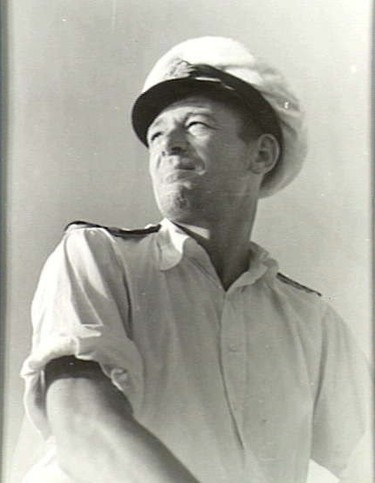
Max J. Clark was born at Franklin, Tasmania, on 30 March 1906. He joined the Royal Australian Navy at Melbourne as a cadet on 1 January 1920, became a midshipman on 15 May 1924, and was commissioned acting sub-lieutenant on 15 September 1926, with the rank confirmed the following July. He was promoted lieutenant on 30 September 1929 and lieutenant commander on 30 September 1937.
On 19 December 1940 he commissioned the N-class destroyer Nizam at the John Brown yard at Clydebank. The ship had been ordered for the Royal Navy and was manned by the Royal Australian Navy. Through January 1941 he ran her acceptance trials on the Clyde, including gunnery, full-power steaming, and torpedo firings, and then worked the ship up at Scapa Flow. In the spring Nizam went south with Napier. The two destroyers escorted a troopship from Gibraltar to Freetown, then continued by St Helena, Simon's Town, Durban, Kilindini, and Aden. Early in May 1941 they entered the Mediterranean and joined the fleet at Alexandria.
Crete was his first severe test. On 21 May 1941 Nizam took part in the bombardment of Scarpanto. She afterwards landed troops and stores at Suda Bay and was the last British ship to leave the harbour, about four hours before German troops occupied the port. On the night of 28–29 May, during the evacuation, she embarked 114 soldiers at Sphakia with the 7th Destroyer Flotilla. Aircraft bombed the ships on the passage back to Alexandria, and near misses left Nizam with minor damage. The next night she returned to Sphakia with Napier after two other ships had been forced to withdraw, one by engine trouble and one by bomb damage. Between them the two Australian destroyers took off more than 1,400 men and landed them at Alexandria on 31 May.
The Distinguished Service Cross was gazetted on 8 January 1942 for his command of Nizam in that battle. The recommendation spoke of the way he handled the ship under bombing, and of the organisation that got so many soldiers away from Sphakia on those two nights. Senior officers of the other forces off Crete had also reported well of him. When he learned of the award he told his ship's company that it belonged to all of them, because they had all won it. The Governor-General presented the decoration at Government House, Melbourne, on 20 November 1943.
He remained with the Mediterranean Fleet after Crete. In July 1941 Nizam went up to Haifa with cruisers during the campaign in Syria. In September she was on a supply run to Tobruk and was damaged while berthing there, so that about two weeks of repair followed the return to Alexandria. He was still in command through 1942, and he was still her captain when a refit at Simon's Town finished on 28 December that year. Promotion to commander came on 31 December 1942. In January 1943 C. H. Brooks relieved him. W. F. Cook also commanded Nizam later in the war.
After leaving the destroyer he served as a training commander at Flinders Naval Depot. On 19 April 1945 he returned to sea in command of the Tribal-class destroyer Warramunga, and he left that ship on 2 December 1946. Shore appointments then filled the rest of his career. He was executive officer of the Balmoral Naval Depot, State Civil Defence Co-ordinating Officer in the Premier's Department of Victoria, Naval Officer-in-Charge of the North-East Australian Area, and Resident Naval Officer at Port Melbourne with command of Lonsdale.
He was appointed an Officer of the Order of the British Empire in the New Year Honours list gazetted on 1 January 1958. He transferred to the Emergency List on 30 March 1957 and gave up command of Lonsdale on 3 April 1958. His naval service ended on 30 March 1966.