Ships
- USS Owen (DD-536) Captain from 20 September 1943
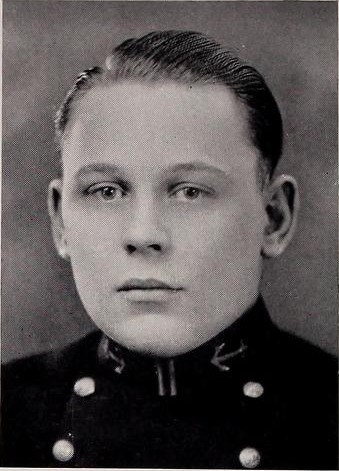
Robert Winthrop Wood was born in Washington, D.C., on 19 July 1905, and he followed a naval career from the United States Naval Academy class of 1928. By the fall of 1943 he was a commander, and the Navy gave him a new destroyer on the day she joined the fleet. On 20 September 1943, at the Bethlehem Steel yard in San Francisco, he took command of Owen (DD-536) as the ship was commissioned. The Fletcher-class hull had been laid down there on 17 September 1942 and launched on 21 March 1943, with Mrs. Hope Owen as sponsor. The name honored Lieutenant Commander Elias K. Owen, a naval officer of the Civil War.
Wood's first work was to make a yard-new ship into a working member of Destroyer Squadron 52. Owen finished shakedown off the California coast and further training in Hawaiian waters in time for the fast carrier offensive of early 1944. In Task Force 58 a destroyer of her kind lived in the screen. She kept station on the carriers, watched for submarines, met aircraft that came through the combat air patrol, and stood by to recover pilots from the sea. She was built for that duty: a ship about 376 feet long, armed with five 5-inch guns and ten torpedo tubes, and fast enough to stay with a carrier group making a high-speed run.
On 16 January 1944 Owen sailed from Pearl Harbor for the Marshall Islands and Operation Flintlock. From 29 January through 3 February she screened the carriers of Task Group 58.2 off Kwajalein while the landings went in, then retired with them to Majuro, the lagoon the fleet was turning into an advanced base. In February that group left Majuro for the carrier strike on Truk. Wood had Owen in Task Group 58.2, operating with the carriers Essex, Intrepid, and Cabot, when the force hit the Japanese base in the middle of the month. Aircraft on the field and ships in the lagoon took the damage. The destroyers' share was to keep the carriers covered while the air groups struck, and then to come back with them. After a short return toward Pearl Harbor, the formation was at Majuro again by the middle of March.
Through the late spring and summer of 1944 Wood kept Owen with the fast carriers as the war moved into the Marianas and beyond. The operations later gathered under his Silver Star ran from 9 June to 1 October 1944 and took in the capture of Saipan, the Battle of the Philippine Sea, the capture of Guam, and carrier raids on Palau, Yap, Ulithi, Mindanao, the Visayas, and Luzon. On 19 June Japanese dive bombers opened the two-day fleet action that broke what remained of Japan's sea-based naval air arm. Across both days of that battle Owen held her place in the screen of the carrier Bunker Hill. Wood's task was the screening captain's work in its hardest form: hold the station, fight aircraft that reached the formation, and keep the flight deck he was guarding able to launch and recover.
The Silver Star, given to him as a captain for service he had performed as a commander, recognized the way he fought Owen across that whole stretch. He kept the ship in combat condition through weeks of hard steaming, and he turned her guns on attacking aircraft and on shore targets when the carriers closed an island. The same months produced a second record the award singled out. Under his direction Owen recovered the crews of twenty-two aircraft forced down in hostile waters. For a destroyer in a carrier screen, that rescue work sat beside the gunnery as a measure of how the ship was handled. He was relieved on 1 October 1944, a year and eleven days after he had commissioned her.
Wood continued in the Navy and reached the rank of captain. He died on 16 August 1991. The command that marks his war is the year in Owen, from her commissioning through the Marshalls, the strike on Truk, the Philippine Sea, and the carrier raids that carried the fleet toward the Philippines. The destroyer stayed in the Pacific after he left her and finished the Second World War with nine battle stars, the early ones earned while he had the ship.