Ships
- USS Pope (DD-225) Officer in charge, 23 January 1941 to 10 February 1941 · Not her captain. On 25 January 1942 he signed her Balikpapan report as executive officer.
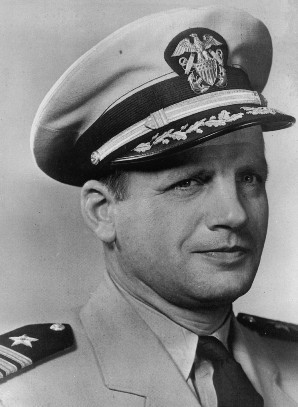
Richard Nott Antrim was born in Peru, Indiana, on 17 December 1907. After a short period in the Naval Reserve he entered the United States Naval Academy in 1927 and graduated on 4 June 1931. Sea duty followed. He qualified as a lighter-than-air naval aviator, cleared for airships and balloons, and in 1938 joined the Asiatic Fleet as executive officer of the minesweeper Bittern. In December 1939 he transferred to the destroyer Pope (DD-225) as executive officer.
From 23 January 1941 to 10 February 1941 he was officer in charge of Pope. The tour was a temporary charge of the ship. He was not her captain. Welford Charles Blinn took command on 10 February 1941. Antrim remained aboard as executive officer, the duty he still held when the Pacific war opened in December 1941.
On the night of 24 January 1942 Pope ran in with other Asiatic Fleet destroyers against a Japanese invasion convoy off Balikpapan. The close attack helped delay the landings. Lieutenant Antrim, still the executive officer, chose the targets for her guns and torpedoes at very short range, and the fire fell among the transports. He was not her captain that night. The ship came through the action. On 25 January he signed Blinn's report of the Balikpapan fight as executive officer.
On the night of 19–20 February 1942, in Badoeng Strait, a Japanese cruiser caught Pope in a searchlight. Antrim handled the main battery and the machine guns. The crews shot the light out and landed hits. On 1 March 1942, in the Java Sea, Japanese aircraft and Japanese warships together sank Pope. The loss is not credited to one plane or one ship. Antrim was wounded. He gathered about 150 survivors in the whaleboat and on rafts, divided the remaining food and water, and kept the group together for three days until a Japanese warship took them up and turned them over to the army at Makassar, on Celebes.
In April 1942 a guard in the Makassar camp beat an American officer with a heavy line until the man was unconscious and close to death, and other soldiers kicked him where he lay. Antrim got the guard to state the charge, then stepped forward and offered to take the rest of the beating himself. Thousands of Allied prisoners had pressed in around the scene. The guards stopped, startled that he would accept the blows. The officer lived. Americans in the camp stood higher in the eyes of their captors afterward, and daily conditions eased. Antrim spoke for the prisoners through the rest of his captivity. On a work party he had the men dig air-raid trenches so that, from above, the pattern read as the letters U.S., and Allied bombers could tell the camp from a military target.
He came out of Japanese hands in 1945. The Navy Cross recognized his work as executive officer of Pope in the actions of 24 January, the night of 19–20 February, and 1 March 1942. The Medal of Honor recognized the intervention at Makassar. President Harry S. Truman presented that medal at the White House on 30 January 1947. Antrim also received the Bronze Star for his conduct as a prisoner. He stayed in the Navy until poor health from the camp years brought retirement in April 1954 as a rear admiral. He died in March 1969 at Mountain Home, Arkansas, and was buried at Arlington National Cemetery. A guided-missile frigate was later named Antrim for him.