Ships
- USS Langley (CV-1) Captain from 16 June 1922 · Relieved on 5 July 1924
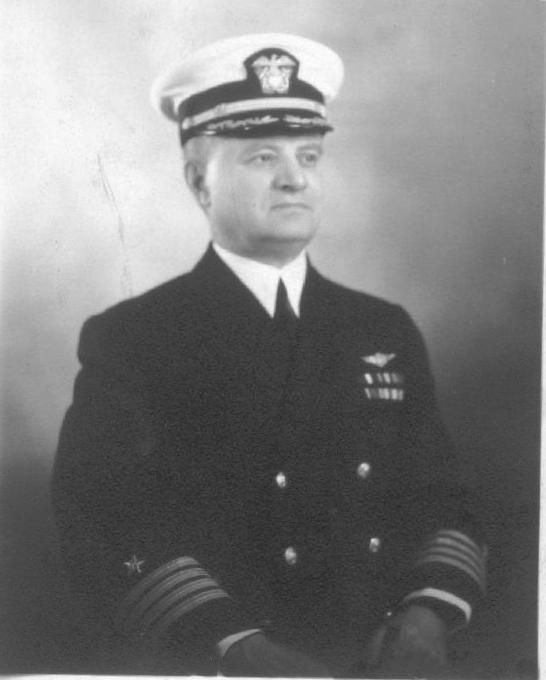
Stafford Henry Rahall Doyle was born in Orangeburg, South Carolina, on 16 May 1876. He was appointed to the Naval Academy from South Carolina's Seventh District in 1896 and graduated on 8 June 1900. The law then required two years at sea before commissioning, and he served them as a naval cadet in the battleship Kentucky. He was commissioned ensign on 1 July 1902 and stayed in Kentucky as ensign and lieutenant. Aboard her he won a sharpshooter's medal and earned the Philippine Campaign and Cuban Pacification medals.
He was an engineer by training and inclination. He served in the Department of Steam Engineering at the New York Navy Yard, helped fit out the scout cruiser Birmingham, and was her engineer officer from her commissioning on 1 April 1908. He studied mechanical engineering at the Postgraduate School at Annapolis and inspected engineering material in Pennsylvania and New York. In August 1911 he took command of the destroyer Paulding, and his service in her earned him the Mexican Service Medal. Back at the New York yard he worked on the trials of the battleship New York and the fitting-out of Arizona. He joined Arizona as engineer officer at her commissioning on 17 October 1916, and he was still aboard when the United States entered the First World War.
Promoted to commander in 1917, he fitted out and commanded the seized German liner Friedrich der Grosse. She was commissioned on 25 July 1917 and renamed Huron that September, and he carried troops to Europe in her, for which the War Department commended him. From September 1918 to August 1919 he commanded the transport Great Northern. She set a trans-Atlantic round-trip record of twelve days, one hour and thirty-five minutes between New York and Brest, and he received the Navy Cross "for distinguished service ... in the important, exacting and hazardous duty of transporting and escorting troops and supplies to European ports through waters infested with enemy submarines and mines."
In November 1919 he took command of the Naval Air Station at Hampton Roads. In March 1922 he was given the job of fitting out the experimental carrier Langley, converted from the collier Jupiter. On 16 June 1922 he became the first U.S. Navy officer to command an aircraft carrier. In October 1922 Lieutenant Godfrey Chevalier made the first landing on her deck. In two years of trials Doyle developed improved gear for landing planes aboard ship, and he kept telling the Navy that the carrier was "the type of ship most essential to any fleet to insure control of the air," and urging that more be built quickly. Every carrier in the Pacific war two decades later stood on that early work.
He went on to the Naval War College (1924–25) and qualified as a naval aviation observer at Pensacola. He commanded NAS San Diego from 1925 to 1927 and the cruiser Trenton, flagship of the Scouting Fleet's light cruisers. He was then Commandant of the Seventh Naval District and of the Key West base, Captain of the Yard at New York, and chief of staff of the Third Naval District. He retired for physical disability on 1 July 1935.
He settled in Gallatin, Tennessee, with his wife, the former Lucy Haynie, and died there on 8 February 1942, two months after Pearl Harbor. He was survived by his wife and their two children, William David Doyle and Lucy Allen Doyle.
Date flag: the end of his Langley command is given as 5 July 1924 by NavSource and the live page, but 20 June 1924 by another summary of DANFS.
Sources
Navy Office of Information, Biographics Branch, "Captain Stafford H. R. Doyle, U.S. Navy, Deceased" (22 March 1961; NavSource PDF, courtesy of his grandson LtCol Sam D. Doyle).
NavSource, CV-1 commanding officers.
NHHC/DANFS, "Langley I (CV-1)."