Ships
- IJN Amatsukaze Captain from 15 September 1940
- IJN Shigure Flag, not her captain, 1943
- IJN Yahagi Captain, 7 April 1945
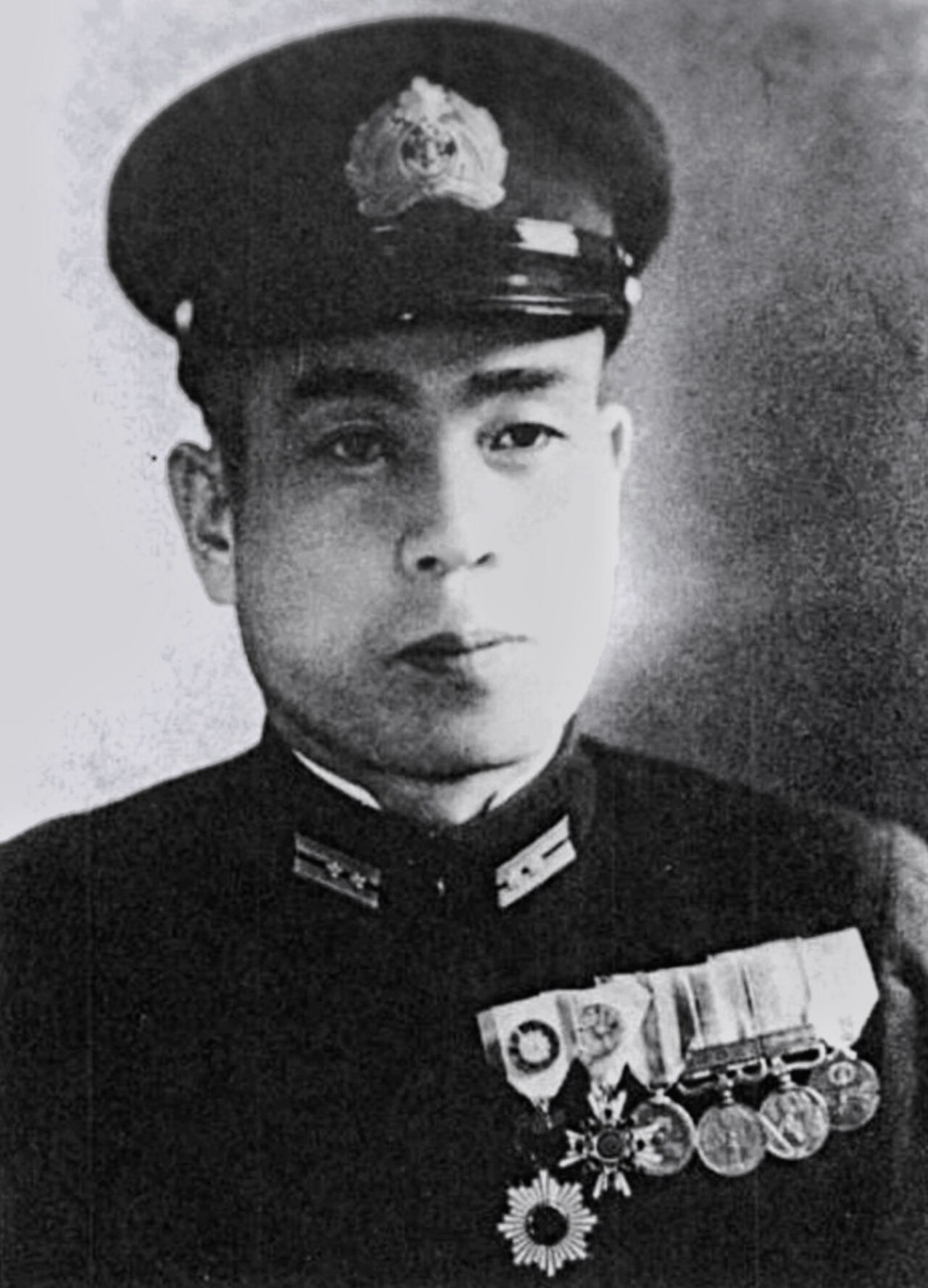
Tameichi Hara was born on 16 October 1900 on the outskirts of Takamatsu, in Kagawa Prefecture on Shikoku, into a family that still counted samurai among its forebears. He graduated from the Imperial Japanese Naval Academy at Etajima with the 49th class in 1921 and spent his early service in destroyers. In 1932 the navy made him a surface-warfare instructor, and a manual of torpedo attack that he prepared was taken up as doctrine. His first destroyer command came in November 1934. Further destroyer commands followed, and by the eve of the Pacific War he was known for night fighting and for torpedo work.
In March 1942, still a commander in rank, he commanded the destroyer Amatsukaze in the Dutch East Indies campaign, including the Battle of the Java Sea. On the night of 1 March, together with Hatsukaze, he depth-charged the submarine Perch about thirty miles northwest of Surabaya and left her on the bottom. The depth charges did not sink her. Two mornings later her own crew scuttled the boat. Hara wrote that, the same night, he watched a man light a cigarette aboard another submarine on the surface, about 4,000 meters away, and that gunfire sank that boat after her torpedoes missed. That boat was not Perch. No Allied submarine is known to have been lost that night.
Through the autumn of 1942 Amatsukaze was in the Solomons. In the night action off Guadalcanal on 13 November she put torpedoes into the American destroyer Barton, which sank. At about 0204 the 6-inch guns of Helena hit Amatsukaze. Her guns went out and the steering went out. Hara steered her by hand from the stern for hundreds of miles and brought her into Truk. She was not sunk.
Promoted to captain in 1943, he was given Destroyer Division 27 and flew his flag in Shigure. He was not her captain. Her own captain still had the deck. Most of the time the other ships of the division were elsewhere, so the division he actually had was this one ship.
At Vella Gulf on 6 August 1943 he had argued against repeating the same route. He was overruled. Three of the four Japanese destroyers were sunk. Shigure got away after a torpedo passed through her rudder and did not explode. Eleven nights later, off Horaniu, his flag was in her again. She was not hit. On 2 November his flag was in her again, at Empress Augusta Bay. She was not hit.
After he left the division he spent about a year ashore, teaching torpedo work at Oppama and then at the torpedo-boat school at Kawatana. He later commanded the light cruiser Yahagi. On 7 April 1945 he took her to sea with the battleship Yamato on that ship's last sortie, a run toward Okinawa made in daylight and without fighter cover. American carrier aircraft caught the force in the East China Sea, and Yahagi went down under bombs and torpedoes. Hara survived that too.
Of the Japanese destroyer captains who were at sea when the Pacific War began, he was the one who lived to see the surrender. He left active service that autumn. For a time the occupation barred former officers from public office, and he returned to sea as master of merchant ships carrying salt. In 1961 his war memoir appeared in English as Japanese Destroyer Captain, direct about the battles he had fought and about the higher decisions he believed had thrown ships away. He died on 10 October 1980.