Ships
- USS Sigourney (DD-643) Captain from 29 June 1943
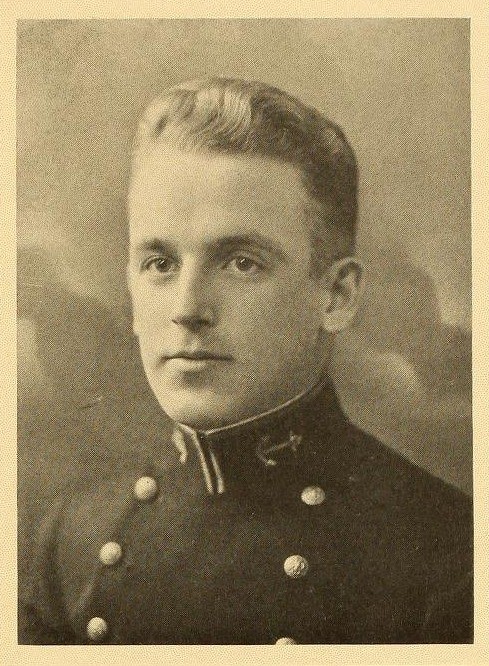
Walter Leo Dyer (12 March 1903 – 1960) was a United States Navy officer from Rumford, Maine, who graduated from the Naval Academy in 1926 and spent most of his career in destroyers. He took his first command, the old four-stack destroyer Cole, during the Neutrality Patrol and the early Atlantic convoy war. He then commanded the modern destroyer Niblack on the North Atlantic run and on the first support convoy into Casablanca after the North African landings. In June 1943 he commissioned the new Fletcher-class destroyer Sigourney at Bath, Maine, and took her into the Solomons. On the night of 17 November 1943, while escorting a resupply echelon into Empress Augusta Bay, he held his ship alongside the burning high-speed transport McKean under continuous Japanese air attack and helped pull survivors from the water. He remained in command through the Green Islands landing, bombardments of Rabaul and Bougainville, and fire support for the Emirau landing, leaving the ship in the spring of 1944 before the Marianas campaign. After the war he commanded destroyer formations and the Fleet Sonar School at San Diego, and in the Korean War he commanded the heavy cruiser Helena on her third combat tour, for which he received the Legion of Merit with Combat “V.” He died in 1960.
He was born on 12 March 1903. The Navy Registers of the war years record that date of birth and give his entry into the Naval Academy as 14 June 1922. The 1926 Lucky Bag, the Academy yearbook, places him in Rumford, Maine, a paper-mill town on the Androscoggin River in Oxford County. Nothing examined here names his parents, describes his schooling before Annapolis, or explains how a boy from that town received an Academy appointment. The yearbook’s character sketch is the only early personal witness that survives in the sources examined here, and it is written in the joking style of the form.
He entered the Academy in the summer of 1922 and graduated with the Class of 1926. His classmates knew him as “Walt” and “Tarxan.” The yearbook sketch opens with a line that treats Maine as a place of independent minds: “Hail to the state of free thinkers!” It says that he was at first “appalled at the grossness of Navy discipline,” but that time made him “a resigned and non-reg inhabitant.” Academics gave him trouble as a plebe; by second-class year he was among the “savoirs” in navigation and electricity, and he took a particular pride in his French, hoping someday to make the redoubtable 3.0. Skags, sleep, and psychology books, the entry says, lured him more than organized sports, though when he did turn out he won places on the class basketball and wrestling teams. The sketch ends with a line that sounds like his own: “Oh, what a feeling—a gun and the big woods of Maine; that’s life and the way I want to live.” The writer wondered whether the Navy would lose him after four years, then added that he admitted Brussels and London were “beautiful places to spend a hilarious leave.” The voice is that of a young man who loved the woods and who did not take the Academy’s forms with perfect seriousness, but who stayed.
He was commissioned an ensign on graduation in June 1926. The Navy Directory of 1928 lists him under instruction at the Naval Air Station, Pensacola. The sources examined here do not say whether he completed flight training or why he did not become a naval aviator. By 1931 he was a lieutenant (junior grade) in the Heron, a converted minesweeper serving as a tender for seaplanes, and by 1933 he was serving in the aircraft carrier Lexington. From 1934 into 1935 he was under instruction at the Naval Training Station, Naval Operating Base, Norfolk. In late 1935 the directory lists him as engineer officer of the destroyer Chandler, and he was still her engineer as a lieutenant in 1937. The pattern of those years was the ordinary junior career of the interwar destroyer navy: aviation exposure, a tender and a carrier, shore instruction, then the engineering plant of a destroyer.
In 1939 the directory places him at the Bath Iron Works Corporation in Bath, Maine. The new destroyer Gleaves, lead ship of her class, was then building there; she was launched on 9 December 1939 and commissioned on 14 June 1940. The 1940 directory lists him as executive officer of the Gleaves. The sources do not state that he had been on her fitting-out detail, but the Bath assignment and the subsequent billet as her first executive officer fit that sequence. He was back in his home state, standing up a new destroyer at the yard that would later build his wartime command.
By the time of the 1941 Navy Directory he was a lieutenant in command of the Cole, a Wickes-class four-stack destroyer recommissioned in October 1939 for the Neutrality Patrol. The registers of 1942 list him as a lieutenant commander with date of rank 1 January 1941. Convoy compilations and ship histories place the Cole, while he commanded her, on the North Atlantic run from the summer of 1941: five voyages escorting convoys between Newfoundland and Iceland by late January 1942, then east-coast and Caribbean escort work. In March 1942, British Admiralty records preserved in wartime convoy reconstructions show him, as Lieutenant Commander W. L. Dyer, screening the troop convoy AS 2 from Charleston toward the Caribbean with the heavy cruiser Devonshire and the escort carrier Archer. He left the Cole on 30 June 1942. The ship’s later part in the Safi landing during Operation Torch, for which she received a Presidential Unit Citation, came after his relief; that action is not his.
A month later, on 31 July 1942, he took command of the Niblack, a Gleaves-class destroyer built, like the Gleaves herself, at Bath. She was a far more modern ship than the Cole: five five-inch guns, sonar, and the endurance for the mid-ocean escort war. In early August she formed part of the screen of the fast troop convoy AT 18 from New York and Halifax toward the United Kingdom, with the battleship Arkansas and the light cruiser Brooklyn. The Niblack carried the commander of Destroyer Division 13. After that crossing the destroyer’s official history places her briefly in the Caribbean at the height of the U-boat campaign there, then back on northern escort duty. In November 1942 she escorted the first support convoy into Casablanca after the Allied landings on the Moroccan coast. Through the winter and early spring of 1943 she performed coastal convoy escort. He was relieved on 24 April 1943. The Niblack’s later Mediterranean fighting—Sicily, Salerno, Anzio, the sinking of U-960—belongs to the officers who followed him.
His third wartime command was a new ship. The Fletcher-class destroyer Sigourney was laid down at Bath Iron Works on 7 December 1942, launched on 24 April 1943, and commissioned on 29 June 1943 with Commander W. L. Dyer in command. The official Dictionary of American Naval Fighting Ships names him that way, by initials, at the commissioning; the Navy’s wartime combat narrative of the Bougainville operations names him in full—“Comdr. Walter L. Dyer”—as her captain in November 1943. He was forty years old, a commander, commissioning a ship built in the same yard where he had stood by the Gleaves four years before.
After shakedown in Casco Bay and Bermuda she sailed from Norfolk on 14 September with the heavy cruiser Baltimore, reached San Diego, and steamed on to Pearl Harbor and Espiritu Santo. There she joined Destroyer Squadron 22, Destroyer Division 44. Staging was under way for the landings at Cape Torokina on Bougainville. On 1 November 1943 the Sigourney escorted the assault transports and took part in the preliminary bombardment of the beaches. She was under air attack, suffered no damage, and was credited with splashing two enemy planes.
Sixteen days later came the night that defines his recorded character under pressure. On the morning of 17 November the Sigourney was in the outer screen of the Fifth Echelon to Empress Augusta Bay, a resupply convoy of high-speed transports and LSTs under Captain Grayson B. Carter, screened by Destroyer Squadron 22. In bright moonlight, at about nine knots, the formation entered the bay. Japanese aircraft dropped float lights, circled, and began torpedo runs. At 0350 a torpedo struck the high-speed transport McKean. Her after magazine and depth-charge stowage exploded. The ship burned furiously.
The task-group commander ordered the adjacent transport Talbot to investigate and begin rescue with her landing boats. The Waller and the Sigourney joined with their whaleboats. The Navy combat narrative records that the enemy planes concentrated around the wreck, and that at one time as many as four planes were making separate, simultaneous runs on the Sigourney. Bombs fell; torpedoes were reported. Her captain later described it as “a night melee, with planes coming from all sides.” She shot down one aircraft on her port bow and believed her five-inch guns hit another. Neither the Sigourney nor the Talbot was damaged. The Sigourney took thirty-four survivors aboard. Rescue continued until after sunrise. Of the McKean’s crew, ninety men were picked up by the ships of the group; of the embarked Marines of the 3rd Battalion, 21st Marines, one hundred thirty-three survived. Holding a destroyer close to a burning, exploding transport, illuminated for every attacking pilot, for roughly two hours, while boats worked in the water, is the clearest picture the record leaves of how he handled a ship when the cost of hesitation would have been measured in drowned men.
Through the winter and spring she stayed with Task Force 31. She hunted barges, swept for submarines, and worked with PT boats. In mid-February 1944 she was in the Green Islands Attack Group that landed New Zealand troops. On the night of 29 February–1 March, with her squadron, she swept Simpson Harbor and bombarded Rabaul and the airfield on Duke of York Island. In March her division operated under the army commander on Bougainville, firing counter-battery and call fire; on 12 March alone the Sigourney and the Eaton fired four hundred rounds in support of the 37th Division’s perimeter. In mid-March she supported the landing of the 4th Marines at Emirau, then returned to bombard pillboxes east of the Torokina River until 12 April. Ship-listing compilations date his relief to 1 May 1944. The Sigourney’s later fighting in the Marianas, at Peleliu, in Surigao Strait, and in the Philippines was under other captains. He had taken her from the builder’s yard through the Solomons campaign; the rest of her nine battle stars were earned without him.
The sources examined here do not identify a personal decoration for his Sigourney command. No action report signed by him, no letter home, and no oral history have been found. What survives of those months is the official narrative of the ships and the one night when the combat narrative quotes his own words about the melee over the burning McKean.
After leaving the Sigourney his wartime and immediate postwar assignments are only partly recovered in the sources examined here. A cruise book prepared aboard the heavy cruiser Helena in 1952, while he was her commanding officer, summarized his earlier commands as the Cole, the Niblack, the Sigourney, Destroyer Division 44, Destroyer Squadrons 15 and 22, the West Coast Sonar Training Squadron, and the Fleet Sonar School at San Diego. Those billets are consistent with a destroyerman who had spent the war in DesRon 22 and DesDiv 44 and who then specialized in antisubmarine training on the West Coast. Exact dates for the division and squadron commands have not been confirmed from Navy Registers in the sources examined here.
He took command of the Helena on 19 January 1952. She was a Baltimore-class heavy cruiser of about thirteen thousand tons, armed with nine eight-inch guns, already a veteran of two Korean combat tours. Under him she entered Korean waters for her third tour in June 1952. A contemporary account in Our Navy magazine, written while the cruise was still recent, called him a “tough, efficient” captain and a veteran of twenty-seven years’ service. It describes shore bombardments at Songjin and elsewhere, rail and industrial targets, and the ship’s helicopter—nicknamed the “Last Chance Taxi”—pulling downed pilots from the water and from behind enemy lines. In early December 1952 the Helena embarked President-elect Dwight D. Eisenhower and members of his incoming cabinet for the passage from Guam to Pearl Harbor after Eisenhower’s Korean battlefield tour, a voyage the same account treats as part of the formation of early administration Far East policy. Dyer remained in command until 6 February 1953.
For his service as commanding officer of the Helena and as a task-element commander from 8 June to 28 November 1952 he received the Legion of Merit with Combat “V.” The award was listed in the July 1953 issue of All Hands. The published notice is a synopsis rather than a full citation.
The compilations that list his destroyer commands also give the year of his death as 1960 and his age as fifty-six. No obituary, place of death, or burial site has been confirmed in the sources examined here. A ship-listing compilation notes that he later became a rear admiral; that claim has not been traced to a Navy Register or official biography in the materials examined here, and contemporary accounts from his Helena command still style him captain. Nothing in those materials names a wife or children.
What the record leaves is a Maine midshipman who joked about the woods and French verbs, an engineer and executive officer of new destroyers, a convoy captain in the Atlantic, and a commissioning captain who, on a moonlit night off Bougainville, kept his ship in the light of a burning transport until the boats had done their work. The later years add the sonar school, a cruiser command under fire in Korea, and a presidential passenger list. The private life—family, illness, the manner of his dying—does not appear in the sources examined here.