Ships
- USS Alden (DD-211) Captain, 24 December 1921 to 24 January 1923 · She was decommissioned that day.
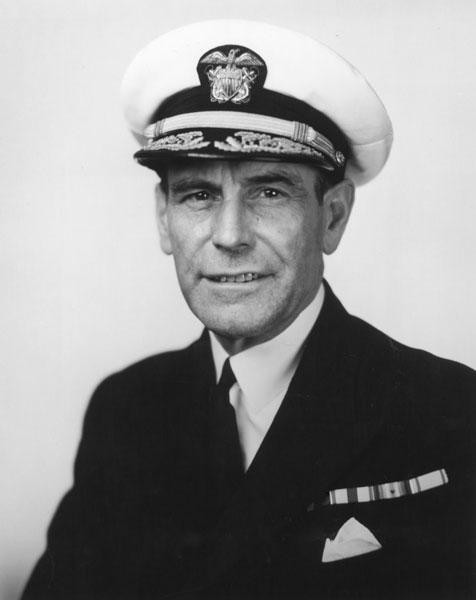
William Alexander Glassford, Jr. was born in San Francisco on 6 June 1886. His father, William A. Glassford, made a career in the Army and retired as a colonel. His brother, Pelham D. Glassford, later reached brigadier general in that service. Glassford graduated from the United States Naval Academy on 12 February 1906, went to sea as a passed midshipman in the destroyer Preble, and received his commission as an ensign after the two years of sea duty then required.
Destroyer duty filled his early service. In 1911 he commanded the Second Division of the Pacific Torpedo Fleet and, from 7 October 1911 until 8 June 1912, the destroyer Paul Jones. He commanded Paul Jones again from 1 February to 4 November 1916. In the First World War he commanded Shaw. In October 1918 her steering gear jammed and the liner Aquitania cut away the destroyer's bow, killing twelve of the crew.
By 1919 he was a commander, leading Destroyer Division 32, and on 25 June 1919 he took the new destroyer Chauncey. On 24 December 1921 he became captain of Alden (DD-211), a Clemson-class destroyer built by William Cramp and Sons and commissioned in November 1919. He stayed in command through the postwar reduction of the fleet. Alden was decommissioned on 24 January 1923, and his tour ended that day.
Glassford returned to the Asiatic Fleet at flag rank. On 1 November 1940, as a rear admiral, he took command of the Yangtze Patrol. In the last days of peace he was ordered to bring the gunboats out of China, and the last of them reached Manila shortly after the attack on Pearl Harbor. On 5 December 1941 he became commander of the cruisers of the Asiatic Fleet.
The gunboats were turned to harbor defense, and Glassford was given Task Force 5, the striking force of the Asiatic Fleet, with his flag at first in the heavy cruiser Houston. In January 1942 Japanese forces had already occupied the oil port of Balikpapan on Borneo. The light cruisers Boise and Marblehead, which were to have gone in with the destroyers, were out of the attack, and Glassford sent the destroyers on under Commander Paul H. Talbot. The night raid struck Japanese transports in the anchorage. The port was already in Japanese hands, and the wider campaign through the Netherlands East Indies continued. Glassford then brought the remaining American ships into the American-British-Dutch-Australian command on Java.
On 4 February 1942 he was promoted to vice admiral and placed in command of United States naval forces in the Southwest Pacific as the Asiatic Fleet was broken up. On 2 June 1942 he became commandant of the Sixth Naval District at Charleston, South Carolina. In May 1943 he went to Dakar as the president's representative in French West Africa. He received the Navy Distinguished Service Medal for that mission and a second award for his command of the Asiatic Fleet striking force in 1941 and 1942.
In 1944 he served as deputy commander of the Twelfth Fleet. On 11 April 1945 he took command of the Eighth Fleet, and in August 1945 he became commander of United States Naval Forces, Germany. He retired as a vice admiral. Glassford died in San Diego on 30 July 1958, at the age of seventy-two, and was buried at Arlington National Cemetery.