Ships
- USS Thatcher (DD-514) Captain, 4 August 1944 – 10 April 1945
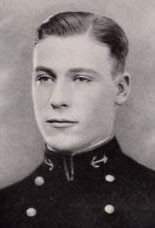
The Navy spelled him out when it had room and clipped him when it did not. The Registers of the 1930s and the war years print William Arthur Cockell. The later lineal lists and the 1959 index shorten him to William Arthur or William Ar., under the same file number, 062026, that the 1944 Register had already hung on the commander of that name. He is the Naval Academy class of 1928, born in England, appointed from New York, and by the end of the 1950s a rear admiral on the retired list. He is not the younger William A. Cockell, Jr., born in 1929, who retired as a rear admiral on 1 January 1986 and went to President Reagan’s National Security Council. The spelling that matters is Cockell, with the double l and the e.
Origins
The Register’s birth column is blunt. On 1 January 1933, again on 1 July 1940, and again in the wartime Registers of 1944 and 1945, William Arthur Cockell is recorded as born on 28 August 1905, and the place given in the state column is England. No town, no county, and no parents’ names appear in those tables. A county sometimes repeated for him on the web, Kent, is not in the Registers used here and is not used in this account.
What the Navy does say is where it took him from. He entered the service on 2 September 1924, appointed from New York, and the footnote that covers his part of the class says he was commissioned ensign on 7 June 1928. The Lucky Bag of 1928, the class yearbook, prints under his name the home the midshipmen recognized: Oswego, New York. The class biography is a sketch, not a service record, and it should be read as one. It says he “could not bear the thought of breaking his long line of sea-going ancestors,” and that he was at the Academy “in spite of a two year vacation due to being a little too playful in the fall kicking game.” The book does not document the ancestors, and it does not say whether the two years were a failed earlier appointment, an injury, or a joke the company liked. What it does fix is the town he claimed, the nicknames the company used, and the way they saw him.
They called him Art, Red, and Lymie. The sketch also calls him Chubby. Red, it says, did not give up soccer. Art, it says, adapted himself “to any condition and making a good party of it whether it be hop, bull fest, or even extra-duty,” and at those gatherings he would “rave about his own part of New York” or end with “My, what’s happened to all the mail?” The activity line under the sketch credits class baseball, class lacrosse and its managership, a Navy “N” and numerals, class soccer, class basketball, class bowling, the Lucky Bag staff, and one stripe. A later roll in the same book lists Cockell, W. A., among the midshipman officers. The portrait is of a sociable upstate New Yorker who played, who helped make the yearbook, and who is credited with one stripe. It is not a portrait of a star man or a varsity hero, and the book does not pretend otherwise.
Formation
He missed the January 1928 Navy Directory because he was not yet an officer. The Directory of 1 January 1929 finds Ens. William A. Cockell in USS Mississippi. He is still an ensign in Mississippi on 1 January 1930. The battleship was his first documented sea duty, and the Directory gives him no other billet title than the ship itself.
By 1 April 1931 the same man, still an ensign, is on the roster of USS William B. Preston, signal number 5068, and the alphabetical list agrees: ensign, William B. Preston. In 1931 she was still a destroyer. The Directory does not say what watch he stood.
The next Directory that names him has changed both his rank and his element. On 1 July 1932 he is a lieutenant (junior grade), “instrn,” Naval Air Station, Lakehurst, New Jersey. On 1 October 1932 he is still a lieutenant (junior grade) at Lakehurst, the instruction tag dropped. The Register of 1 January 1933, in the lieutenants (junior grade), gives the date of rank that fits those two facts. James Richard Lee’s line on the same page carries 7 June 1931, and Cockell’s date is ditto from that line, so his rank as lieutenant (junior grade) dates from 7 June 1931. That is why the April 1931 Directory could still call him an ensign and the July 1932 Directory a lieutenant (junior grade). Three years to the day after the ensign’s commission of 7 June 1928.
The 1933 Register also says what kind of officer Lakehurst was making of him. Its code 2, defined that year simply as “Designated as naval aviator,” sits beside code 31, “Completed course in torpedo instruction,” and the duty is “Naval air station, Lakehurst (instrn.).” The airship station and the torpedo course are both on the page. He was teaching, or being taught, at the Navy’s lighter-than-air field, and he already had the torpedo school behind him. The Register does not name an airship. It does not put him in Los Angeles, Akron, or Macon. On 1 April 1934 the Directory still has the lieutenant (junior grade) at Lakehurst.
Then the air station gives him back to the surface Navy. On 1 October 1934 he is a lieutenant (junior grade) in USS Marblehead. He is still in Marblehead on 1 January 1935. The Register of 1 July 1936 still indexes him as lieutenant (junior grade). On 1 January 1937 the Directory has caught up with a new rank: Lieutenant William A. Cockell, USS Marblehead. On 1 April 1937 the ship’s roster lists him again, signal 4072, lieutenant, with no billet abbreviation beside the name. Other officers on that roster are tagged exec, gun, nav, eng, or the cruiser’s aviation unit. He is simply aboard.
The Register of 1 July 1940, looking backward, dates his rank as lieutenant from 1 July 1936. The 1936 Register’s own index had not yet styled him that way. The two publications can both be true if the promotion was effective the day the 1936 Register was dated and the book was closed on the old grade. What is secure is the later Register’s date, 1 July 1936, and the Directory’s use of “lieutenant” from January 1937.
He did not stay in the cruiser. By 1 September 1937 Lieutenant Cockell is back at Naval Air Station, Lakehurst. He is there on 1 July 1938 and on 1 January 1939. The gap between the April 1937 Marblehead roster and the September 1937 Lakehurst line is only a summer, but it is enough to keep him off one famous day at that field. The Directory of 1 April 1937 has him in the cruiser. It does not place him at Lakehurst on 6 May 1937, when the Hindenburg burned there. No source used here puts him in that wreck, or in the loss of Akron four years earlier, when the Registers only show him as an instructor at the station, not as a named member of an airship’s crew.
By the eve of the war the qualification codes had grown more precise. The Register of 1 July 1940 lists him as a lieutenant with 2-a, 18, and 31. In that year’s key, 2-a is “Designated as naval aviator (lighter than air).” Code 18 is the Naval War College correspondence course in strategy and tactics. Code 31 is still the torpedo course. The lighter-than-air designation is the Navy’s own description of him, not a later historian’s inference from the Lakehurst addresses. Those addresses, from 1932 to 1934 and again from 1937 to 1939, are where the designation was lived.
War years as lived
The same 1 July 1940 Register dates his then-current cruise from 14 June 1939 and dates the end of the cruise before that as June 1937. June 1937 is when the Lakehurst shore tour, the one that shows up in the September 1937 Directory, would have been about to begin. 14 June 1939 is the new sea duty. The Directory of 1 June 1940 says what ship that cruise was: Lieutenant William A. Cockell, USS Fanning, gun. The Directory of 1 April 1941 says the same thing, gunnery officer of Fanning.
Fanning (DD-385) had commissioned in 1937. The Dictionary of American Naval Fighting Ships, for the years after she joined the Battle Force in September 1938, describes a San Diego destroyer doing antiaircraft gunnery, antisubmarine work, and tactical exercises, with one return to the Atlantic and several to Hawaii across the next three years. Cockell’s documented time in her sits inside that stretch: gunnery officer by 1 June 1940, still gunnery officer on 1 April 1941, on a cruise the Register opens on 14 June 1939. The Navy called him her gun officer in the years when the ship’s recorded work was, in large part, gunnery. The Registers add a little arithmetic. On 1 July 1940 his sea service in the rank of lieutenant was 2 years and 11 months, and his total sea service was 7 years and 11 months. He was not a newcomer to a deck.
What cannot be pressed any further is the day the war reached that destroyer. The last Directory that names Cockell in Fanning is 1 April 1941. The wartime Navy then stopped publishing the Directory. DANFS carries Fanning through Pearl Harbor, a collision, and the Doolittle raid, and none of those passages names her gunnery officer. The Register of 1 July 1942 still dates his present cruise from 14 June 1939, credits him with 9 years and 11 months of total sea service, up two years from the 1940 figure, and gives him 7 months of sea service in the rank of lieutenant commander. It does not print a ship. An unchanged cruise date is consistent with his still being at sea on the tour that began in Fanning. It is not a statement that he was still in her for the operations DANFS records after April 1941, and those operations are not told here as his.
What the 1 July 1942 Register does say, cleanly, is the new rank. He is a lieutenant commander. The date-of-rank column on his page is ditto from a line dated 1 January 1942. The qualifications have not changed: 2-a, 18, 31. The airship pilot was a destroyer lieutenant commander, at sea, in the first summer of the Pacific war, and the Navy’s public list no longer said where.
The Register of 1 July 1944 moves him again, still without a station. He stands in the commanders, signal 2780. The date of temporary rank dittos to 15 September 1942, the date printed on Charles Robert Watts’s line above him and carried down the page. His permanent rank on that page dittos to lieutenant commander, dated 1 January 1942. So from the autumn of 1942 he was a commander by temporary appointment, and from the summer of 1944 the Register still knew him as a lighter-than-air aviator with the War College correspondence course and the torpedo course. It did not know, or would not print, the ship.
The Register of 1 July 1945 places him in the captains, signal 2374, qualifications still 2-a, 18, 31. Robert Edgar Braddy’s line on that page shows the permanent rank the dittos follow: lieutenant commander, 1 January 1942. The temporary rank changes at Charles Robert Watts, 25 March 1945, and Cockell’s temporary date is ditto from that line, before the next explicit date, 30 March, on a later officer. On 1 July 1945 William Arthur Cockell was a captain by temporary appointment from 25 March 1945, and a lieutenant commander on the permanent list from 1 January 1942. Again there is no station. The fighting commands of 1943, 1944, and 1945, if he had them, are not in the book the Navy published about its officers.
Cost
The cost that can be read without inventing a mood is the one the assignments impose. He had qualified as a lighter-than-air aviator and had spent the middle 1930s either at Lakehurst or in Marblehead. In June 1939, with the war in Europe not yet America’s, he went back to sea as gunnery officer of a destroyer. The airship designation did not come off the Register. It is still there in 1942, 1944, and 1945, beside the ranks the surface Navy was using him in. Whatever he flew, or had flown, at Lakehurst, the job the Directory recorded in 1940 and 1941 was the guns.
Then the record itself goes dark in the way wartime policy made it dark. From 1 July 1942 through 1 July 1945 the Registers will say how high he stood and when the rank changed, and they will not say on what deck he stood when the rank changed. Temporary commander in September 1942. Temporary captain in March 1945. The Registers do not say so. The cost of writing his war honestly is that the central claim, the captaincy the list was built to capture, cannot yet be told as something he lived. It can only be marked as a claim, in the gaps below.
There is a second, later cost, and it is documented. He came back, on paper, to the airships. And then the designator changed.
After
In 1949 William Arthur Cockell submitted a Master of Science thesis to Ohio State University, “Some aspects of the selection of candidates for airship pilot training, U.S. Navy.” A copy is in the Dudley Knox Library of the Naval Postgraduate School. The pages that could be read here are an argument about selection, not a memoir: the thesis treats the choice of airship pilots as a control point of a personnel system, and it says that the more specialized the work, the greater the need to choose the person for it. It does not, in the text recovered here, state the author’s rank, file number, or station. The identification rests on the full name and on the subject, which is the specialty the Registers had been printing beside his name since the code became 2-a. It is the work of a man who had been through the lighter-than-air pipeline and was writing, four years after the war, about how the Navy should decide who else went through it.
The Register of 1 January 1952 lists him as a captain, file number 062026, designator 1380. In that Register’s table, the first three digits 138 mean an unrestricted line officer of the aeronautic organization on duty involving flying lighter-than-air aircraft, including inactive officers who would be so ordered if they returned to active duty. The date block printed with his name is 25 March 1945, the temporary-captain date from the 1945 Register, and 28 August 1905, the birth date, and 7 June 1928, the ensign’s commission. He was forty-six, a captain, and still carried inside the airship designation.
The Register of 1 January 1956 still has him a captain with designator 1380, and it prints an asterisk after his signal number. The explanatory note in that Register says the asterisk means the officer has been selected for promotion to the next higher grade under the Officer Personnel Act of 1947. The next grade above captain is rear admiral. The book still calls him captain.
By the Register of 1 January 1957 the designator has changed. He is a captain, designator 1100. In the 1952 key, which is the key that defines these numbers in the postwar Registers, 110 is an unrestricted line officer who is not a member of the aeronautic organization. The lighter-than-air flying designator is gone. The Register of 1 January 1958 again lists him as a captain, designator 1100. He was fifty-two. The public list still had him on active duty, and it no longer had him in the airship community.
The Register of 1 January 1959, under the same file number 062026, lists Cockell, William Ar., as rear admiral, retired. Between the first day of 1958 and the first day of 1959 he left the active list, and he left it as a flag officer on the retired list. The Register line does not say whether he ever hoisted a rear admiral’s flag in command, or whether the star was the retired-list grade of a captain who had been selected and then retired. No flag command, no retirement ceremony, and no obituary were found for this essay. The star is a fact of the 1959 list. The life that followed it is not on that list.
No wife is named in the Registers, the Directories, the Lucky Bag, or the thesis pages read here. A William A. Cockell, Jr., born 12 August 1929, later a rear admiral, is a different officer, and the question of whether he was this man’s son is taken up with the other unfinished identifications below. What this Cockell left that can be pointed to without guessing is the paper: a class sketch from Oswego, a trail of stations from Mississippi to Lakehurst to Marblehead to Lakehurst to Fanning’s gun battery, a set of promotion dates through the temporary ranks of the war, a 1949 thesis on how to choose airship pilots, and a retired rear admiral’s line in 1959.