Ships
- USS Libra (AK-53) In command, 7 August 1942
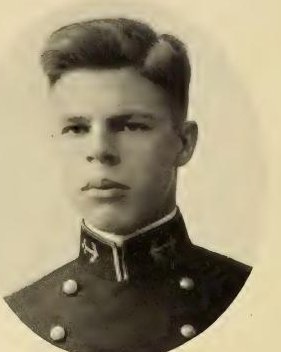
William Bartlett Fletcher, Jr., was born on 3 December 1900 and made his home in Newport, Rhode Island. He graduated from the United States Naval Academy and followed his father, William Bartlett Fletcher, a rear admiral whose own career had begun in the sailing and early steam Navy, into the line of the fleet. The younger Fletcher advanced through the interwar officer grades, commanded ships in the first months of the Pacific war, and later retired as a rear admiral. He died on 31 May 1980.
He was promoted to lieutenant commander on 30 June 1935 and to commander on 1 May 1941. On 10 March 1941 he took command of the fleet oiler Neches. That duty ended on 23 January 1942, when a Japanese submarine torpedoed Neches and sank her in Hawaiian waters as she steamed to refuel a task force. Within a few months the Navy gave him a new ship, a cargo vessel still being converted from merchant service into a naval auxiliary.
Libra had been laid down at Kearny, New Jersey, as the merchant ship Jean Lykes for the Lykes Brothers line. Launched on 12 November 1941, she was acquired by the Navy on 30 December and named Libra on 9 January 1942. Fletcher was her commanding officer at commissioning on 13 May 1942, when she still carried the hull number AK-53. Yard work at New York ended on 26 May. She loaded combat equipment at Hampton Roads and, on 10 June, sailed for Wellington, New Zealand, arriving on 11 July after the long passage across the Pacific.
At Wellington her holds were filled for the Marine force that would open the first large Allied offensive in the Solomon Islands. On 22 July she left New Zealand for the Fiji Islands, where the invasion ships rehearsed the landings they were about to make. From those rehearsals Libra moved north with the assault convoy. On 7 August 1942 she arrived off Tulagi and began sending cargo ashore in support of the landings on Tulagi and Guadalcanal.
Japanese aircraft broke up that unloading six times in three days. Each raid sent the ship to general quarters. Fletcher took her out of the anchorage, maneuvered in open water while the attack passed, and brought her back in so the boats could resume work. In the hours before dawn on 9 August the crew heard heavy gunfire to the northwest. There Allied cruisers and destroyers met a Japanese surface force in the Battle of Savo Island, a night fight fought to keep the enemy away from the transports and the supplies still aboard them. Libra came through those opening days of the campaign afloat and fit to continue.
The South Pacific command afterward awarded Fletcher the Silver Star for his conduct as commanding officer from 7 to 9 August 1942 and on the trips that followed. Still a commander, he took Libra back into waters the Japanese still contested around Guadalcanal. On four occasions he landed food, ammunition, and gasoline for the troops ashore while high-altitude bombers, dive bombers, and torpedo planes attacked, and the ship completed those deliveries undamaged. On 2 and 3 October 1942 he also helped put a garrison ashore at Funafuti in the Ellice Islands. The award rested on that record of shiphandling under repeated air attack and on cargo that reached the beach.
He kept Libra on the Guadalcanal supply line through the autumn. She was back at Espiritu Santo on 15 November 1942 and made two further voyages to the island before the month ended, carrying material the Marines needed to hold what they had seized. From mid-December 1942 through March 1943 she shifted war equipment from New Zealand to bases in the New Hebrides. On 1 February 1943 the Navy reclassified her from cargo ship AK-53 to attack cargo ship AKA-12, the designation she kept through the rest of her combat service. For her work in the Guadalcanal campaign the ship received the Navy Unit Commendation.
Fletcher was still in command on 30 June 1943, when Libra unloaded at Rendova during the New Georgia landings and the task group came under a heavy attack by Japanese torpedo planes. Antiaircraft fire from the ships destroyed most of the formation before the planes could drop. One torpedo ran beneath Libra, then riding high and light after discharging cargo, and struck the transport McCawley. On 2 July 1943 Fletcher turned the ship over to his relief, closing a command that had run from her commissioning through the hardest months of the southern Solomons.
The next day he began a shore-and-staff tour that lasted until 26 August 1944. As a captain he served as chief of staff to the commander of a transport group in the South Pacific Force and, in the same period, as commander of an attack group. The duty covered the preparation and the execution of the amphibious assaults on Bougainville and on Guam. The Legion of Merit followed for that service. His decorations also included the Navy Distinguished Service Medal and the Bronze Star Medal. He left the Navy as a rear admiral.