Ships
- USS Terry (DD-513) Captain, 28 November 1944 – 20 September 1945
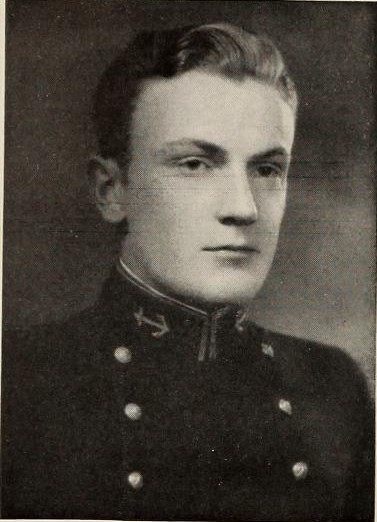
William Brigham Moore (born 27 August 1909) was a United States Navy officer from Ogden, Utah, a graduate of the Naval Academy in the class of 1930, who commanded the destroyer Terry (DD-513) from 28 November 1944 to 20 September 1945. In those ten months she was repaired at Mare Island, took part in the Iwo Jima assault, where a Japanese shore battery hit her on 1 March 1945, and screened the fast carriers in the last raids on Japan. He was a captain by the mid-1950s and was still on the Navy's active list in 1960. The sources examined here do not give the date or place of his death.
He was born on 27 August 1909 in Ogden, Utah. The Navy's Register of Commissioned Officers records the day, 27 August; uboat.net gives the year and the state. His class book of 1930 calls Ogden his home. The sources examined here do not name his parents or describe his family or schooling.
The 1930 Lucky Bag (the Academy yearbook) calls him "Dinty" and "Bill." Its opening joke is about his state: "Although Bill comes from Utah, he really hasn't a harem, and so far has evaded the snares of the Washington, Baltimore and Philadelphia connoisseurs." "Dinty's weakness and also his pleasure is the mighty oar," it continues, "and he shines best in Round Bay or on the Severn past the 'Little Red House.'" He had found a place on the race boat crew and "spent many an afternoon pulling on the rowing machines on the good ship 'Florida.'" In second-class year he "kept himself out of trouble and, incidentally, made considerable for the opposition, as a tackle on the class football team, which had a perfect season in the Harvard Shield race." In exam week he usually found Bill "boning Vanity Fair or the American Mercury, but needless to say he would have felt like a stranger out of the first section." His ambition, the writers said, was to be stationed on the West Coast, "the coast of beautiful skylines." He passed his parole periods around Washington and Falls Church, Virginia, and the sketch ends on one of his lines: "Pete, come in here, will you, and help me sort my mail by states!" The activities line lists track, cross country and wrestling.
He was commissioned an ensign in June 1930, at twenty. The Navy Directories place him in the battleship Utah in 1930, in the battleship West Virginia from 1931 into 1933, and, as a lieutenant (junior grade), in the gunboat Panay in 1934 and 1935. By 1937 he is in the destroyer Claxton. He became a lieutenant on 30 June 1937, according to uboat.net, and from 1937 into 1939 he was on instruction duty at the Naval Academy. In 1940 the directory lists him as executive officer of the destroyer Buchanan, and from 1940 into 1941 as a lieutenant in the light cruiser Savannah. He became a temporary lieutenant commander on 1 January 1942 and a temporary commander on 15 October 1942. The sources examined here do not say where he served between the spring of 1941 and the autumn of 1944.
On 28 November 1944, at thirty-five, he took command of the Terry, a Fletcher-class destroyer that had fought at Guam in the summer of 1944 and was then at the Mare Island Navy Yard, California, for overhaul. She finished the overhaul on 13 December, drilled along the coast, and on 18 December headed west in company with the battleship Missouri. After a short stop at Pearl Harbor she rejoined the Fifth Fleet at Eniwetok on 5 February 1945 and two days later sortied in the screen of the Iwo Jima assault force.
The Navy's history records what she did there. On the morning of 16 February she joined minesweepers about nine miles south of the island and, a little after 10:00, opened fire on enemy gun emplacements to protect them as they swept the approaches to the beaches. At about 14:32 a Japanese four-inch gun straddled her. She rang up twenty-five knots and moved ahead while the enemy laid a barrage in her wake, and her five-inch guns silenced the battery; the minesweepers finished their work just after 16:00 without loss. She cleared the island for the night, returned the next day to counter-battery fire, and after the landings on 19 February supported the troops ashore by day and screened Task Force 54 at night. At 02:45 on 1 March, while helping the destroyer Capps hunt a Japanese submarine, she evaded a torpedo dropped by a low-flying enemy plane, which passed fifty yards astern. A few hours later, passing Kitano Point on the north coast, she was taken under fire by a shore battery that got her range at once. A direct hit on the starboard main deck stopped her starboard engine and cost her steering and telephone communications. She opened the range on her port engine while the cruiser Pensacola, the battleship Nevada and other destroyers silenced the battery, and medical and repair parties came aboard. She laid to off the south coast for two days of emergency repairs and cleared the Volcano Islands on 3 March for the long return to the United States.
Interim repairs at Saipan, stops at Eniwetok and Pearl Harbor, and two months of permanent repairs at Mare Island followed. On 13 June she sailed south to San Diego for exercises and then escorted the carrier Wasp to Hawaii; on 11 July she, Wasp and the destroyer Benner left Pearl Harbor to join Task Force 38, and for the last weeks of the war she screened the fast carriers during the final raids on the Japanese home islands. After the surrender she operated off Japan on patrol and as a courier for the occupation forces. Moore's command ended on 20 September 1945, according to uboat.net; the ship herself left for home on 1 November. The sources examined here contain no account of Moore on the bridge, no citation, and no report or letter in his hand. The Navy's history, which does not name him, describes a ship that took one serious hit.
The Registers show him still in the Navy for fifteen years after the war. The Register of 1950 lists him as a commander, that of 1955 as a captain, and the Register of 1960 still includes him. Uboat.net dates his temporary promotion to captain to 1 July 1948. The sources examined here do not give his postwar assignments, his retirement, a marriage, children, a death or a grave. No obituary was found.
What remains of Moore is an oarsman and football tackle from Utah in a 1930 yearbook, a young officer who served in the gunboat Panay, a destroyer executive officer and a cruiser lieutenant in the years before the war, and ten months at the head of a destroyer that took a hit off Iwo Jima and then went back to the war with the carriers.