Ships
- HMS Repulse (34) Captain from 18 June 1940 · In command when she was lost, 10 December 1941. He survived.
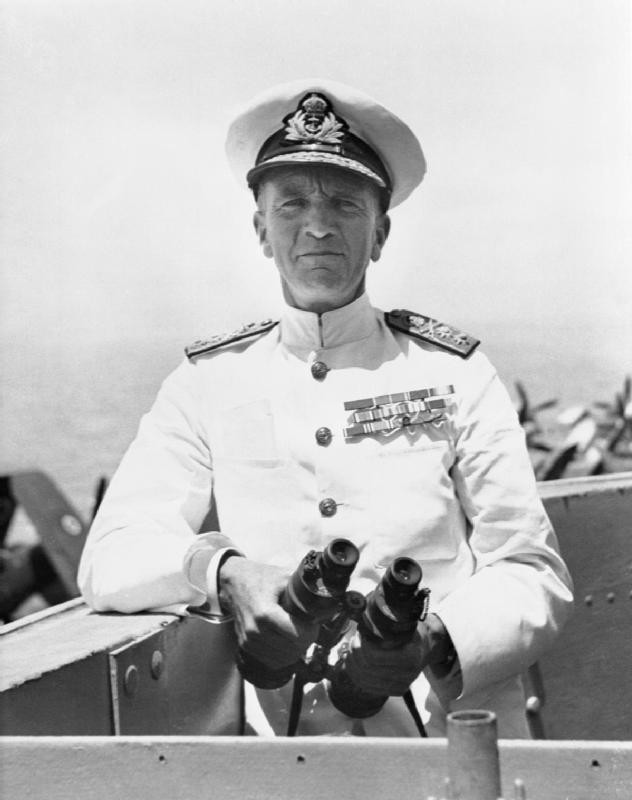
William George Tennant was born on 2 January 1890, the son of a major, and his family home was at Upton-upon-Severn in Worcestershire. After a period at Hanley Castle Grammar School he entered the Royal Navy in 1905, at fifteen, as a cadet in the training ship Britannia. He was confirmed as a sub-lieutenant in December 1909, promoted lieutenant on 30 June 1912, and in 1913 specialized in navigation.
In the First World War he served with the Harwich Force in the destroyers Lizard and Ferret, then with the Grand Fleet in the cruisers Chatham and Nottingham. He was in Nottingham at the Battle of Jutland, and he was still aboard when a U-boat sank her in the North Sea on 19 August 1916. He came through that sinking. Later in 1916 he joined the light cruiser Concord as navigating officer and remained with the Harwich Force in her until 1919.
The Navy then sent him as navigating officer on two royal voyages around the world, in Renown in 1921 and in the battlecruiser Repulse in 1925. On that second cruise he was the navigator. In October 1925 he was appointed a Member of the Royal Victorian Order, and on 31 December he was promoted commander. He reached captain on 31 December 1932. From January 1935 into early 1937 he commanded the cruiser Arethusa on the Mediterranean Station, and from 1937 to 1939 he taught at the Imperial Defence College.
In late May 1940, with the British Expeditionary Force driven back to the Channel, Tennant went to Dunkirk as Senior Naval Officer ashore for Operation Dynamo. He ran the embarkation from the beaches and the harbour and stayed until the last ships left on 2 June. On 7 June 1940 he was made a Companion of the Order of the Bath. Men who had served with him on those beaches came to know him as Dunkirk Joe.
On 18 June 1940 he was appointed captain of Repulse. Over the next year he took the battlecruiser to sea with the Home Fleet in the search for the German ships Scharnhorst and Gneisenau, and he had her in the hunt for the battleship Bismarck. Late in 1941 Repulse sailed east with Prince of Wales as part of Force Z. Tennant was still her captain on 10 December 1941.
That day, off Kuantan, Japanese naval aircraft operating from shore bases sank Repulse. She went down before Prince of Wales. The sinking is not credited to one plane. Tennant conned the ship through a long run of torpedo attacks, and when she was hit and could not be saved he ordered the crew off. He survived and was taken from the water by the destroyer Vampire. Writing the next day, he counted 27 officers and 486 men lost, and 42 officers and 754 men saved.
He was promoted rear-admiral on 6 February 1942 and that year commanded a cruiser squadron of the Eastern Fleet. In 1943 he joined the planning staff for the invasion of Normandy and took charge of the Mulberry harbours built for the landings. He then served as Flag Officer, Levant and Eastern Mediterranean, was promoted vice-admiral on 27 July 1945, and was appointed a Knight Commander of the Order of the Bath. From 1946 to 1949 he was Commander-in-Chief of the America and West Indies Station. Promoted admiral on 22 October 1948, he retired on 3 August 1949. He later served as Lord Lieutenant of Worcestershire and died at Worcester on 26 July 1963.