Ships
- USS Wickes (DD-578) Captain from 16 June 1943 · Relieved on 25 July 1944
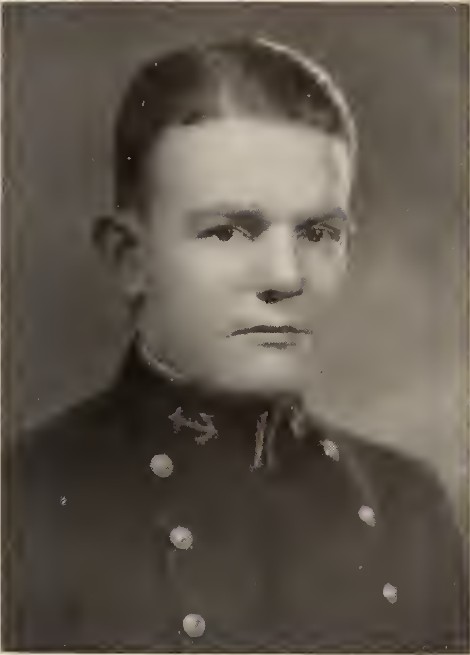
William Young Allen, Jr., United States Naval Academy class of 1930, is the officer the Dictionary of American Naval Fighting Ships names in command of Wickes at her commissioning on 16 June 1943, and the officer the commanding-officer compilations give to Wickes until 25 July 1944. He is not Halle Charles Allan, Jr., and not Russell Bowes Allen. A Gallatin, Tennessee, banker named William Young Allen, who died in 1941, is a different man, and so is the World War I soldier whose Distinguished Service Cross is indexed under William Y. Allen. What follows is the life the registers, the Navy Directory, the Academy yearbook, and the ship histories will support. Where they stop, or where they disagree, the blank or the conflict stays in the sentence.
Origins
He was born on 29 February 1908. That date is printed on his line in the Register of Commissioned and Warrant Officers of 1 July 1945, after the dittos in the rank columns: 29 February 08. The same day is in the Register of 1 July 1944. The Register of 1 January 1956, in the captains' index, prints the digits 2 29 08 on the line of Allen, William Young, Jr. The Register of 1 January 1957 prints a string the optical reading splits as 2 29 06 and then 3 0 8, which does not agree with the earlier books. The 1944 and 1945 registers, which spell the month, are the ones followed here. Nineteen-eight was a leap year, so the day exists. The registers do not give a town.
A secondary commanders' list says he was born in San Antonio, Texas, and that he died on 5 November 1973 in West Lake Hills, Texas. No birth certificate, no obituary, and no grave record were found to test either place or the death. The 1930 Lucky Bag heads his page "Huntsville, Texas." That is the home a midshipman claimed. It is not, by itself, a birthplace. San Antonio and Huntsville are both left as what those two books say. They are not the same fact.
Nothing in the registers names a father, a mother, brothers, or sisters. "Young" is his middle name and his father's name, in the sense that the registers and the yearbook both print "Jr." The books do not say who the senior William Young Allen was. No marriage, no wife, and no children have turned up in the sources read for this essay. That is a blank, not a conclusion that he had no family.
Formation
He entered the Naval Academy on 15 June 1926. The Register of 1 July 1945 prints that day as his date of entry, on the same line as the birth date. The Register of 1 July 1944 prints it again. He is an ensign in the Register of 1 January 1931, signal 5391, in the block of new ensigns whose date of rank begins "5 June 30" and is then dittoed. The Register of 1 July 1942, on the lieutenant commanders' page that contains him, footnotes the class: commissioned ensign 5 June 1930. Five June 1930 is his ensign's date, as a class date dittoed down to him, not as a day reprinted beside his name in a later book.
The 1930 Lucky Bag is classmate prose, written to be clever, and it should be read that way. It calls him "Red," "W. Y.," and "Reddy," and it puts him in Huntsville. "In Huntsville, Texas, Red began the business of making himself a leader. His motto was never to be excelled by anybody in anything, and to be a real friend to everyone." The yearbook says success followed, and that he then decided on the Academy, "finishing school for would-be leaders." Academically, it says, he never broke any records, "but when it comes to common horse sense or out-guessing an opponent in a game, he is hard to beat." Hard fighting and quick thinking, the sketch says, won him places on two varsity squads. The line they wanted kept about his character is the one that sounds least like a roast: "Always above-board and clean-cut in every way, with a strength of character to be admired. Independent, but big-hearted, he will give you anything from a licking to the shirt off his back, if you ask for it in the right way." "That torrid top of his" is their description of red hair. It is not a medical record.
The same page gives the record that can be checked against the regiment. He was company commander of the Sixth Company, the first-class midshipman who wore three stripes. The yearbook's credit line, once the doubled optical text is set aside, reads basketball all four years, with the Block N; lacrosse all four years, the letter in the last three, and captain in the first-class year; the N.A.C.A. committee; three stripes. The letters N.A.C.A. are not expanded in the sketch. The basketball write-up, on a page the index gives to W. Y. Allen, Jr., says Colestock and "Red" Allen were the heroes of the Lehigh game, a hard contest Navy won 39 to 29, and that Allen played one of his best games that day. A track chapter in the same book says an Allen was the best miler and won every race. That chapter is not among the index pages for W. Y. Allen, Jr., and his own credit line does not list track. The mile is not claimed for him here.
The yearbook's motto, never to be excelled, is their sentence. The offices are the Academy's. Company commander, lacrosse captain, and a varsity letter in two sports are what a midshipman class uses when it means to say a man already knew how to be in charge of other men. The registers do not give his class standing. They do not say he was turned back. He finished with the class he entered with.
On 1 January 1931 the Register and the Navy Directory both have him an ensign on Houston. The Directory of 1 January 1932 and the Directory of 1 January 1933 still have him an ensign on Houston. Houston (CA-30), commissioned 17 June 1930, left New York on 10 January 1931, nine days after the first of those lists, passed the Canal and Hawaii, and reached Manila on 22 February as flagship of the Asiatic Station. On 31 January 1932, with war underway between China and Japan, she went to Shanghai to protect American lives and property. The ship's history says she landed Marine and Navy gun platoons and, except for cruises to the Philippines and Japan, stayed in that trouble until Augusta relieved her on 17 November 1933. The directories do not say Allen went ashore, or what his billet was, or that he was still on board on the January day she sailed from New York. They do keep an ensign on her across two New Year's Days while she was the Asiatic flagship and while Shanghai was her work. That is the first sea duty the paper gives him: a new heavy cruiser, someone else's flag, and a city where the Navy was putting armed men on the beach. He was not her captain. He was an ensign. The history does not record a citation, a wound, or a mistake with his name on it.
He is still an ensign on 1 January 1933. By 1 July 1934 the Directory has him a lieutenant (junior grade) on Macdonough. A secondary list dates the lieutenant (junior grade) rank 5 June 1933, the ordinary day three years after the ensign's commission. That day was not found printed on a register line of his. The directories only bracket it: ensign on 1 January 1933, lieutenant (junior grade) on 1 July 1934.
Macdonough (DD-351), a Farragut-class destroyer, was laid down at the Boston Navy Yard on 15 May 1933 and launched on 22 August 1934. She was not in commission on 1 July 1934, when the Directory already lists him on her, and she was not yet launched. The Directory of 1 January 1935 still has him a lieutenant (junior grade) on Macdonough. She was commissioned on 15 March 1935, with Commander Charles S. Alden in command, not Allen. He was a junior officer on another man's ship, and before that, on the paper, a junior officer ordered to a hull. The Directory of 1 January 1936 and the Directory of 1 January 1937 still have him a lieutenant (junior grade) on Macdonough. After commissioning she made a long shakedown to Europe and western South America, joined the Pacific Fleet, and operated out of San Diego until October 1939. The two directories inside that San Diego period put him on her. They do not say he made the European cruise, and they do not say what he did on board. A lieutenant (junior grade) who stays with a new destroyer from the yard through two years of the fleet is learning the work. The books do not say he had yet commanded anything. Her later war, thirteen battle stars, Attu, the Gilberts, a submarine sunk off Truk, is after he had left. It is not his.
On 1 July 1938 the Directory has moved him. He is a lieutenant at the naval gun factory, Navy Yard, Washington, and the line ends "tempo." The same word is printed on his line in that volume's shore-establishment roster, Lieutenant W. Y. Allen, Jr. The front of the Directory does not expand "tempo" in the abbreviation list that was read. The word is on many other officers' lines in the same book. It is left as the Directory printed it, not translated. The Register of 1 July 1938 indexes him a lieutenant, signal 4056. In the lieutenants' section his name sits with the class of 1930, in a block whose date of rank, printed at the head and then dittoed, reads 2 June 1938. A few men further down the list have later June dates printed instead of a ditto. His own line, in the optical text, does not. Two June 1938 is the block date, not a date set in type beside his name. It is the best day the 1938 register gives for the lieutenant's rank.
By 1 January 1939 the Directory has moved him again: lieutenant, Marine Corps Schools, Marine Barracks, Quantico, under instruction. The Register of 1 July 1944 and the Register of 1 July 1945 both carry, on his line, the qualification numbers 21 and 75. In the 1945 register's own key, 21 is a completed postgraduate course in general line duties, and 75 is the field officers' or senior course at the Marine Corps School. The registers do not date the courses or name the classrooms. Quantico under instruction, on 1 January 1939, is the billet that matches the second of those numbers. It is not a proof that the number and the billet are the same set of orders. The gun factory in the summer of 1938 is not, by the key, the ordnance postgraduate course. That course is a different number, and he does not have it. What the paper shows is a lieutenant taken off a destroyer, put to school and to a Washington yard, and sent to the Marine Corps to sit the senior course. The Directory does not say he asked for any of it.
On 1 November 1940 and again on 1 April 1941 the Directory has him a lieutenant on Maryland. Maryland (BB-46) is a battleship. The directories do not give his billet. The April 1941 directory is the last of the series. It does not say he was still on board when the war started.
The war, as the paper has it
From 1 April 1941 until the autumn of 1942 there is no directory and, in the registers examined, no station. Wartime registers dropped the ship. No letter, no fitness report, and no deck-log signature from those months was found. Maryland was at Pearl Harbor on 7 December 1941 and was hit there. Whether he was aboard that morning is not established by any source read for this essay. He may have stayed, gone to a school, or gone to another ship. The books do not say where he was when the war began.
The rank he held by the first summer of the war is printed, and then argued over by the way later books style him.
The Register of 1 July 1942 lists him a lieutenant commander, signal 3603, William Young Allen, Jr., qualifications 21 and 75, the rank dates dittoed. On that page the date of temporary rank, printed at the head of the lieutenant commanders and not replaced by another date before his line, is 15 June 1942. His permanent status on the wartime registers is still lieutenant. Temporary lieutenant commander, permanent lieutenant, is the ordinary shape of a rank in 1942. The Register of 1 July 1945 puts him in the commanders, signal 3110, and the only explicit date of temporary rank in that commanders' block before the dittos reach him is 15 October 1942. The permanent-status column at the top of the same block reads "Lt." His line dittos those columns. Read that way, he was a temporary commander from 15 October 1942. The Register of 1 July 1944 indexes "Allen, William Y., Jr." a commander, which agrees that the higher rank was already his before the summer of 1944. Both dates are dittos. They are not reprinted as fresh type on his own line.
The first command the compilations give him is not in the Pacific.
Noa (DD-343), a Clemson-class destroyer recommissioned in 1940, is given by the NavSource commanding-officer list to Lieutenant Commander William Young Allen, Jr., from 1 October 1942 to 1 May 1943, and then to Lieutenant Thomas Dana McGrath. The uboat.net list has the same months and styles him a temporary lieutenant commander for the whole tour. If the 15 October 1942 ditto is right, he became a commander about two weeks after the day NavSource says he took her, and the "lieutenant commander" in the ship lists is the rank he wore at the start, or the rank the compilers kept. The list is a compilation, not a deck log. The days, 1 October and 1 May, should be held as secondary until a log or a set of orders turns up.
What Noa was doing in those months is only partly written down, and the accounts do not agree on one day. She had spent 1940 and 1941 on experimental seaplane work and on midshipman training out of Annapolis. She was in the Boston Navy Yard the first week of December 1941, worked in Chesapeake Bay, went to the Gulf for the shakedown of larger ships, and plane-guarded Hornet. A wave took part of her bridge and she put into Charleston. The history then sends her to Boston by way of Bermuda. Upon completion of repairs there, one account says, she was ordered to antisubmarine patrols along the Atlantic coast beginning 25 March 1943. Another condensation of the same ship's history says those patrols began on 25 May. If he left her on 1 May, only the March date puts the patrols under him. The May date puts them under the next captain. Both dates are in print. They were not averaged.
One day inside both end-dates is firmer. On 3 April 1943 the tanker Gulfstate was torpedoed by U-155 southeast of Marathon Key, Florida. The ship's history, as the current article prints it, says three of the wounded were transferred to Noa for medical treatment. It does not say Allen conned the ship alongside, or who made the decision, or how many of the three lived. It puts wounded men on his ship, if the commanding-officer list is right, in the middle of his tour. She also worked with the Navy's Sound School at Key West, on training, patrol, rescue, and convoy escort, and that Key West duty in the history runs through 28 July, past the May relief. Only the early part of it can be his, and the history does not split the duty by captain. In August she was converted to a high-speed transport. On 12 September 1944 she was rammed and sunk by Fullam, under Lieutenant Commander Wallace Boud, and the crew survived. That loss is not his. He had been off her for sixteen months.
His war, so far, was an ensign's Asiatic cruise, a junior officer's new destroyer, schools, a battleship he may or may not have been on when the bombs fell, and then an old four-piper in the Atlantic, a yard, a disputed date for the start of patrols, and three wounded men from a tanker. The Pacific command comes after that.
Wickes (DD-578), a Fletcher-class destroyer, was laid down at Orange, Texas, on 15 April 1942, launched on 13 September 1942, and commissioned there on 16 June 1943. The Dictionary of American Naval Fighting Ships says "Lt. Comdr. William Y. Allen, Jr., in command." The NavSource list, credited to Wolfgang Hechler and Ron Reeves, gives the ship to Lieutenant Commander William Young Allen, Jr., from 16 June 1943 to 25 July 1944, and then to Commander James Barton Cresap through the decommissioning. uboat.net styles Allen a temporary commander for that same span. The 1 July 1944 register, dated nine days after the list says he left, indexes him a commander, and the 1945 register's ditto would have made him one since October 1942. The commissioning sentence and the register do not use the same rank. The register is the stronger book for the date of rank, with the ditto left visible. The ship's history is the stronger book for the fact that he was the man who took her when she went into commission. Why DANFS still says lieutenant commander is not explained. Orange is in Texas, and the yearbook's home is Huntsville. The history does not say he asked for a ship in his own state. It says he was there on the day she was commissioned.
If the end date is right, the cruise that is his runs from the builder's yard to the middle of the Aleutian tour, and stops. It does not include the Philippines or Okinawa. Those were Cresap's. What follows is the ship's history for the months the list assigns to Allen, told as the ship's, except where the history itself puts words with the commanding officer.
She left New Orleans on 13 July 1943, reached Guantanamo Bay three days later, and shook down until 11 August. Charleston, then a training autumn: Trinidad, Casco Bay, Norfolk, Argentia, with short availabilities at Boston and Norfolk. On 6 November she sailed from the Boston Navy Yard with the small carrier Cabot and the destroyer Bell, crossed the Canal between 12 and 15 November, reached San Diego on the 22nd, and Pearl Harbor on the 27th. She drilled there at antisubmarine and antiaircraft work. Several times she was sent out to thicken the screens of task groups coming back from the Gilberts. On 10 December, with Charles J. Badger and Isherwood, she left Pearl Harbor for the Aleutians.
The history then says this, and the pronouns are the history's: "To her commanding officer and crew, the duties performed seemed 'uneventful,' their 'greatest battles,' he recalled were fought against the elements and the 'dreary monotony of Aleutian duty.'" The "he" is not tied to a letter, a war diary, or a signature that was found for this essay. The sentence sits in the paragraph about the months after 10 December, before the bombardments, and the commanding officer the list still has aboard is Allen. It is the nearest thing these sources have to his own voice, and it is secondhand. It should be read as the ship's history characterizing that duty, not as a quotation from a document in hand.
The routine broke three times, the history says, in bombardments by Task Force 94 against the Kurils. On 4 February 1944 Wickes fired on the town of Kurabuzaki, on the southern tip of Paramushiro. The history calls it the first time she made contact with the enemy. Early in March the force went through the Sea of Okhotsk looking for Japanese shipping, "found slim pickings," and shelled Paramushiro again on 4 March. Another bombardment was planned and cancelled for weather. On 26 May her guns were on Paramushiro again, and on 13 June on Matsuwa. The history says darkness and fog made the work hard and did not make it impossible. It does not say what was hit, or whether anyone ashore was killed, or whether he took the ship in himself. It says a new destroyer, in her first command, shot at Japanese islands in the fog and did not, in these paragraphs, fight a ship.
On 2 August, while the force was again going toward Matsuwa, Wickes sighted a Mitsubishi G4M "Betty" on the van picket and opened fire. The history calls it her first antiaircraft action. The plane got away. Weather then cancelled the bombardment. On 7 August she left Adak, "very happily," the history says, with other ships of Destroyer Squadron 49, and reached San Francisco on 16 August. Both of those days are after 25 July 1944, the day the commanding-officer list says Cresap relieved Allen. If both the list and the history are right, the first time the ship fired at an airplane, and the happy departure from the Aleutians, belong to the next captain. The list does not say where Allen was relieved, or why. A photograph in the National Archives, reproduced on NavSource, shows her in the Attu anchorage in the summer of 1944 and does not name the officer on the bridge.
Everything the ship's history tells after San Francisco is outside his dates if the list is right. The dazzle paint, the fighter-director gear, the cancelled Yap landing, Leyte Gulf, the distant night of Surigao Strait, Lingayen, the bomb that wounded fifteen men on 10 January 1945, the counter-battery fire off Corregidor, the fifty-one days at Okinawa, the Navy Unit Commendation for service as a fighter-direction ship on radar picket from 27 March to 15 May 1945, five battle stars: those are Wickes, and they are Cresap's cruise. The commendation, as the Secretary of the Navy's text is printed on NavSource, authorizes the ribbon for personnel attached from 27 March to 15 May 1945. That window opens eight months after the list says Allen left. The five stars are the ship's. They are not divided by captain in the history, and they are not awarded here to him by assumption. He should not be given it.
The Register of 1 July 1944, which already calls him a commander, does not put the Bronze Star mark beside his name. The name line carries the course numbers 21 and 75, the birth date, and the entry date, and not the parenthetical the next year's book uses for a decoration. The Register of 1 July 1945 prints him "William Young Allen, Jr. (G—1)." In that volume's own key, (G-1) means the Bronze Star Medal. No citation, no serial, and no action were found. Hall of Valor, which prints full texts for other Allens, did not produce one for him. The award is on the books by 1 July 1945. It is not on the books on 1 July 1944, nine days before the list says he left Wickes. It may be for the Kuril shoots, for Noa, for the missing months after he turned the new destroyer over, or for something the registers do not name. The mark says he was decorated. It does not say for what.
The cost
The cost that can be documented is uneven, and a good deal of it is what the record refuses to show.
He was a leap-day child whose town of birth the government's books do not give, raised, as far as the yearbook is willing to say, in Huntsville, and sent to Annapolis at eighteen to be a leader. The classmates believed the motto. The Navy then spent his twenties making him wait. An ensign on someone else's flagship through the Shanghai crisis. A lieutenant (junior grade) on someone else's new destroyer from the building yard into the San Diego years. Schools. A battleship, rank still lieutenant, in the last year of peace. The record of those years is duty, not decision. No letter says he wanted destroyers, or the China station, or the gun factory. He stayed. That is all the paper can say about a choice.
The war, once he had a ship, was not the war the Wickes name now carries. On Noa he had an old destroyer in the Atlantic, a repair yard, a conflict about when the patrols started, and, on 3 April 1943, three wounded men from a tanker a U-boat had just hit. The history does not say he failed to find the submarine, or that he did. It says the wounded came aboard. On Wickes he had a new ship and thirteen months, and the history's own sentence for the Aleutians is monotony, weather, and then shore bombardments in the dark and the fog. First contact with the enemy was a town on Paramushiro, not a fleet action. If he left on 25 July 1944, he left before the ship ever fired at an airplane, and before the bomb off Lingayen, and before the picket line at Okinawa where other destroyers were hit and his was, under another captain, commended for not being destroyed. The men who died on those later pickets are not in a citation of his, because no citation was found at all.
The Bronze Star arrives in the register in the year after he left her, without a sentence attached. A decoration with no action named is a strange kind of credit. It says the Navy thought something he did was worth a medal. It does not say whether that something was the fog, the tanker, or a job ashore that these sources never found. From 25 July 1944 until the captain's rank of 1949, no ship and no station turned up. That missing year, and the years after it, are part of the cost of writing about him. The war he can be seen to have lived is shorter than the war his ship lived, and quieter, and the quiet is not the same thing as safety. Shelling an island in the Kurils at night, in a destroyer, is not a drill. The history simply does not give him a casualty list.
There is no letter in which he says what he thought of Shanghai, or of the three men from Gulfstate, or of the dreary months the ship's history remembers in a voice that may be his, or of turning Wickes over in July 1944 while she still had her hardest fighting ahead. The Lucky Bag had promised a redhead who would not be excelled and who would give you the shirt off his back. The registers show the career, in the only way registers can: he stayed, he was schooled, he was given two commands, he was promoted with his class, he was given a Bronze Star the books will not explain. They do not show what it cost him, because nobody wrote that down in a place these sources reach.
After
He was a captain by 1 January 1956. The Register of that day, and the Register of 1 January 1957, list Allen, William Young, Jr., captain, designator 1100, the unrestricted line, with a date of present rank whose digits read 7 01 49, 1 July 1949, the same day printed for classmates on the same lines, Walter William Strohbehn among them. It is a year-group date, not a sign that he was singled out. Neither register prints a ship, a staff, or a shore job. Designator 1100 says what kind of officer he still was. It does not say what he did.
On 1 January 1957 he is still on the active list as a captain. On 1 January 1960 the alphabetical index has file number 063349, "ALLEN WILLIAM YOUN," rear admiral, retired. The index line does not give the day he retired, and it does not say he ever served in a flag billet. A tombstone promotion to rear admiral on retirement was a thing the Navy did. The register does not say that is what this was. It says the retired rank. uboat.net's date, 1 February 1957, falls in the open window between the active captain of 1 January 1957 and the retired rear admiral of 1 January 1960. It is not printed in either book, and it is not used here as a day.
No obituary was found. The death on 5 November 1973 in West Lake Hills, at sixty-five if the birth date holds, is the secondary list's statement and nothing more. If it is right, he lived sixteen years after the 1960 register's retired line, and those years are blank here: no wife, no children, no second career, no sentence of his own about the Kurils or the Aleutian weather. The shirt off his back, the company he commanded at twenty-two, the cruiser at Shanghai, the wounded off Marathon Key, the new destroyer he took out of Orange and brought as far as the fog, and a Bronze Star with no story attached: that is the life the paper will stand up for. The rest is not filled in.