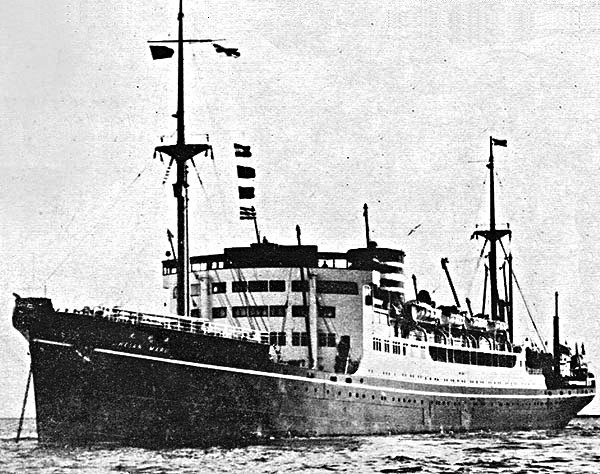
Heian Maru was laid down at the Osaka Iron Works on 19 June 1929 as an 11,616-ton passenger liner for Nippon Yusen, a sister of Hie Maru and Hikawa Maru. She was launched on 16 April 1930 and completed on 24 November 1930. Her maiden voyage was from Hong Kong toward Seattle. Through the 1930s she ran NYK's Kobe–Seattle service. On 16 August 1941 she returned to Yokohama from Seattle, the last Japanese voyage to Seattle before the Pacific war.
She was converted to a submarine tender. On 1 November 1943 Captain-retired Toshiharu Tamaki, class 36, assumed command at Yokosuka. The parenthetical rank on that line of his appointment is rear admiral, posthumously. He survived Truk. When or where he died is not stated, so the promotion is not tied to this sinking.
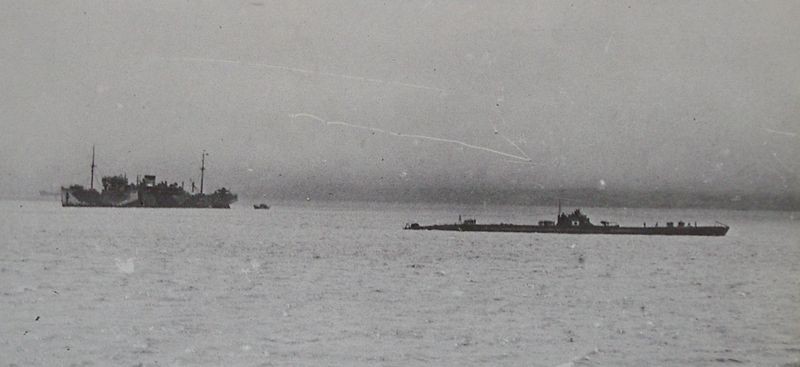
On 17 and 18 February 1944 she was at Truk with Vice Admiral Takeo Takagi and the Sixth Fleet staff. She lay on the lee side of Dublon with the hospital ship Tenno Maru and the cargo ship Urakami Maru. At 0435 on the 17th the air-raid alarm was given. She weighed and zigzagged north of Dublon. The Japanese expected a short raid of the kind that had hit Kwajalein.
At 0110 on 18 February another raid began and she got under way again. At 0304 two bombs burst above the engine room on the port side. A fire started next to the officers' mess, reached the bridge, and threatened a hold that still held torpedoes. At 0312 two bombs hit the bow and she began to go faster. About 0500 Captain Tamaki ordered the flag lowered and the ship abandoned. The survivors, Tamaki among them, reached the 85th Submarine Base Unit. Sixteen passengers, one crewman, and a civilian from the Nippon Yusen staff were killed. Twenty-five men were wounded. At 0930 Avengers from Bunker Hill hit the burning ship with a torpedo on the port side amidships and she capsized. She went down at 07-23 N, 151-52 E and lies on her port beam in about 110 feet.
A note on sources. The times, Tamaki's command, and the resting place are the tabular record by Hackett, Kingsepp, and Peter Cundall on combinedfleet.com. Her own commanding officer is not named in that record before 1 November 1943. The Joint Army-Navy Assessment Committee calls her a converted submarine tender of 11,614 tons, sunk by carrier aircraft at 7-23 N, 151-51 E, and dates the loss 17 February. The movement record puts the bombs and the capsizing on the 18th.