Isokaze (磯風) carries a name that means shore wind. She was the second destroyer of that name, a Kagero-class ship built at Sasebo. She was laid down on 25 November 1938, launched on 19 June 1939, and commissioned on 30 November 1940.
On 7 December 1941 she was in the screen of Admiral Nagumo's carriers for the attack on Pearl Harbor. She was not hit. On 1 March 1942, south of Java, she and Chikuma fired on the Dutch freighter Modjokerto. The freighter sank in about three minutes. That sinking is not credited to one of them.
At Midway she was the plane guard for Soryu. A bomb fell close aboard and ruptured fuel tanks. She could still steam. Soryu was stopped and burning. Isokaze and Hamakaze took survivors off. The post-war account is that Isokaze then put three torpedoes into Soryu. The carrier's loss is not credited to her. The dive bombers had already wrecked Soryu. She was docked at Kure from 22 June to repair the near miss.
On 10 January 1943, southeast of New Britain, a plane found the submarine Argonaut. Maikaze depth-charged her, and Isokaze joined Maikaze in shelling the boat until it sank. The sinking is not credited to Isokaze alone. On 7 February, on an evacuation run, two bombs hit her forward of the bridge. Ten men were killed. The bow stayed on. She was towed in, and the repairs at Kure ran into July. On 4 November a mine at Kavieng wrinkled her side and cut her best speed. She went home again.
On 19 June 1944 she was with Admiral Ozawa's carriers in the Philippine Sea. Albacore put one torpedo into Taiho that morning. Isokaze stayed with the carrier. That afternoon Taiho blew up. Isokaze went alongside through the burning oil and took men off, among them the executive officer and the navigator. Taiho sank. That loss is Albacore's, not hers. She was not hit.
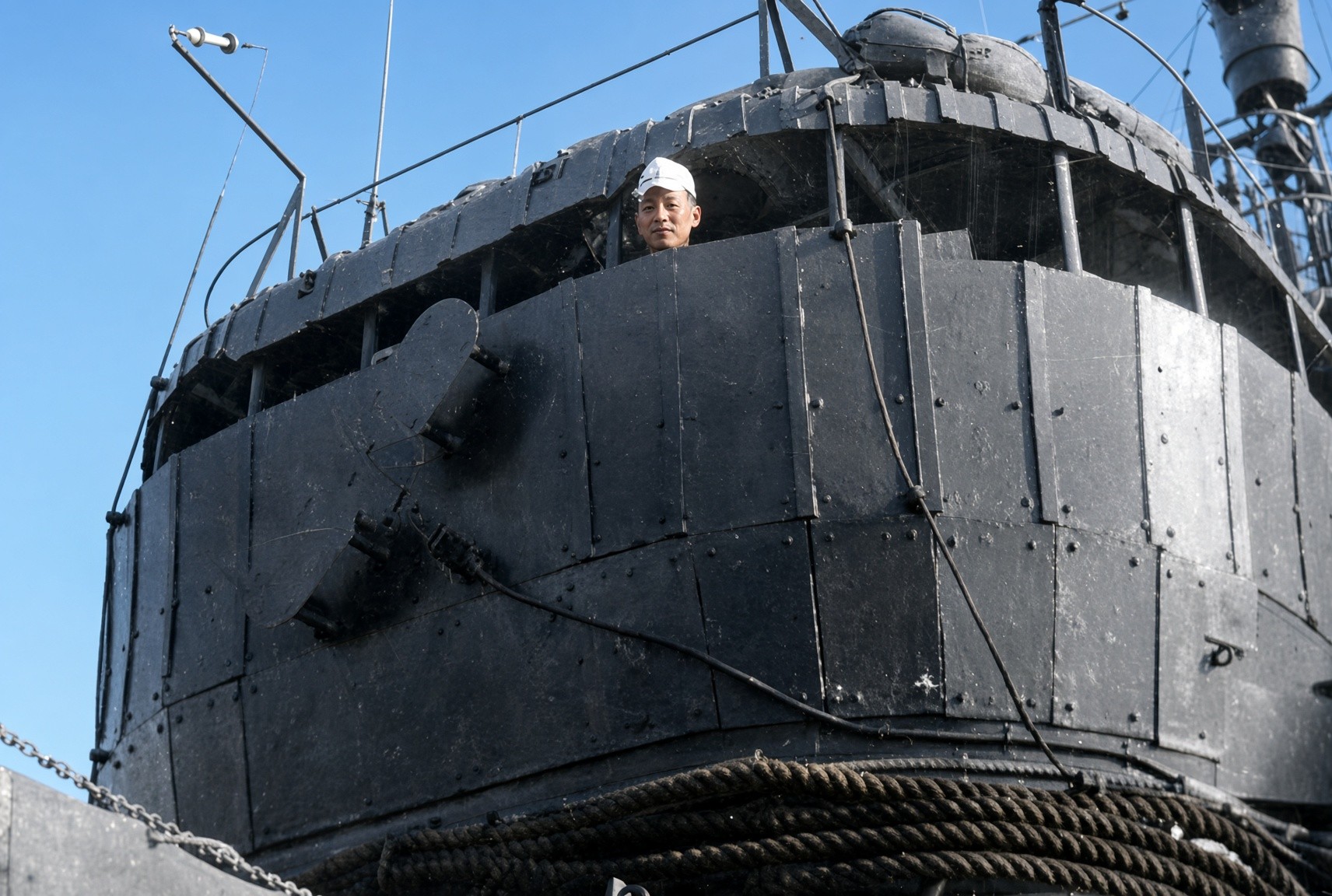
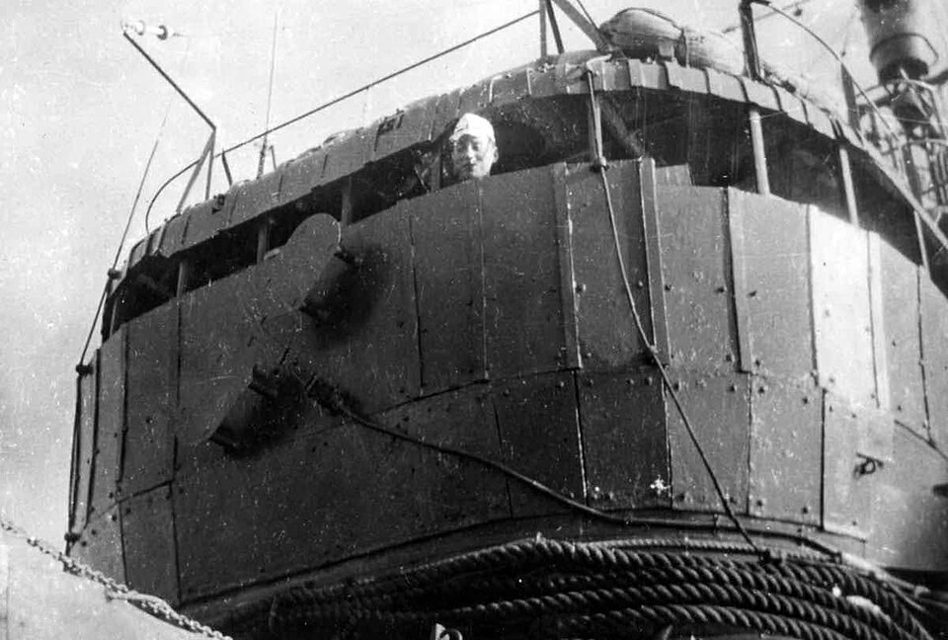
On 21 October 1944, at Brunei, her torpedo officer, Lieutenant Tobei Shiraishi, photographed her bridge and Kurita's fleet at anchor. She sailed with that fleet. Off Samar on 25 October she was in the screen with Yahagi, Urakaze, Yukikaze, and Nowaki, and she fired eight torpedoes at the escort carriers. She was not sunk. No American ship lost that morning is credited to her.
On 7 April 1945 she was with Yamato, bound for Okinawa. She tried to go alongside the crippled Yahagi and was driven off by the air attack. A near miss flooded the port engine room. She tried to retire at 12 knots, and then lost her steering and her power. Twenty men were killed and fifty-four wounded. Yukikaze took off 285 survivors, including her captain, Saneho Maeda, and Captain Kiichi Shintani of Destroyer Division 17. That night Yukikaze fired into the torpedo mounts of the abandoned ship, and Isokaze went down about 150 miles southwest of Nagasaki. The loss is credited to the air attack, not to Yukikaze, and not to one carrier. She was struck on 25 May 1945.
A report made public on 8 February 2018 identified the wreck. Fukuda Salvage & Marine Works had found her.