Ships
- USS Chester (CA-27) Captain from 24 June 1930
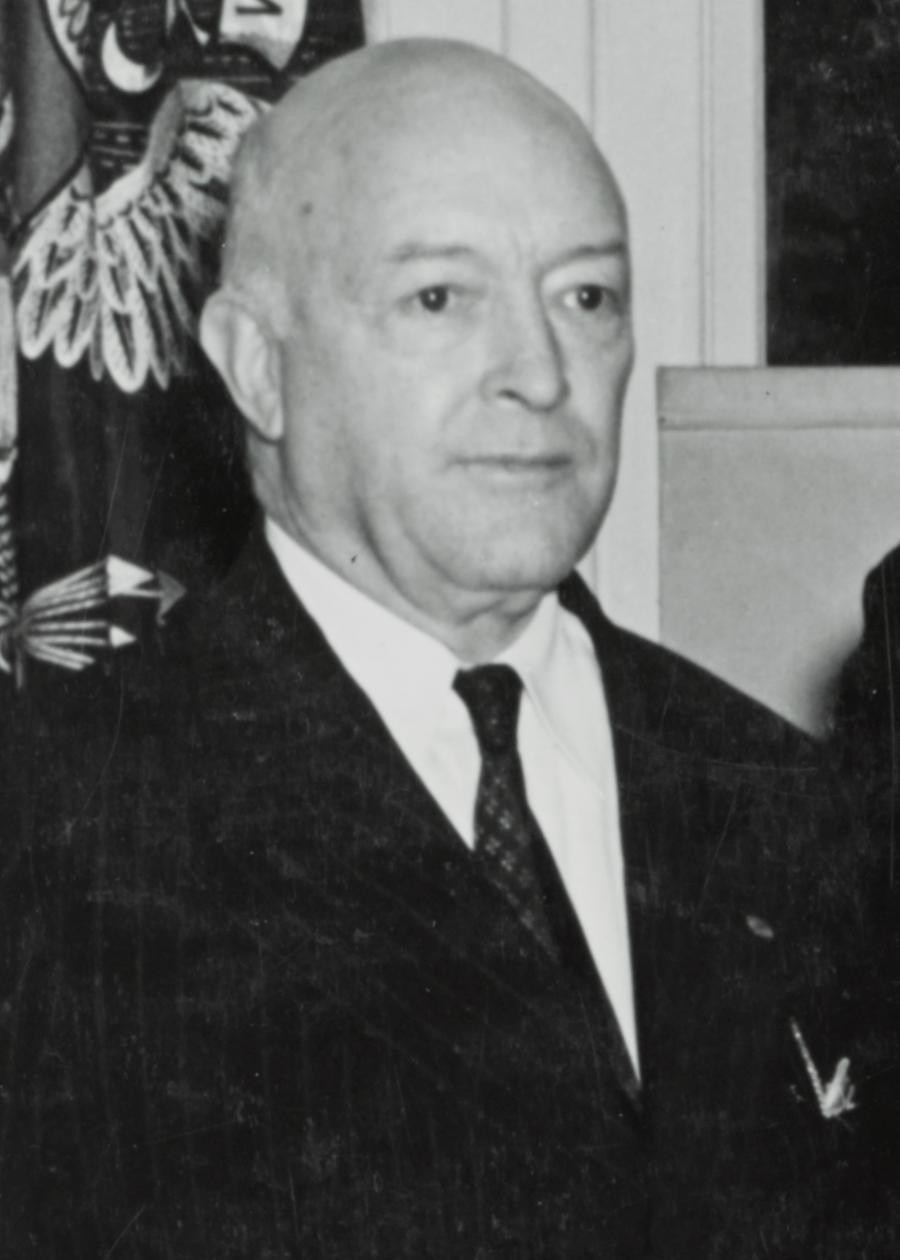
Arthur Philip Fairfield (29 October 1877 – 14 December 1946) was a United States Navy officer from Saco, Maine, who entered the Naval Academy in 1897, graduated with the Class of 1901, and retired as a vice admiral on 1 November 1941. His seagoing commands included the destroyers McDougal and Gregory in the First World War and the heavy cruiser Chester, which he commissioned in 1930. As a rear admiral he commanded Cruiser Division 7 of the Scouting Force, led the temporary Squadron 40-T that evacuated Americans from Spanish Civil War waters in 1936–1937, served as Assistant Chief of Naval Operations, and commanded Battleship Division Three of the United States Fleet in the last years before Pearl Harbor. After retirement he was recalled for the Second World War and worked in Washington as an adviser to the Maritime Commission and on awards boards.
He was born in Saco, Maine, on 29 October 1877. The Navy Register of 1941 records the date and the state of birth, and the Academy yearbook of his graduating class places him as a Saco man. A death notice printed after he died in 1946 likewise begins with Saco. Secondary biographical compilations name his parents as Rufus Albert Fairfield and Frances Mary Patten and describe him as a great-grandson of John Fairfield, the nineteenth-century Maine governor; those family details have not been verified here against contemporary vital records and rest on those later compilations.
He attended Thornton Academy in Saco and then spent two years at Bowdoin College in Brunswick before leaving for Annapolis. Bowdoin’s later honorary-degree list treats him as of the Class of 1899—the class with which he would have graduated had he stayed—and in 1924 the college conferred on him an honorary Master of Arts. The citation for that degree, preserved in a later memorial compilation, called him “for two years a member of the Class of 1899, later a graduate of the United States Naval Academy,” and praised him as a “brave, modest, and loyal representative of that branch of the service that the State of Maine particularly delights to honor.”
The 1901 Lucky Bag, the midshipmen’s yearbook, entered him under the nickname “Few Hairs,” with the hometown “Buzzard, Saco, Me.” The sketch is short and mocking in the period style. “A small, aged man whose hair fell out in his youth. He had one hair examined by the doctor in hopes of finding an efficient hair-restorer, but failed. A genial companion. Is quiet and unobtrusive and cares for his own business only. The Captain of the ‘Great Hustler team’ of 1900.” He appears in the class lists as A. P. Fairfield and is recorded as having taken part in the gymnasium tournament and in the “Hustlers.” The yearbook does not describe his parents’ work or his school years in any further detail.
As a naval cadet he served, according to the death notice and later summaries, in the protected cruiser Columbia during the war with Spain. The Academy graduated him in 1901. The Register of 1945 gives his date of entry as 8 September 1897, from Maine.
The early commissioned years after 1901 are thinly documented in the sources examined here. The registers and directories that survive in digitized form for those decades place him on the line-officer ladder that led, by the First World War, to destroyer command. By January 1918 the Register listed him as a commander (temporary), born 29 October 1877 in Maine, appointed from Maine on 8 September 1897, with recent sea service ending in November 1917—timing that matches his relief from McDougal.
His first major independent command was the O’Brien-class destroyer McDougal (Destroyer No. 54). The Dictionary of American Naval Fighting Ships, as transcribed in a destroyer-association compilation that reproduces the May 2017 DANFS text, has him in McDougal when the ship sailed from the York River on 14 April 1917 with the first American destroyer division bound for Queenstown (Cobh), Ireland. That division—under Commander Joseph K. Taussig in Wadsworth, with Porter, Davis, Conyngham, McDougal, and Wainwright—reached Queenstown on 4 May and reported to Vice Admiral Sir Lewis Bayly of the Royal Navy. Fairfield’s Bowdoin honorary citation later linked him to that famous exchange in which the American destroyer commander, asked how soon he could be ready for service, answered that the ships were ready now; the citation attaches the reply to the division’s arrival rather than to Fairfield personally, and the standard accounts credit Taussig with the words.
On the night of 8 September 1917, while McDougal was escorting a mercantile convoy, a lookout sighted a submarine on the starboard bow. According to the DANFS narrative, the destroyer closed to about five hundred yards before the submarine submerged, dropped two depth charges on the spot, and later found an oil slick about a mile across, though no wreckage. Vice Admiral Bayly commended the crew and concluded that the convoy would likely have suffered serious damage without the intervention. The Navy Cross later awarded to Fairfield cites “prompt and efficient action in contact on 8 September 1918 with a submarine which attempted an attack upon a convoy.” The year in the citation text as reproduced by the Military Times Hall of Valor does not match the DANFS date of 8 September 1917. The ship’s history and Fairfield’s relief date make 1917 the consistent year; the citation’s 1918 appears to be an error in the award text as later printed. A NavSource commanding-officers list that ends Fairfield’s McDougal tour on 13 August 1917 is likewise inconsistent with the DANFS account, which has Lieutenant Commander William T. Conn relieving Commander Fairfield on 3 December 1917.
After McDougal he commissioned the new flush-deck destroyer Gregory (DD-82) on 1 June 1918 and took her to European waters. An official-history summary reproduced by a later Gregory association page describes the ship joining a convoy at New York, sailing for Brest on 25 June, escorting convoys between French and British ports through the last summer of the war, and then serving with the patrol squadron at Gibraltar from early November. The same summary has her carrying passengers and supplies in the Adriatic after the Armistice and returning to New York in June 1919. Fairfield’s Bowdoin citation and the 1946 death notice also place him on Admiral William S. Sims’s staff at Queenstown as assistant chief of staff to the commander of United States naval forces in European waters. The Library of Congress finding aid to the Sims papers lists correspondence with Arthur P. Fairfield for 1915–1933, which is consistent with a working relationship across those years, though the finding aid itself does not spell out the wartime staff billet.
After the war he taught at the Naval Academy. A later Navy ordnance textbook history records that the 1921 edition of Naval Ordnance was prepared by officers of the Academy’s Department of Ordnance and Gunnery and that Commander A. P. Fairfield was head of the department; major credit for the revision is given there to Commander F. D. Pryor. The book appeared under Fairfield’s name from the Lord Baltimore Press in 1921. He was promoted to captain with date of rank 1 November 1923, as the Register of 1933 records.
In June 1930 he commissioned the new Northampton-class cruiser Chester (CA-27) at Camden, New Jersey. The Dictionary of American Naval Fighting Ships opens her history with the commissioning date—24 June 1930—and with “Captain A. P. Fairfield in command.” Under him she made an early European cruise to Barcelona, Naples, Constantinople, Phaleron Bay, and Gibraltar, then joined the Scouting Fleet. A secondary NavSource commanding-officers compilation dates his relief by Captain Martin K. Metcalf to 14 June 1932; DANFS does not name the relief. The Register of 1933 then places him at the Naval War College at Newport for instruction. The Naval War College’s own register of officers, as cited in later summaries, lists him among the senior-course graduates of 1933. The Navy Register marks him with the code for completion of the senior course.
He was promoted to rear admiral with date of rank 1 September 1934. The Register of 1936 lists him as commander of Cruiser Division 7, Scouting Force, United States Fleet. A contemporary note in the United States Naval Institute Proceedings for November 1936 said that until recently he had commanded that division from the heavy cruiser Astoria, and that before his flag promotion he had been Assistant Chief of the Bureau of Navigation as a captain. Those Proceedings details are useful and specific, but they are a single journal note and have not been cross-checked here against the Bureau’s own orders.
The war that shaped the last active decade of his career was not, at first, the American war of December 1941. It was the Spanish Civil War, which broke out in July 1936 and forced Washington to improvise a standing naval presence in European waters for the protection and evacuation of American nationals.
In September 1936 the Navy organized Squadron 40-T, a temporary squadron for Spanish waters. The Dictionary of American Naval Fighting Ships entry on the light cruiser Raleigh (CL-7) is explicit: “Rear Adm. Arthur P. Fairfield broke his flag in Raleigh at Norfolk 17 September 1936. The next day the cruiser steamed independently for Gibraltar, arriving 27 September. Destroyers Kane (DD-235) and Hatfield (DD-231) and CGC Cayuga, in company with Raleigh, initially comprised the Squadron. Together, the ships saved hundreds of Americans and other nationals from the dangers of the war in Spain.” A later study that draws on the squadron commander’s weekly reports in the National Archives confirms the same opening force and dates Fairfield’s relief by Rear Admiral Henry E. Lackey to 4 December 1937. That study also records that Kane and Hatfield completed their Squadron 40-T duty in late October and early November 1937 and were succeeded by Manley and Claxton; some later obituaries that name Claxton and Manley as Fairfield’s original destroyers are compressing the squadron’s changing composition. Omaha relieved Raleigh as flagship in April 1938, after Fairfield had already been relieved.
The weekly reports summarized in that archival study show the work of the command in concrete terms: evacuations of small parties of Americans and other nationals from Barcelona, Valencia, and other ports; the long, difficult embarkation of refugees by Kane off Santander in weather and under local obstruction; the rescue of large numbers of Cubans from Alicante; disputes with Ambassador Claude Bowers over whether further trips into threatened ports were justified; and constant reporting on foreign warships, mining, and the military situation ashore. The DANFS phrase “hundreds of Americans and other nationals” is the official summary of results. No personal letter or memoir by Fairfield from those months has been found in the sources examined here.
After Spain he returned to Washington. Later summaries, including the photograph caption that identifies him as Assistant Chief of Naval Operations in 1939, place him in that office in 1938–1939. The 1946 death notice likewise remembered him as “formerly Assistant Chief of Naval Operations.” The precise dates of the billet have not been confirmed here from a Navy Directory line, but the identification is consistent across those sources.
He then went back to sea in command of Battleship Division Three. Fleet Notice 47N-40 of 15 October 1940, issued by Admiral J. O. Richardson as Commander-in-Chief, United States Fleet, and effective 1 November 1940, lists Battleship Division Three as Idaho (flag), Mississippi, and New Mexico, with Observation Squadron Three. In the same notice’s roster of flotilla, squadron, and division commanders, “36 Rear Admiral A. P. Fairfield” appears opposite “Battleship Division Three.” The Navy Register of 1941 lists Fairfield among the rear admirals, with date of rank 1 September 1934, Navy Cross, Naval War College senior course, birth 29 October 1877 in Maine, and entry 8 September 1897 from Maine. The same register’s duty columns, read with neighboring entries, are consistent with shore duty beginning in March 1941 after sea service that ended in February 1941—timing that fits a relief from the battleship division in early 1941.
He retired on 1 November 1941 and was carried on the retired list as a vice admiral. The Register of 1942 already carries him as vice admiral with the retirement date. A month later Japan attacked Pearl Harbor. The death notice of December 1946 states that the officer who had retired in 1941 “was recalled during the recent war to serve as an adviser to the Maritime Commission.” Later summaries add service as chairman of a Board of Medals and Decorations (or Board of Awards) among other duties. The wartime registers continue to list him as a retired vice admiral on active duty into 1944 and 1945. The sources examined here do not yield a detailed account of his day-to-day work in those years—no signed memorandum, no hearing transcript that puts his own words on the record about merchant-marine awards or Maritime Commission policy has been located for this essay—and the Merchant Marine decorations debate of 1943, though closely related to the subject of wartime awards, is documented in presidential and departmental memoranda that do not name him.
He was not a fighting captain of 1942–1945. His ship commands and his battleship-division command belonged to the years before American entry. What the war asked of him, once he was recalled, was staff and advisory work in Washington while younger officers took the destroyers, cruisers, and battleships to sea.
He left active duty again about 1945. On 14 December 1946 he died at the Naval Medical Center in Bethesda, Maryland, of a heart ailment aggravated by pneumonia, at the age of sixty-nine. The death notice published the next day in Washington identified him as formerly Assistant Chief of Naval Operations, sketched the Saco birth, the Bowdoin years, the Naval Academy, the Spanish War service in Columbia, the First World War commands of McDougal and Gregory and the Sims staff duty at Queenstown, the Spanish Civil War squadron, and the wartime recall to the Maritime Commission. It named as survivors his widow, Mrs. Nancy Duval Fairfield, and a brother, George A. Fairfield of Mineola, Long Island. He and his wife are buried at Arlington National Cemetery. Secondary compilations give her name as Nancy Douglas Duval Fairfield and her dates as 1874–1947; the death notice names her only as Mrs. Nancy Duval Fairfield. Arlington’s burial detail, as cited in later compilations, places the grave in Section 2, grave 4935.
A Liberty ship launched in 1944 as William Hodson, which had served under lend-lease as Chung Tung, was renamed Arthur P. Fairfield in 1947 and Admiral Arthur P. Fairfield in 1948 while operated by the American Pacific Steamship Company. That commercial renaming is recorded in shipping-line compilations; it is a namesake, not a naval command.
What the record leaves is an officer formed in the Maine coast towns and the old Academy, tempered in the destroyer war of 1917–1918, trusted with a new cruiser and then with flag commands that mixed diplomacy, evacuation, and the last peacetime battle line, and finally called back from retirement to sit in Washington while the fleet he had helped to shape fought without him. The citations and ship histories speak in the official voice. The yearbook remembered a quiet, unobtrusive midshipman who minded his own business. The honorary degree from Bowdoin called him modest. Between those phrases and the oil slick off a convoy in September 1917, the hundreds taken out of Spanish ports in 1936–1937, and the battleship division that flew his flag in Idaho in 1940, the public record of Arthur Philip Fairfield largely consists.