Ships
- USS Nevada (BB-36) Captain from 4 December 1933 · Relieved on 25 June 1935
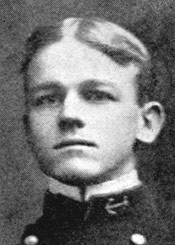
Adolphus Staton was born in Tarboro, North Carolina, on 28 August 1879, the son of Dr. Lycurgus Lafayette Staton and Kate Baker Staton. He attended the Virginia Military Institute and the University of North Carolina, then entered the United States Naval Academy and graduated in 1902. His first sea duty was in the protected cruiser Chicago and the new cruiser Cleveland. The Navy commissioned him an ensign in May 1904.
He served next in the battleship Connecticut and was promoted to lieutenant in May 1907. In June 1909 he joined the gunboat Yorktown. After that cruise he took charge of the Navy recruiting station at Los Angeles. He returned to sea in September 1911 in the battleship Florida, moved on to the armored cruiser North Carolina, and later joined the battleship South Carolina.
On 22 April 1914, during the landing at Veracruz, Lieutenant Staton commanded a battalion of sailors. His Medal of Honor citation recorded that he was eminent and conspicuous in that command, and that he led his men with courage and skill through the action of the 22nd and into the occupation of the city. In June he was ordered to the Office of the Judge Advocate General in Washington. He earned a law degree from George Washington University in 1917, where he was president of his class, and was admitted to the bar of the District of Columbia that year.
Staton asked for sea duty in a war zone and, during the First World War, served briefly as navigator of the battleship Oklahoma before taking command of the gunboat Dubuque. He later became executive officer of the transport Mount Vernon. On 5 September 1918 a torpedo hit Mount Vernon about two hundred miles from Brest, France. The ship remained afloat and reached port under her own power. As a commander, Staton received the Navy Cross. The citation credited the discipline of the officers and crew, and the efficiency that held through the torpedoing and afterward, in large part to his energy and zeal as executive officer.
In June 1920 he reported to the new battleship Tennessee for her fitting out and served as her executive officer. He finished the Naval War College course at Newport in April 1922 and returned to the Judge Advocate General’s office as an assistant. Command at sea followed. He commanded the gunboat Asheville and the tenders Argonne and Black Hawk, the last from May 1924 to July 1926. He was promoted to captain on 4 June 1925. From 1926 to 1929 he headed the officers’ discipline division in the Bureau of Navigation in Washington.
In March 1929 Captain Staton took command of Destroyer Squadron 11 of the Battle Fleet, and about a year later he transferred to Destroyer Squadron 6. He completed the Army War College course in 1932 and remained in Washington as a chief coordinator under the Director of the Budget. In July 1933 he became assistant director of the Office of Naval Intelligence.
On 4 December 1933 he assumed command of the battleship Nevada. He was her captain through the peacetime cruising of the United States Fleet and was relieved on 25 June 1935. In July 1935 he went to Fort Leavenworth, Kansas, for staff duty at the Army Command and General Staff School, and he remained there until he left active duty.
Staton retired on 30 June 1937 and was advanced to rear admiral on the retired list. He was admitted to the Maryland bar in 1939 and worked in real estate from Chevy Chase, including as an executive of Falkland Properties in Silver Spring. During the Second World War the Navy recalled him to the Office of the Under Secretary of the Navy, where he served on a board that administered the removal of radio operators judged subversive from American merchant ships. He died at his home in Chevy Chase, Maryland, on 4 June 1964, and was buried at Arlington National Cemetery.