Ships
- USS Taylor (DD-468) Captain from 28 August 1942
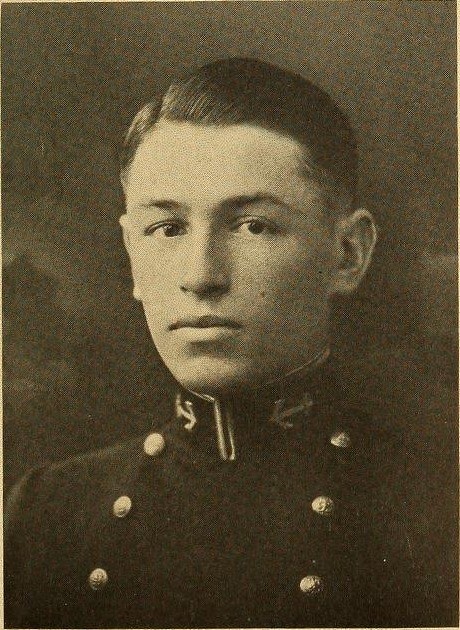
Benjamin Katz was born on 11 April 1904 in Kovno, in the Russian Empire, and his home was Cambridge, Massachusetts. He graduated from the United States Naval Academy with the Class of 1926. He was promoted to lieutenant on 30 June 1936 and to lieutenant commander on 1 January 1942.
From 23 November 1941 until 2 May 1942 he commanded the old four-stack destroyer Dallas. In the escort force that sailed just as the United States entered the war, Dallas helped take a convoy across the North Atlantic to Londonderry in Northern Ireland.
On 28 August 1942, the day the new Fletcher-class destroyer Taylor was commissioned at the Boston Navy Yard, Lieutenant Commander Katz became her first commanding officer. Bath Iron Works had built the ship. She joined Destroyer Squadron 20 at Portland, Maine, for shakedown and served as a squadron flagship from 28 September. After a cruise to Jamaica, Guantánamo Bay, and Bermuda, she left New York on 13 November to screen a 42-ship support force for the invasion of North Africa. In heavy weather on that passage, a boarding party from Taylor went aboard the Spanish steamer Darro to keep word of the convoy off the radio. Taylor then left her squadron, passed through the Panama Canal on Christmas Eve, and headed for the South Pacific. Katz and a classmate who had Radford were the first officers of the Naval Academy Class of 1926 to command the new 2,100-ton destroyers.
She arrived in time for the air attacks off Rennell Island at the end of January 1943, in which the cruiser Chicago was torpedoed and lost. For about nine months after that, Taylor operated under Admiral William F. Halsey, at times with Captain Frank McInerney’s Destroyer Squadron 21 and at times with the destroyers attached to Rear Admiral Richmond Kelly Turner’s amphibious force. Early offensive work included a bombardment on 15 March of the Japanese base at Vila, on Kolombangara, and escort of the oiler Kanawha into Tulagi late that month. Through the Solomons campaign the ship carried out night and dawn bombardments, minelaying runs, actions against aircraft, hunts for Japanese ships trying to leave the Kula Gulf area, and rescues.
On the night of 12–13 July 1943, in the battle off Kolombangara, the Japanese cruiser Jintsu caught Taylor in a searchlight and lit the destroyer as if it were day. Katz received the Silver Star for his conduct as commanding officer of Taylor on 12 and 13 July. On the night of 17–18 August he received the Navy Cross. A Japanese force of destroyers and a large number of landing barges was trying under cover of darkness to reinforce garrisons in the Vella Lavella–Kolombangara area. Katz took Taylor into the interception through gun and torpedo fire, and the ship came out of the fight without a hit.
He remained in command until 16 January 1944, when Nicholas J. Frank, Jr., relieved him after Taylor had returned to the West Coast. Katz was advanced to temporary captain on 20 March 1945 and later retired as a rear admiral. When Admiral C. Turner Joy, the senior American naval commander in Japan, was named United Nations truce negotiator, Katz went with him to Korea to supervise communications.
After retirement he earned a master’s degree in engineering administration from George Washington University. He then spent twelve years with manufacturing firms in Alexandria, Virginia, managed a hotel there, and took part in local business and community affairs. He died on 24 February 1985, at the age of eighty, at a hospice in Northern Virginia, and was buried at Arlington National Cemetery.