Ships
- USS Dunlap (DD-384) Captain from 12 June 1940 · Relieved on 15 September 1941
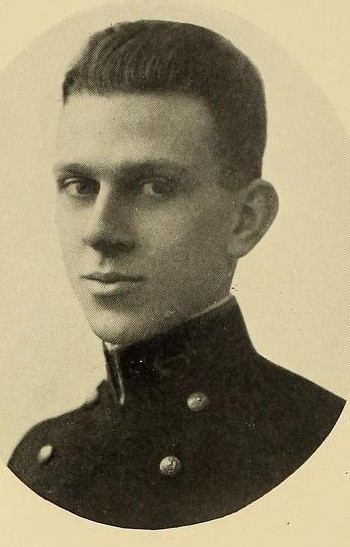
Lieutenant Commander Carl Hilton Bushnell commanded the destroyer Dunlap through the last year of peace in the Pacific. He was born in Baltimore, Maryland, on 25 January 1900. In June 1917 he entered the United States Naval Academy with the class the First World War sent to sea on a shortened course, and he was commissioned an ensign on 5 June 1920. He became a lieutenant (junior grade) in June 1923 and a lieutenant in June 1927. Promotion to lieutenant commander followed on 1 July 1936.
On 12 June 1940 he took command of Dunlap (DD-384), relieving Rockwell Justus Townsend. The ship was a fast fleet destroyer of about 1,500 tons, laid down for a speed near 35 knots and armed with five 5-inch guns and a heavy torpedo battery. United Shipbuilding and Dry Dock launched her at New York on 18 April 1936, and she was commissioned on 12 June 1937 with Albert Ernest Schrader, Jr. as her first commanding officer. She was named for Marine Brigadier General Robert H. Dunlap. Her early service ran along both coasts, including training cruises and, in June 1938, escort duty at Philadelphia for the Swedish liner carrying the Crown Prince of Sweden. In April 1940 she sailed for Pearl Harbor, which became her home port, so Bushnell assumed command with the ship already based in Hawaii.
For fifteen months Dunlap stayed with the Pacific Fleet in Hawaiian waters. The work was the ordinary hard routine of a destroyer in a fleet that was drilling for a war the country had not yet entered: gunnery, torpedo practice, screening, and long days at sea out of Pearl Harbor. On 1 July 1941, while he still had the ship, Bushnell was promoted to commander. He turned Dunlap over on 15 September 1941 to Virginius Randolph Roane.
The destroyer's combat record was made under the captains who followed him. With Roane she was at sea in a carrier task force when Japanese aircraft struck Pearl Harbor, and she went on the early carrier raids of 1942. Clifton Iverson had her from April 1943, including the night action in Vella Gulf that August, when Frederick Moosbrugger led the American destroyers. Cecil Rice Welte commanded her from August 1944 through the end of the war, a stretch that included further Pacific operations and the Japanese surrender of the Bonin Islands, which was received on her deck. Dunlap earned six battle stars. That fighting lay ahead of the crew Bushnell had trained in 1940 and 1941.
His own war was spent largely on the production of weapons rather than on a bridge. He was given the temporary rank of captain on 21 June 1942. From 1 April 1943 to 18 August 1945 he directed the production of underwater ordnance in the Bureau of Ordnance, covering torpedoes, mines, depth charges, and defense nets at a time when fleet demand had outrun every peacetime factory plan. He received the Legion of Merit for that work. The award recognized the judgment and drive with which he kept those weapons moving to ships in every theater.
After the surrender he returned to sea in larger ships, still as a temporary captain. He commanded the light cruiser Concord from 23 September to 12 December 1945. On 23 January 1946 he became commanding officer of the battleship Pennsylvania and remained until 1 June 1946, in the months when that ship, worn by wartime damage, was being taken out of active service. Bushnell retired from the Navy on 1 July 1951. He died at Bremerton, Washington, on 1 February 1955, at the age of fifty-five. From a midshipman's appointment in 1917 to a battleship after the Second World War, the fifteen months in Dunlap were the destroyer command that carried him into the fleet's last year of peace.