Ships
- USS O'Bannon (DD-450) Captain from 26 June 1942
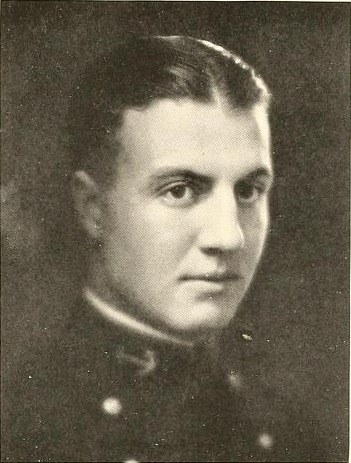
Commander E. R. Wilkinson, Edwin Richard Wilkinson, was the first commanding officer of O'Bannon. Born on 23 September 1902, he graduated from the Naval Academy in 1924 and later retired as a rear admiral. On 26 June 1942 he placed the new destroyer in commission at Boston. Bath Iron Works in Maine had built her as one of the earliest ships of the Fletcher class, and the Navy sent her toward the Pacific as soon as her crew could be worked up.
After a short training period in the Caribbean, O'Bannon left Boston on 29 August 1942 for the Southwest Pacific, where the fight for Guadalcanal was already underway. From a base at Nouméa, New Caledonia, Wilkinson’s ship began escort duty among the islands. In early October she took the escort carrier Copahee in toward Guadalcanal, and Marine pilots flew Wildcat fighters off the carrier to strengthen Henderson Field. Through the rest of that month the destroyer stayed on escort work in the New Hebrides and the southern Solomons.
On 7 November 1942 O'Bannon joined Rear Admiral Daniel J. Callaghan’s support group with a convoy carrying reinforcements, food, ammunition, and aviation supplies. As the ships neared Guadalcanal, the destroyer sighted a Japanese submarine on the surface, fired on it, and kept it down until the convoy had passed. On the night of 12 November, fifteen Japanese torpedo bombers attacked the transports. All but one were shot down, four of them by O'Bannon.
In the early hours of 13 November the same force met a heavier Japanese squadron in the waters off Savo Island, later known as Ironbottom Sound. The American column ran Cushing, Laffey, Sterett, and O'Bannon, then the cruisers Atlanta, San Francisco, Helena, Portland, and Juneau, with Aaron Ward, Barton, Monssen, and Fletcher astern. O'Bannon closed the battleship Hiei so tightly that the battleship could not depress her main guns onto the destroyer. Gunfire from Wilkinson’s ship and from the rest of the American force left Hiei crippled, and aircraft sank her the next day. The destroyer also engaged other enemy ships, took damage, and still withdrew. For his leadership on 12 and 13 November, Wilkinson received the Navy Cross. The award recognized the seamanship and fighting spirit with which he helped a smaller force break up a stronger enemy’s plan against Henderson Field. The ship’s Presidential Unit Citation, covering her first year in the South Pacific, credited O'Bannon with three torpedo hits on a Japanese battleship that night and with gunfire against two other enemy warships.
Wilkinson’s action report of 17 November 1942 described a crew that had been together only since the June commissioning and had stayed at their stations while shells fell around the ship. He was still in command at the start of January 1943, when O'Bannon went north with cruisers and another destroyer to shell the new Japanese airfield at Munda. Soon after the ship returned to port, the executive officer was promoted into command and Wilkinson went on to another assignment. He also received the Legion of Merit.