Ships
- USS Alden (DD-211) Captain, 5 February 1921 to 21 May 1921
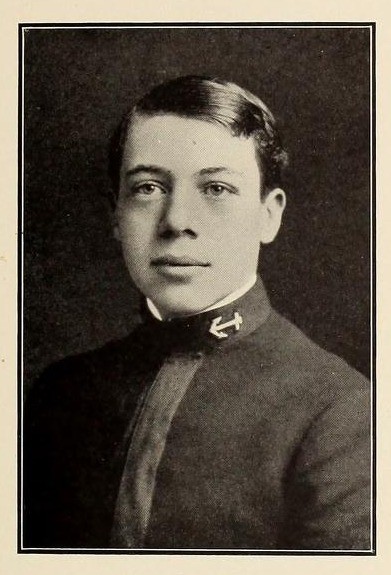
Eldred Bewes Armstrong was born in Terre Haute, Indiana, on 14 June 1886. He entered the United States Naval Academy from Indiana and graduated with the Class of 1906, eighteenth in a class of 101. His senior cruise was in the armored cruiser Maryland. He was promoted to ensign on 13 February 1908.
His early sea duty was in the submarine service. From November 1909 to January 1910 he was the first commanding officer of the submarine Stingray. He then served as executive officer of the gunboat Castine while she was employed as a submarine tender. He rose to lieutenant on 1 July 1911 and to lieutenant commander on 26 June 1917.
During the First World War he commanded the destroyer Mayrant on patrol and convoy work in waters sown with mines and hunted by submarines. For that command he received the Navy Cross. After the Armistice he was executive officer of the transport Antigone, which carried American troops home from Europe. He had held the temporary rank of commander since 1 July 1918.
On 5 February 1921 Armstrong became captain of the destroyer Alden, following William Alexander Ancrum in command. He left the ship on 21 May 1921. On 3 June 1921 his rank of commander was made permanent.
He commanded the collier Abarenda from 21 November 1922 to 24 January 1924. In 1926 he was given the gunboat Asheville on the Asiatic Station, where she served with the fleet in Chinese and Philippine waters. He brought that tour to a close in 1928. On 28 July of that year he sailed from Shanghai with his family in the liner President Grant, and they reached Seattle on 13 August.
From 1929 to 1931 he was officer in charge of the receiving station at Newark, New Jersey. Passed over for promotion, he was placed on the retired list on 30 June 1934, closing about thirty-two years of service. He and his wife, Ethel Chatham Towers, whom he had married in New York on 31 May 1919, settled in Monterey, California, with their son, Eldred Jr.
Armstrong returned to active duty in the Second World War and served in the Twelfth Naval District. His son, a tail gunner in a B-17 of the 32nd Bomb Squadron, 301st Bomb Group, was killed on 31 May 1943 on a mission over Foggia, Italy, one of two men lost from a crew of ten. Ethel Armstrong died in San Francisco on 19 July 1944. Armstrong died in Alameda, California, on 20 June 1950 and was buried at Golden Gate National Cemetery in San Bruno.