Ships
- USS Conyngham (DD-371) Captain from 4 November 1936
- USS Helena (CL-50) Captain, 25 September 1942 – 23 November 1942
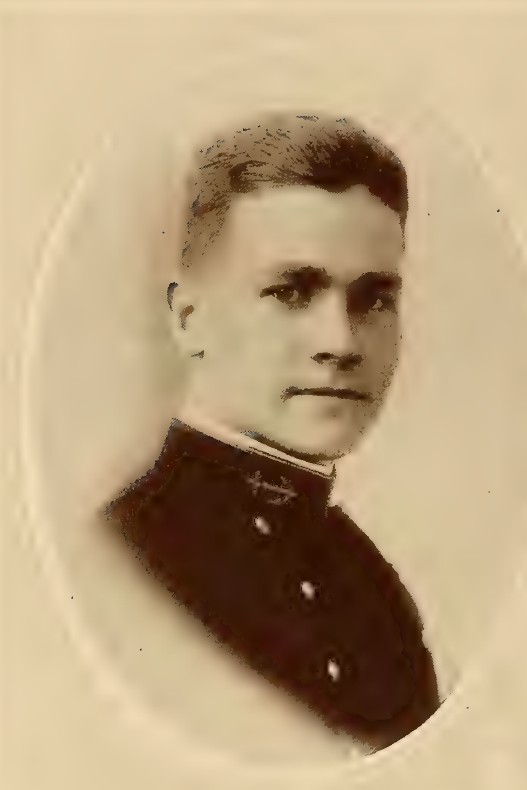
Gilbert Corwin Hoover was born 25 July 1894 in Columbus, Ohio, to Frederick Maynard Hoover and Eliza Florence Kinnear. He entered the Naval Academy and graduated with the class of 1916.
Early service
Ensign Hoover went to the battleship Wyoming and served in her with the British Grand Fleet in the First World War. Between the wars he did the usual line: Washington Navy Yard, White House naval aide under President Herbert Hoover in 1929, command of the destroyer Conyngham at San Diego, Bureau of Ordnance. In 1939 he sat on Roosevelt’s Advisory Committee on Uranium, the panel that opened the American atomic program.
First Navy Cross: Coral Sea
By 1942 he was a captain commanding Destroyer Division 25 / the destroyers of Task Force 11—Morris, Anderson, Hammann, Hughes, Russell. After the Battle of the Coral Sea, 7–8 May, Lexington was exploding and on fire. Hoover put his ships alongside and took survivors off while the carrier was still going up. That earned his first Navy Cross.
Helena
He took command of Helena on 25 September 1942, relieving Oliver Read.
On the night of 11–12 October, Cape Esperance, he fought the rear of the column. The Navy Cross citation for that night credits Helena with sinking a Japanese destroyer on the disengaged side and holding down damage to the American destroyers astern.
On the night of 12–13 November he had Helena in Callaghan’s line off Savo, between Portland and Juneau. Callaghan and Scott were killed. Helena came through with light damage. At daylight Hoover was the senior officer left. Six of thirteen American ships could still steam. He gathered them in Indispensable Strait and took the remnants toward Espiritu Santo: Helena, the wrecked San Francisco, Juneau, and the destroyers that could still fight. Sterett’s sonar was out. Fletcher was his only sound anti-submarine ship. He sent O’Bannon north of San Cristobal to radio a report to Halsey rather than light up his own position.
Juneau
On the run south, Japanese submarine I-26 put a torpedo into Juneau. The cruiser exploded and was gone in seconds. From Helena’s bridge the impression was that no one had lived. There were survivors—on the order of a hundred. Ten of them lasted until they were found days later. The five Sullivan brothers were among the dead.
Hoover did not stop the column to search. He had reports of more submarines on the route, one submarine already in the area, one working sonar ship, and two cruisers of which one was a wreck. He sent a visual to a passing Army bomber asking ComSoPac to get aircraft or a boat out for Juneau. That message, as later told, never reached Halsey.
The relief
At Espiritu Santo, Vice Admiral William F. Halsey took Hoover off Helena. The junior-officer story on the ship was that Halsey called it leaving the battlefield with a ship that could still fight. Charles P. Cecil assumed command on 23 November. Halsey later said the relief had been too fast and that he regretted it. Hoover was not court-martialed. The command was simply gone. A third Navy Cross for the 13 November fight was still written. Nimitz presented one of the Solomons crosses in person. The career as a fighting captain was finished.
Officers who were there have argued both sides ever since. Rear Admiral J. C. Wylie, who was in the force that morning, later called Hoover’s choice the hardest combat decision he had known, made at once, with the knowledge that criticism would come. The other side is simpler: men were in the water, and the column did not turn back.
After Helena
Hoover commanded the Naval Ammunition Depot at Earle, New Jersey. He retired 1 January 1947 as a rear admiral. From 1950 to 1956 he worked for the Atomic Energy Commission at Sandia, Albuquerque, and at Rocky Flats, Colorado.
He died 8 January 1980 in Bristol, Rhode Island, at eighty-five. He was survived by his wife, Mabel Robinson Dumbell; a son, Gilbert C. Hoover Jr.; and two daughters, Katherine H. Miller and Ann H. Wood.
The record without embroidery: three Navy Crosses in one year, two nights in Helena that held Henderson Field, and a morning after Juneau blew up when he kept the wounded force moving and lost the ship for it.