Ships
- USS Bunker Hill (CV-17) Captain from 24 January 1945 · Relieved on 18 August 1945
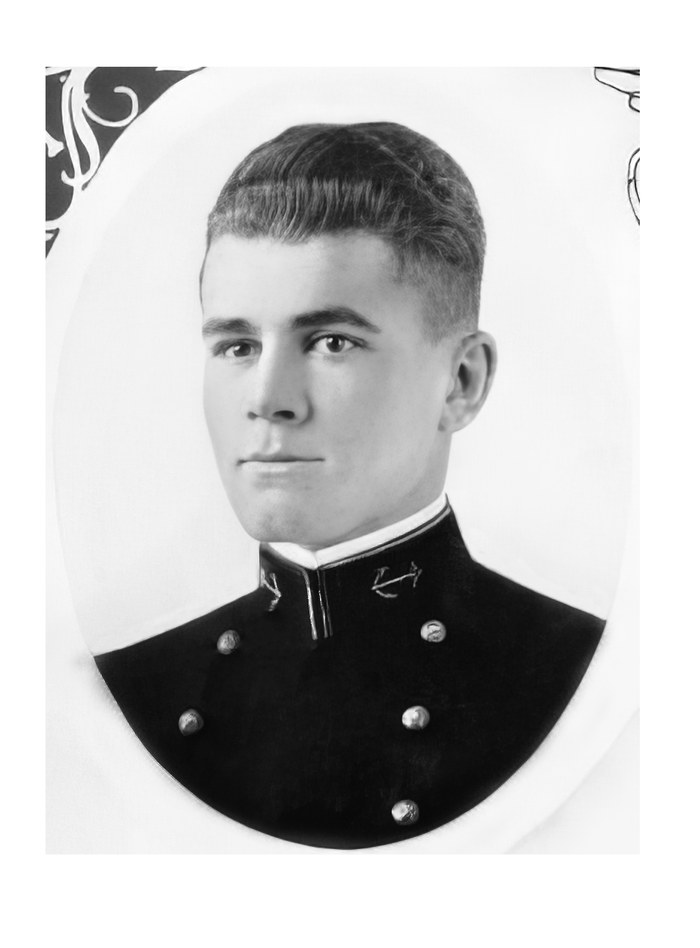
George Albert Seitz was born in Rochester, New York, on 13 March 1897, the son of Albert and Caroline Seitz. He graduated from the United States Naval Academy with the class of 1920. In 1924 the Navy designated him Naval Aviator No. 3157. He later did graduate work at the Massachusetts Institute of Technology.
In the early part of the Second World War his duty was in French Morocco. He took part in moving material to North Africa for the Allied landing and occupation, and he commanded the headquarters squadron of Fleet Air Wing Fifteen and the naval aviation facilities at Port Lyautey.
On 24 January 1945 Seitz assumed command of the aircraft carrier Bunker Hill (CV-17). The ship had completed a yard period at Bremerton and was returning to the western Pacific. Through late winter her aircraft worked with the fast carriers in the Iwo Jima operation and in strikes against Japan and the Ryukyus.
That spring Bunker Hill supported the fighting on Okinawa. On 7 April 1945 her planes joined a fast-carrier attack on a Japanese force in the East China Sea. The battleship Yamato, a cruiser, and four destroyers were sunk in that action, the result of the whole task force, with Bunker Hill one of the carriers whose aircraft took part.
On the morning of 11 May 1945, still off Okinawa, two suicide aircraft struck Bunker Hill in quick succession. Burning gasoline and exploding ammunition swept the flight deck and the decks below. The ship lost 346 men killed, 43 missing, and 264 wounded. Vice Admiral Marc A. Mitscher, who had been flying his flag in the carrier, transferred his flag after the hits. Seitz and the crew fought the fires, kept the ship afloat, and brought her to Pearl Harbor and then to Bremerton for repair. He was relieved on 18 August 1945.
After the war the Navy sent him to the Marshall Islands as a commodore, with headquarters at Kwajalein, where he served as military governor. In mid-October 1947 he was flown from Kwajalein to Oahu for medical treatment. He died of a heart ailment on 24 October 1947, at the age of fifty, at the naval hospital in Aiea, and was buried at Arlington National Cemetery.