Ships
- USS Perkins (DD-377) Captain, 1 March 1943 – 29 November 1943
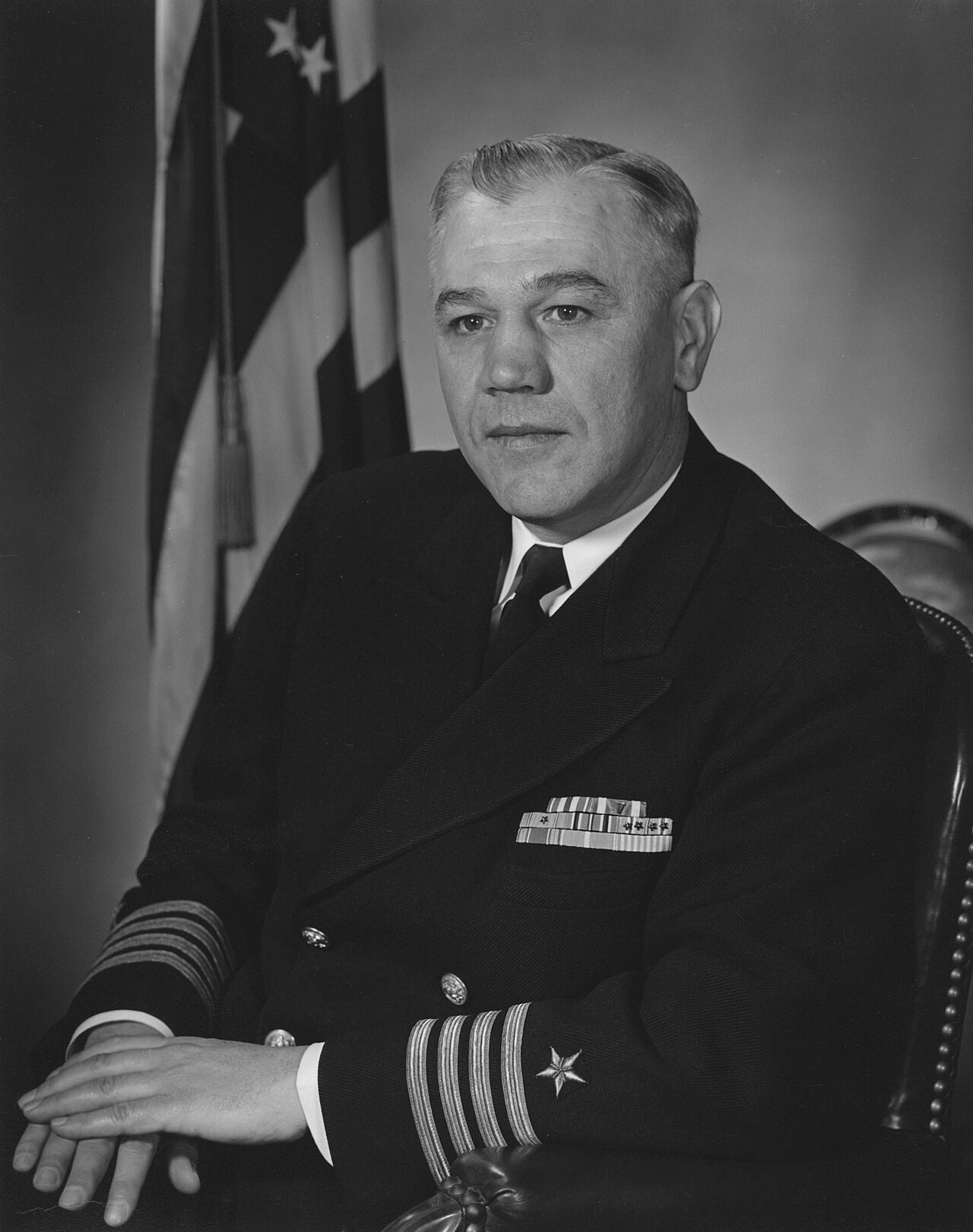
Gerald Lyle Ketchum was born in Bellingham, Washington, on 5 December 1908. He graduated from the United States Naval Academy in 1931 and was commissioned in the Navy. He was a lieutenant in July 1939, advanced to temporary lieutenant commander in June 1942, and became a temporary commander in November 1942. That was the rank he held when the Southwest Pacific gave him a destroyer. He served through the Second World War and the Korean War and rose to rear admiral, with Antarctic expeditions occupying much of his later career.
On 1 March 1943 he took command of the Mahan-class destroyer Perkins (DD-377), relieving Walter Chilcott Ford. The ship was already deep in the South Pacific war. Through the spring she trained with the forces gathering in Australian waters for the drive along the north coast of New Guinea, and by summer she was committed to the fight for the Huon Peninsula. Her work was the everyday labor of a destroyer in an amphibious campaign: screening transports and landing craft, patrolling waters where Japanese submarines were active, and turning her guns on shore positions as Allied troops closed on the Japanese garrisons.
The busiest stretch came in September 1943, during the operations against Lae. Perkins shelled the isolated garrison there, and on 15 September Allied troops entered the town after the last Japanese soldiers pulled out. A week later, on 22 September, she was screening a convoy of landing craft when ten Japanese torpedo planes attacked. Ketchum placed Perkins between the aircraft and the convoy. Strafing fire raked the ship. He maneuvered her clear of two torpedoes, and her gunners shot down one plane and helped destroy a second. The Silver Star was awarded for his handling of that attack. The same coastal push carried on to Finschhafen, which fell on 2 October, with Perkins still screening the invasion shipping and firing on targets ashore.
After Finschhafen the traffic in Huon Gulf thickened, and Japanese submarines kept the escorts busy. Perkins took reinforcements into Langemak Bay and to Scarlet Beach, east of Sattelberg. On 28 November 1943 she left Milne Bay alone, bound for Buna. Shortly before two o’clock on the morning of 29 November, off the northeastern New Guinea coast, the Australian troopship Duntroon struck her on the port side amidships. Perkins broke in two and sank about two miles off Ipoteto Island. Nine of her sailors were killed. Duntroon took the survivors aboard. The date of the collision is the date his command ended.
A court of inquiry convened in San Francisco the following month and held Ketchum accountable for the collision, together with his executive officer and the officer of the deck. He remained in the Navy after the loss of Perkins. He held command of ships again, continued on active duty through the Korean War, and was promoted to captain and later to rear admiral. He also received the Navy Commendation Medal. The second half of his service became closely tied to the polar regions, and over his career he took part in four expeditions to Antarctica.
From 1 February 1955 to 22 March 1957, while a captain, he served as deputy commander of the United States Naval Support Force, Antarctica, during Operation Deep Freeze I and Operation Deep Freeze II. He directed the planning and the carrying out of those two expeditions, including the design, building, and operation of seven bases spread widely across the continent in support of the United States program for the International Geophysical Year. The Legion of Merit recognized that service. Ketchum died in Plano, Texas, on 22 August 1992, at the age of eighty-three.