Ships
- USS Perkins (DD-377) Captain, 12 December 1941 – 1 March 1943
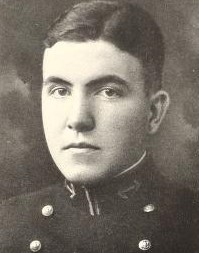
Walter Chilcott Ford (26 November 1903 – 20 November 1999) was a United States Navy officer from Buffalo, New York. He graduated from the Naval Academy in 1925, held the service number 0-59556, and retired in 1955 as a captain, advanced to rear admiral on the retired list on the strength of his combat awards. He took command of the destroyer Perkins at Mare Island five days after Pearl Harbor and kept her until March 1943. In that time she steamed with the ANZAC Squadron and with Rear Admiral J. G. Crace's support group in the Battle of the Coral Sea, lay at her mooring in Sydney Harbour on the night in May 1942 when Japanese midget submarines got in, and fought at Tassafaronga off Guadalcanal on the night of 30 November 1942, after which he brought her alongside the burning cruiser Pensacola. For that service he received the Silver Star, the Bronze Star Medal with Combat "V," and a commendation from the Commander in Chief, Pacific Fleet. He spent the rest of the war as Secretary of the Academic Board at the Naval Academy and received the Legion of Merit. After the war he commanded two destroyer squadrons and served as executive director of the newly created Central Intelligence Agency under Rear Admiral Roscoe H. Hillenkoetter. From 1954 to 1961 he was Deputy Maritime Administrator of the United States, in the years when the nuclear merchant ship Savannah was built. He and his wife, Channez Gates Ford, also of Buffalo, had two daughters.
He was born in Buffalo on 26 November 1903, the son of John J. Ford and Harriett Chilcott Ford. His middle name was his mother's. His Navy biography records only that he attended South Park High School in Buffalo before his appointment to the Naval Academy from New York in 1921. The sources examined here say nothing about his father's work, about any brothers or sisters, or about how the family came to seek a naval appointment for him.
The woman he married came from the same city. Channez Gates was born in 1901, and a daughter's obituary describes both parents as having "hailed from Buffalo." The date and place of the marriage do not appear in the sources examined here. An obituary of 1999 called her his wife of sixty-six years.
The Navy Register for 1925 shows that he was admitted to the Academy on 27 July 1921, when he was seventeen years and eight months old. He was appointed from New York. The class of 1925 Lucky Bag, the midshipmen's yearbook, heads his page "Walter Chilcott Ford, Buffalo, New York," and gives him two nicknames, "Henry" and "Watt." The entry explains the first: "The day our little Henry arrived among us the powers that be decreed that instead of Walter he should be known as Henry and, as such, he has been known by us ever since."
The sketch is the only description of his character as a young man found for this account, and it portrays a quiet boy who grew bolder. "He won his spurs his first Christmas Leave when, although confined to the limits of Crabtown, he spent his leave in Buffalo and got away with it." Crabtown was the yearbook's name for Annapolis. "Four years on the Severn have changed him from a shy, bashful little fellow to a fusser of marked ability. Rumor has it that he hasn't missed a hop since our first June Ball." His classmates thought him a good athlete held back by his studies: "Although an all around athlete, his battles with the academic department have prevented him from showing his real ability along this line." The entry closes on a question in his voice: "Do you think I can get away with it?" He was on the baseball squad for three years and the basketball squad for two, and he played class tennis and class basketball.
He graduated and was commissioned an ensign on 3 June 1925, at twenty-one. According to his biography he took a summer course at the Massachusetts Institute of Technology and in September 1925 joined the battleship Utah, where the Navy Directory of that year lists him. The biography adds that in the Utah he won the fleet tennis championship in singles for 1925–1926. In June 1926 he went to the Naval Torpedo Station at Newport, Rhode Island, for instruction, and in December 1926 he reported to Commander, Destroyer Squadron Nine. He then served in turn in the destroyers Dale, Toucey, Converse and Manley. The Register of 1930 lists him in the Converse.
From September 1930 to June 1932 he served in the light cruiser Detroit, where the Navy Directory of 1932 lists him as a lieutenant (junior grade). As her battery officer in 1931–1932 he received a letter of commendation from the Secretary of the Navy, the year the Detroit won the Battle Efficiency Pennant for light cruisers. His elder daughter, Jeanne Channez Ford, had been born in 1929, during his destroyer years.
From June 1932 to June 1934 he had duty in the Third Naval District at New York; the directory of 1933 lists him there under instruction. In that period, his biography records, the Chief Hydrographer of the Navy gave him a commendatory mention for help in developing the star identifier, a navigational aid. His second daughter, Barbara Beatrice Ford, was born at Flushing, New York, on 7 July 1933. He then went to the repair ship Medusa, where the directories of 1934 and 1935 list him. In 1935 the Republic of Spain awarded him the Cross of Naval Merit, First Class, which his biography describes as given "for his efforts in the promotion of friendly international relations." The sources examined here do not say what those efforts were.
He next joined the staff of Commander, Destroyer Squadron Three, as communication officer. The directory of 1937 lists him as radio officer on that staff, in the destroyer Hopkins. In June 1937 he returned to the Naval Academy as an instructor in the Department of Seamanship and Navigation. The Academy's register for 1938–1939 lists "Lt. Walter C. Ford" among that department's officers. Another officer of the department that year, Lieutenant Commander Timothy F. Wellings, would command the Perkins from 1940 to 1941, two captains before Ford.
From June 1939 to June 1941 he served as flag lieutenant on the staff of Commander, Cruiser Division Seven. The Navy Directories of 1940 and 1941 list him as aide and flag lieutenant on that staff in the heavy cruiser Wichita. The Register of 1945 and a ship-listing compilation date his rank as lieutenant commander from 21 June 1940.
On 7 December 1941 the Perkins, a Mahan-class destroyer commissioned in 1936, was at the Mare Island Navy Yard for overhaul. On 12 December, according to ship-listing compilations, Lieutenant Commander Ford relieved Lieutenant Commander Stephen Ray Bedford in command. He was thirty-eight years and sixteen days old. Her official history records that the ship reported for convoy escort duty on the 15th and was on her way to Pearl Harbor on the 17th. She was back at Mare Island by 15 January 1942 to receive new radar, returned to Hawaii on the 25th, and on 2 February left Pearl Harbor with the heavy cruiser Chicago for the southwest Pacific. On 14 February she joined the ANZAC Squadron, the force of Australian, New Zealand and American ships then charged with guarding the eastern approaches to Australia and New Zealand.
Through March and April the squadron screened carrier forces in the Coral Sea, escorted oilers to fueling rendezvous, and screened larger ships as they bombarded Japanese positions from New Guinea to the Solomons. His Bronze Star citation, as quoted in his Navy biography, names among the operations of that period "the raid on Salamaus and Tulagi." On 1 and 2 May the squadron joined Task Forces 11 and 17, and it screened the carriers whose planes struck Tulagi to open the Battle of the Coral Sea. The Office of Naval Intelligence's wartime narrative of the battle lists the support group under Rear Admiral Crace as the cruisers Australia, Chicago and Hobart and the destroyers Perkins, "Lt. Comdr. Walter C. Ford," and Walke.
On 7 May the support group was detached and sent toward the Louisiade Archipelago to block the Japanese invasion force making for Port Moresby through the Jomard Passage. That afternoon land-based aircraft attacked it. Ford described the attack himself in 1945, in an article in the U.S. Naval Institute Proceedings: "I know for I was there, in the van destroyer of our formation, and my ship, the Perkins, was one of the minor objectives of the enemy. Their torpedo planes, twelve in number, came head on at us, raked our decks with machine-gun fire and dropped torpedoes. We were simultaneously straddled by bombs from a co-ordinated high level bomber attack. Our decks were littered with their fragments, though we accounted for at least seven of the torpedo planes with our own anti-aircraft and 5-inch fire."
His report as commanding officer, dated 9 May 1942 and extracted on an Australian military-history website, is cooler and more exact. At 1515, it says, with the ship at 30 knots and the firing on the last torpedo planes just ended, about twenty high-level bombers appeared overhead from astern. "The ship's course was changed radically to starboard and shortly thereafter the Commanding Officer observed a near miss close aboard on our port hand. This was apparently a fortunate change of course." "The damage was slight." The antenna of the TBS, the ship-to-ship voice radio, was severed above the bridge, fragments fell around the gun director and the after deckhouse, and a man at the director was wounded in the arm and chest, apparently by a 20-millimeter round. The ship had fired 102 rounds of five-inch, 420 of 20-millimeter and 250 of .50-caliber ammunition. The high-level bombers that nearly hit her were American. Later research established that they were U.S. Army B-17s returning to Townsville that had taken the Allied ships for Japanese. No ship of the group was hit by bomb or torpedo. Admiral Crace's comment on the airmen, as quoted on the same website, was: "Fortunately, their bombing, in comparison with that of the Japanese formation a few moments earlier, was disgraceful." Ford received a letter of commendation from the Commander in Chief, Pacific Fleet, for his services that day.
After the battle the Perkins spent nearly two months escorting convoys and patrolling off harbor entrances along the coasts of the Coral and Tasman Seas. Ford wrote that "the torpedoing of one Greek ship in our charge proved that the end was not yet in that area." By the end of May she was at Sydney with the Chicago and the Australian cruiser Canberra, all three, as he wrote, freshly overhauled there.
His Proceedings article is the only first-person account by him found for this biography, and most of it concerns the night of Sunday, 31 May 1942. All three ships were to sail the next day, and he went ashore "to pay my parting respects." At 2230, as he was leaving, he heard gunfire in the harbor that "could only have come from the cruiser Chicago." He hurried to his boat. "Strangely, no one whom I passed ashore seemed unduly alarmed nor concerned by the gunfire. I confess, however, to some trepidation as my small boat passed the Australian cruiser Canberra since, without lights and low in the water, we could easily have been mistaken in the circumstances for a hostile craft." On board the Perkins he found that the Chicago's captain, also on his way back to his ship, had left orders for the destroyer to get under way and patrol the harbor.
"While circling the harbor the thought constantly came to mind that despite all the evidence to the contrary it was rather fantastic to have an enemy craft in such a closed harbor," he wrote. "The confines of a closed harbor are not very satisfactory for maneuvering a destroyer." Nothing was found, and the Perkins was ordered back to her buoy. "Less than a half hour later the officer-of-the-deck yelled 'Torpedo!' Just as I leaned over the bridge, I saw its wake pass our bow." The Chicago and the Perkins were moored about 500 yards apart. The torpedo, he wrote, had passed astern of the cruiser and across the destroyer's bow, run deep under a ferry moored at the Garden Island naval base on which a Dutch submarine crew was living, and exploded against the shore. The Royal Australian Navy's history of the attack identifies the vessel as the depot ship Kuttabul, which sank at once with the loss of twenty-one sailors, nineteen Australian and two British. The torpedo had been fired at the Chicago by the midget submarine M-24. A second torpedo ran ashore on Garden Island without exploding.
Ford sent both of his whaleboats, with three men in each, to the wreck. "All night long they worked assisting in removing the dead and wounded from the ferry." The Chicago's commanding officer then ordered both ships to sea. "With the Perkins running interference, we made the break and got away to the safety of the high seas. The following day we returned to pick up our whaleboats and men—their job well done." Writing three years later, he summed up the Japanese plan: "The Jap attack was well conceived, well planned, and very nearly well executed. Only misfortune prevented its success." He also noted that all three ships at Sydney that night were later lost. The Canberra was sunk at Savo Island in August 1942, the Chicago off Rennell Island in January 1943, and the Perkins in November 1943.
On 11 July the Perkins sailed for Auckland and then Noumea, and she escorted convoys between Suva and New Caledonia. In mid-August propeller damage forced her back to New Zealand, and on 20 August she sailed for Pearl Harbor, where the repairs were finished and more radar and 40-millimeter guns were fitted. According to a ship-listing compilation he was promoted to temporary commander on 1 August 1942. In mid-November the ship headed west again and reached Espiritu Santo on 27 November.
There she was put into a cruiser-destroyer force formed to stop the Japanese destroyer runs that were supplying the troops on Guadalcanal. Its commander, Rear Admiral Thomas C. Kinkaid, drew up the operation plan but was ordered to other duty before he could go over it with his captains. Rear Admiral Carleton H. Wright took over. On 29 November, according to the Office of Naval Intelligence's narrative, Wright held a conference of the nine commanding officers at which Kinkaid's plan was "briefly discussed." That night orders came to intercept a Japanese force expected off Guadalcanal the next night, and the destroyers got under way at 2310.
The force entered Lengo Channel on the evening of 30 November, four days after Ford's thirty-ninth birthday, with four destroyers ahead of the cruisers. The Fletcher led, and the Perkins was second. At 2315 the Perkins's radar showed five ships off Tassafaronga Point, 14,480 yards away. Commander William M. Cole in the Fletcher asked permission to fire torpedoes, and Admiral Wright did not give it until about 2320. Then the Fletcher fired ten, and the Perkins fired eight, recording the range as 5,000 yards. None hit. The cruisers opened fire, and the van destroyers fired starshell and five-inch rounds before Cole led them northwest around Savo Island, out of the cruisers' line of fire.
The Japanese destroyers, eight of them under Rear Admiral Raizo Tanaka, answered with torpedoes. Within minutes the heavy cruisers Minneapolis, New Orleans, Pensacola and Northampton were hit. The Northampton sank before morning. The Pensacola, struck aft, burned furiously as oil from her tanks fed the fire, and lost 125 men killed. The Americans sank one Japanese destroyer, the Takanami. The Naval History and Heritage Command's present-day account calls the battle "one of the most ignominious defeats in U.S. Navy history," though the Japanese supplies did not reach the troops ashore that night. Admiral William F. Halsey later rebuked Cole for leading the destroyers so far around Savo and for poor torpedo tactics, and Navy Crosses went to Wright, to Rear Admiral Mahlon S. Tisdale and to the five cruiser captains. No destroyer captain received one.
After midnight the Perkins and the Maury were sent to stand by the damaged cruisers. Her official history records that she went to help the burning Pensacola while the Maury went to the New Orleans. The Silver Star citation quoted in his Navy biography describes what followed. He "brought the Perkins close alongside the blazing vessel to assist in bringing the fires under control," and then led the crippled ship "into Tulagi Harbor where he continued his efforts until the blaze was completely extinguished." The shorter citation published with the award, issued in May 1946, credits him with "bold and skillful handling of his ship in the face of grave danger" that "was of inestimable value in rendering assistance to a damaged cruiser." It names him a commander.
The Perkins stayed in the Solomons, working from Tulagi. She bombarded the Guadalcanal coast and escorted shipping until January 1943, had a short availability at Noumea, and was back at Tulagi by 13 January. His Bronze Star citation describes those months: "Frequently subjected to enemy air attack while escorting and screening vessels in the Guadalcanal area from November 1942, to February 1943, (he) fought his ship gallantly against the attacking aircraft." The citation covers his whole command, from December 1941 to March 1943.
He was detached in March 1943. Ship-listing compilations give his relief by Commander Gerald Lyle Ketchum on 1 March 1943. The Perkins went on to the New Guinea campaign. Shortly before 0200 on 29 November 1943, steaming alone from Milne Bay toward Buna, she was rammed amidships by the Australian troopship Duntroon about two miles off Ipoteto Island, off the New Guinea coast, and broke in two. Her official history records that four of her crew went down with her.
From 11 June 1943 to 26 June 1945 he served at the Naval Academy as Secretary of the Academic Board. His promotion to captain dated from 20 July 1943, when he was thirty-nine. The Academy's register for 1944–1945 lists "Capt. Walter C. Ford, Secretary, Academic Board, and Aide" immediately after the superintendent, Rear Admiral John R. Beardall. His Legion of Merit citation says that he "was responsible for the administration and training of midshipmen at the Naval Academy during an extremely critical period."
In June 1945 he took command of Destroyer Squadron Twenty-Three, and in January 1946 he moved to command of Destroyer Squadron Two. His decorations include the Navy Occupation Service Medal with the Asia clasp and the Asiatic-Pacific Campaign Medal with four engagement stars. The sources examined here do not describe the squadrons' movements while he commanded them.
While he commanded Destroyer Squadron Two, in April 1946, Proceedings published an article by him and his former assistant secretary at the Academy, Lieutenant Commander J. Buroughs Stokes of the Naval Reserve, on the selection of candidates for the Academy. The midshipman whose classmates had written of his "battles with the academic department" now put his name to a study of candidate selection and academic attrition. The article argued that the system of congressional appointments and entrance examinations achieved fair representation from every part of the country but "fails to a considerable extent" to secure the best qualified men, because of unequal schooling across the states, the form of the examinations and the Academy's lack of authority over final selection. It proposed regional physical examinations so that classes could be filled before plebe summer, and it urged that midshipmen dropped for academic failure be required to pass the full entrance examination before readmission. "The history of the Academy is replete with the cases of 'bilgers' who, recognizing their lack of preparation, have taken intensive training in their weak subjects and upon re-entering were graduated and reached the pinnacle of success in the Navy," the authors wrote, "but far too many re-enter only to fail."
He returned to the United States in December 1947 and became aide to the Under Secretary of the Navy. His biography dates his next assignment, as executive director of the Central Intelligence Agency, from May 1948. The agency had been established by Congress in 1947, and its director was Rear Admiral Hillenkoetter. A State Department memorandum of a conversation with Hillenkoetter on 16 April 1948 shows "Captain Ford" at his side. The subject was the agency's reporting from Bogotá and an alleged intelligence failure there, which had brought Hillenkoetter before a congressional committee the day before. Hillenkoetter said that when a report from his man in Bogotá had come in on or about 23 March, he had suggested passing it to the State Department, but that his deputy, Brigadier General E. K. Wright, "his Executive Officer, Captain Ford, and Colonel Galloway, the Deputy Director for Special Operations," had advised against it, on the grounds that "their man in Bogota would be placed in serious trouble vis-à-vis the Ambassador and the staff." Hillenkoetter said that in hindsight he should have sent it.
The Director's daily log for the first days of January 1949, released by the agency in 2010, lists "Capt. W. C. Ford, ED" among the director's callers on 3 January. On 5 January it records that the director would ask "Captain Ford" to set a time for a presentation of the Office of Policy Coordination's plans to the Project Review Committee, and that later that day "Capt W. C. Ford, Exec." left word that the committee would meet the next afternoon "to consider the OPC program." A 1999 obituary distributed by the New York Times News Service called him "the executive director of the newborn CIA." No account of his work there in his own words has been found.
In June 1949 he joined the staff of Commander, Naval Forces, Eastern Atlantic and Mediterranean, as assistant chief of staff for intelligence. In January 1951 he became Commander, Service Squadron Four. From January 1952 to October 1953 he headed the Transportation and Petroleum Branch in the Office of the Chief of Naval Operations, and then he was chief of its Program Planning Office, working, his biography says, on shipbuilding and ship repair programs.
On 20 October 1954 he was appointed Deputy Maritime Administrator in the Department of Commerce, at fifty. He was transferred to the Navy's retired list on 30 June 1955, at fifty-one, after thirty years of commissioned service, and was advanced to rear admiral on the basis of combat awards. He stayed at the Maritime Administration until 30 June 1961. The annual reports of the Federal Maritime Board and Maritime Administration list him as deputy under four administrators in turn: Louis S. Rothschild, Clarence G. Morse, Ralph E. Wilson and Thomas E. Stakem. The obituary of 1999 says he served "intermittently as deputy and acting administrator." His biography credits him with an important part in promoting the nuclear ship Savannah and the experimental hydrofoil Denison, and in starting the program to replace the merchant ships built during the war. In November 1957 he set out his views in Proceedings under the title "The U.S. Merchant Marine and National Defense," which opened: "Our national policy today requires that the United States maintain a Navy and Merchant Marine capable of carrying on warfare anywhere in the world."
One of his speeches in that office had a lasting result. On 21 May 1958, the eve of National Maritime Day, he was guest of honor and keynote speaker at a banquet at the Hotel Galvez in Galveston, Texas. According to the Rosenberg Library of Galveston, the idea of a maritime academy on the island came out of conversations at that dinner, and the Galveston Chamber of Commerce formed a committee to pursue it. The chamber's president wrote to him the next day, thanking him for his remarks and hoping that the possibility would be "seriously considered." The Maritime Administration approved the academy in January 1962, after he had left. It opened that year as the Texas Maritime Academy and later became Texas A&M University at Galveston.
After leaving government in 1961 he worked as a maritime consultant for the Cities Service Oil Company and several tanker corporations, and, according to the obituary, as a corporate director.
The family's ties to Annapolis lasted beyond his own service there. His daughters attended the Woodward School and Annapolis High School, and together they founded a Junior Army-Navy Guild whose members volunteered at the Naval Academy Hospital; the obituary that records this does not give the years. On 5 June 1954 both daughters were married in a double wedding at the Naval Academy Chapel, each to a Navy ensign. Jeanne married Edward Haskell Tandy, and Barbara married Maurice Harry Werness. Barbara named one of her sons, born in 1961, Walter Ford Shepard Werness. Jeanne died in 1991, and Channez Gates Ford died a year or two later.
Walter Chilcott Ford died of renal failure on Saturday, 20 November 1999, at the Mariner Health facility in Bethesda, Maryland, six days before his ninety-sixth birthday. He was ninety-five. He was survived by his daughter Barbara, nine grandchildren and eighteen great-grandchildren. His burial place has not been found in the sources examined here.
What survives of him is mostly official record, with two exceptions. One is a yearbook sketch of a shy boy from Buffalo who spent a forbidden Christmas leave at home, struggled with his studies, and asked, "Do you think I can get away with it?" The other is his own account of the night at Sydney, written as a captain: the gunfire heard ashore, the small boat creeping past an Australian cruiser in the dark, the torpedo wake crossing his bow, and the six men in two whaleboats who worked all night among the dead and wounded. Between them lie a near miss from friendly bombers in the Coral Sea, eight torpedoes fired without a hit at Tassafaronga, and a destroyer brought alongside a burning cruiser and kept at the work until the fire was out.